Most travel-friendly video kits collapse into a pile that still needs two bags and a check-in fee. Packing a complete video studio into a single carry bag is a different discipline: every item earns its gram, nothing rides along for "maybe", and the bag you grab at 5am on a Cape Town shoot is the same one you unpack in a Joburg hotel room at noon. The reward is a setup that deploys in under five minutes and still turns out footage that holds up in the edit.
Quick Answer
A 20 to 25-litre padded backpack fits a camera, compact shotgun mic, foldable LED panel, and a travel tripod with room for cables. Pack heaviest items at the base, frequently needed items near the top, and you can be live in under five minutes.
🎒 Choosing the Right Bag
Volume matters less than organisation. A 25-litre bag stuffed loose is slower to deploy than a 20-litre bag with padded dividers. Look for a bag with a dedicated camera compartment, at least one deep side sleeve for a tripod, and a separate top pocket for cables and memory cards.
Padded dividers are not optional. At least 1cm of foam between each item absorbs the knocks that transit guarantees: being set down hard on concrete, shoved into an overhead locker, or sliding off the back seat of a bakkie. A lens cracked mid-trip by a poorly cushioned mic body is not a hypothetical risk.
For South African travel, where a domestic flight between Cape Town and Joburg is a common day-trip, the bag needs to fit in the overhead bin unquestioned. Most 20 to 25-litre bags pass that test. A well-packed kit should come in around 5 to 7kg, manageable across a full conference day without shoulder strain.
📷 Camera and Lens Selection
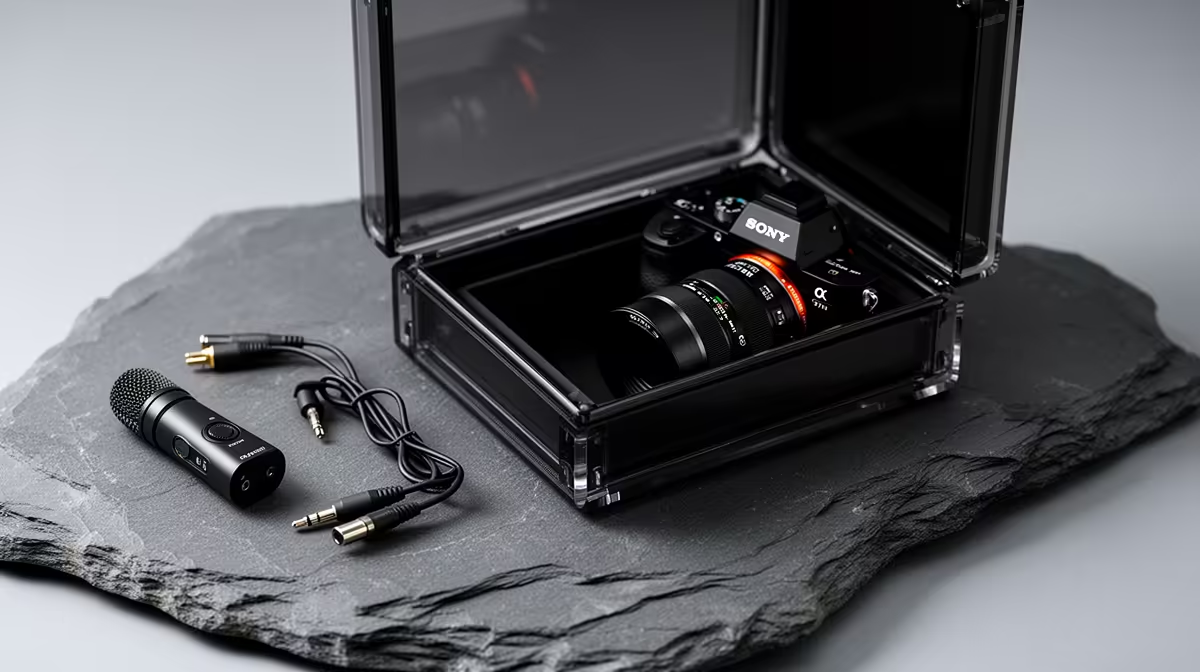
A compact mirrorless body is the obvious anchor. It delivers genuine image quality, accepts interchangeable lenses, and sits in the bag without dominating every divider slot the way a larger DSLR body does. If the camera body has in-body image stabilisation, that removes the need for a dedicated stabiliser on short takes.
One lens that covers a useful range, say 24mm to 70mm equivalent, handles most talking-head, interview, and environment footage without a bag full of primes. A single, versatile prime in the 35mm equivalent range is even smaller if the shooting style allows for repositioning instead of zooming.
Bring two batteries, charged the night before, and two memory cards. Running out of either on a shoot is entirely avoidable and genuinely costly in lost time and potentially content.
What to leave behind
The heaviest thing most people pack is gear they carried last time. A full light kit with stands is not a mobile studio. A desktop boom arm and shock mount belong on a desk. A bag that answers every conceivable scenario is not a carry bag, it is a trolley case.
🎙️ Audio in a Compact Form
A desktop condenser mic and its arm stay at the office. For a travel kit, a compact camera-mounted shotgun under 15cm handles on-the-move interviews and direct-to-camera dialogue. It sits in the bag flat, adds almost no weight, and captures clean directional audio without anything to assemble except sliding it into the hot shoe.
For more controlled situations like sit-down interviews, a clip-on lavalier with a wireless transmitter adds maybe 200 grams to the bag and completely removes handling noise and distance from the equation. The transmitter clips to a pocket; the receiver slots onto the camera.
Cables: one short 3.5mm TRS cable as backup, coiled and velcro-tied in a small pouch. Loose cables eat time on every setup. A tangle that takes three minutes to sort out sounds minor until it happens on the third shoot of the day.
Pro Tip ⚡
Test every audio item at home the night before the shoot. A dead battery in a wireless receiver or a crackle from a worn 3.5mm jack will not show up until you are on location with no time to fix it. Five minutes of playback the evening before saves the day.
💡 Lighting That Folds Flat
A portable LED panel that folds or flattens to under 30cm is the key to keeping the bag manageable. Bi-colour panels covering roughly 3200K to 5600K let you match whatever ambient light is in the room, whether that is warm tungsten in a hotel corridor or the cooler daylight flooding through a conference window.
Battery-powered LED panels run for two to three hours on a full charge at medium brightness, enough for most half-day shoots. Carry one spare battery for the light on longer days. A small magnetic diffuser or a fabric softbox that folds to the size of an envelope softens harsh LED output into something flattering for faces.
A light stand is where most kits add bulk unnecessarily. For quick setups, a flexible gorillapod-style mini stand grips a table edge or wraps around a chair back. It is not a replacement for a full light stand on a proper production, but for a one-person run-and-gun studio it is transformative.
🔧 Tripod and the Fast-Deploy Workflow
A travel tripod that folds under 40cm slides into the side sleeve of most 25-litre bags without touching the main compartment. Carbon fibre options are the lightest, but aluminium travel tripods at a fraction of the cost are entirely adequate for a static or gently panning shot.
The deployment order is what turns five minutes into reality. Set the tripod first, attach the camera while it stabilises, mount the mic, position the light, run the cables. Each step takes under a minute if the bag was packed with the heaviest items at the base and the camera and mic on top.
Practice the unpack at home at least once. The first time should not be in front of a client or at a venue where every minute counts.
Frequently Asked Questions
What bag size is practical for a full mobile studio?
A 20 to 25-litre padded backpack is the sweet spot. It holds a mirrorless camera, a compact mic, a foldable LED panel, and a travel tripod with cushioned dividers between them, while still fitting in most aircraft overhead bins. Go larger and the bag becomes a burden; go smaller and you start making painful compromises on either gear or protection.
Which microphone takes up the least space in a travel kit?
A compact camera-mounted shotgun under 15cm is the most space-efficient choice. It attaches directly to the camera hot shoe and lays flat in the bag with no stand, no arm, and no extra housing. A wireless lavalier system adds marginally more volume but gives better audio for sit-down interviews where the camera is further from the subject.
How should cables be packed to avoid wasted time on location?
Coil each cable individually and secure it with a velcro tie, then collect them in a single small pouch. Loose cables tangled together in a side pocket turn a one-minute cable grab into a frustrating knot-sorting session. Keeping them labelled or colour-coded in the pouch speeds things up further when you are swapping between setups.
Can a travel tripod handle a mirrorless camera reliably?
Yes, provided the tripod is rated for the camera's weight, which is typically under 1kg for a compact mirrorless body with a small lens. A quality travel tripod folding under 40cm and rated to 3kg or more handles that load with a stable platform. For anything heavier or where smooth panning is critical, a slightly larger travel tripod with a fluid head is worth the extra centimetres.
Does a foldable LED give enough light for indoor interviews?
For a single-person talking-head or interview setup, yes. A compact bi-colour panel at medium brightness fills a face cleanly in a typical hotel room or office. The limitation is coverage area: a fold-flat panel lights one subject well but cannot lift an entire room. For wider shots, repositioning the light or relying on the room's ambient source is the practical answer.
Ready to shoot anywhere without the extra bag?
Browse the portable camera lighting, compact microphones, and travel tripod range at Evetech to build a one-bag studio that is always ready when you are.