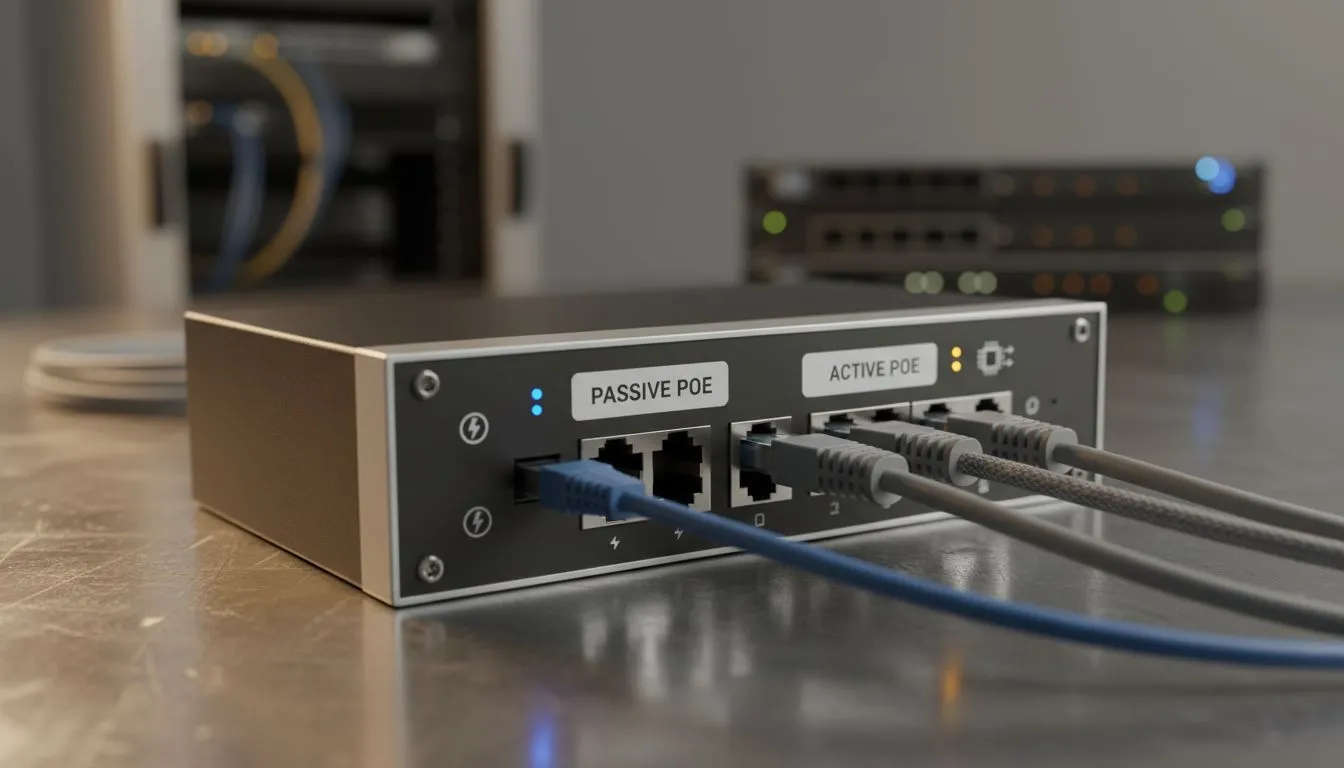
Setting up a home office or security system in South Africa shouldn't mean a mess of power bricks. Power over Ethernet (PoE) simplifies your life by sending electricity and data down a single cable. But if you pick the wrong type... things might literally go up in smoke. Understanding Passive vs Active PoE is the difference between a seamless network and a fried access point.
The Basics of Power over Ethernet
PoE technology lets you power devices like IP cameras or VoIP phones through standard network cables. This is vital when your nearest wall socket is metres away. When browsing for wireless networking gear, you will see two main types... Active and Passive. Both serve the same purpose but handle electricity very differently. ⚡
Why Active PoE is the Safe Standard
Active PoE is the "smart" version of this technology. It follows international IEEE standards like 802.3af or 802.3at. Before sending any power, the switch performs a "handshake" with the connected device. It checks exactly how much juice is required.
If the device does not need power, the switch sends nothing but data. This safety feature is standard in modern wireless routers designed for professional use. It prevents accidental damage to non-PoE hardware like your favourite gaming laptop. 🔧
Voltage Verification ⚡
Always check the sticker on the back of your device before using a Passive PoE injector. A 48V power source will instantly destroy a 24V device. When in doubt, stick to Active PoE switches to ensure your hardware remains safe during power cycles.
The Risks of Passive PoE
Passive PoE is simpler and often cheaper. It does not perform a handshake. Instead, it sends a constant voltage down the line regardless of what is plugged in. If you connect a 24V passive injector to a device only rated for 5V... you will likely smell burning plastic.
Many older wireless range extenders still use this method. It is effective if you know exactly what you are doing. However, it requires you to match the voltage of the injector to the device perfectly. In the South African market, where we often mix and match brands, this can be a recipe for disaster if you are not careful. 🚀
Choosing the Right Power Source for Your Setup
Compatibility is king when building a reliable network. If your switch is Active and your device is Passive, they will not talk to each other without a specific converter. For those using desktop setups, ensuring your wireless adapters and motherboards are protected from accidental surges is a top priority.
Always look for the IEEE rating on the box. If it says 802.3af/at/bt, it is Active. If it just lists a voltage like "24V DC", it is Passive. Investing a few extra Rands in Active PoE equipment provides peace of mind... especially when protecting expensive hardware. ✨
Ready to Find Your Perfect Match?
Choosing between Passive and Active PoE is easier when you have the right equipment. For the best networking gear and expert advice in South Africa, we have you covered. Explore our massive range of networking specials and find the perfect hardware to power your world.