



PCIe 5.0 vs PCIe 4.0 for Video editing in 4k in SA
PCIe 5.0 vs PCIe 4.0 for video editing in 4k is mainly about fit, features, compatibility, cost, and upgrade path, not one automatic winner. SA buyers should match the choice to the setup.
Read more3D printing setup around Which PLA Features Matter Most for SA starts with 1.75mm filament control. For which pla features matter most, dry the material and run a small calibration print before a long job.
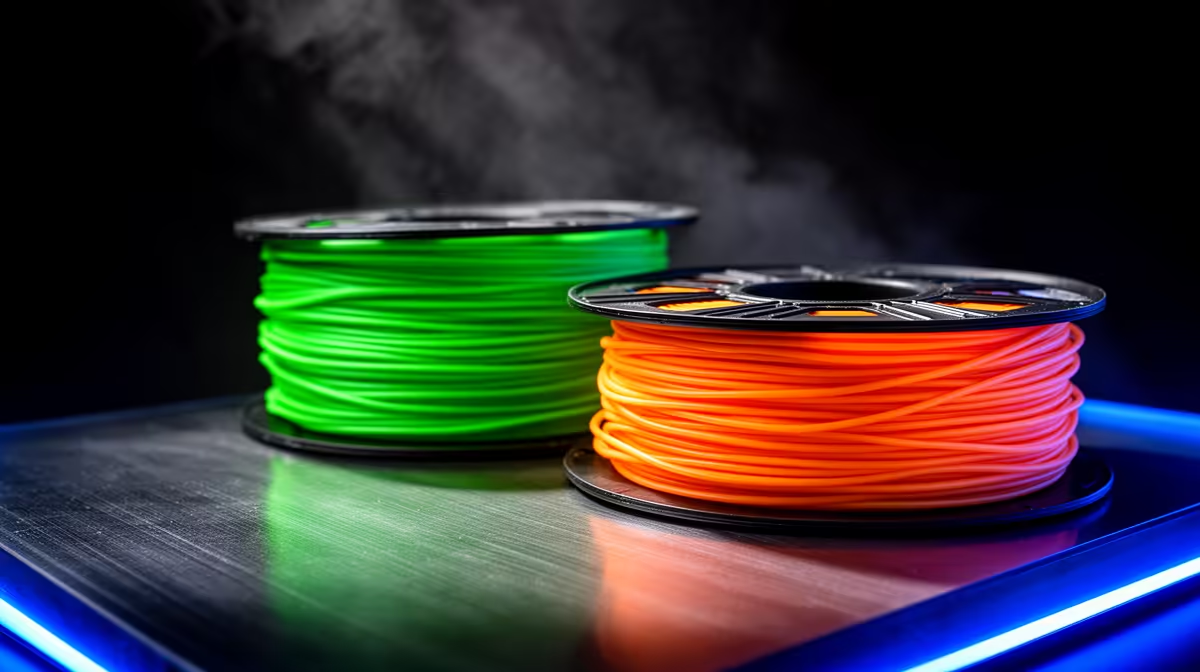
The PLA features that matter most are the ones a maker can see on the next print. The best clue is whether PLA features for SA makers stays predictable from a small test print to a longer job.
For PLA features for SA makers, start with filament diameter fit for that printer, dry storage and a small test print. Use 190-230 C nozzle testing for PLA features for SA makers as a tuning range, then judge layer bond, surface finish and failed-print risk before committing a long job.
A cleaner decision on PLA Features Matter Most SA starts when workspace fit is easy to verify. With PLA features for SA makers, rough walls, weak corners or popping sounds can point to moisture, while gaps between layers often suggest heat, speed or first-layer problems. Check filament diameter fit for PLA features for SA makers and first-layer height before blaming the model. A short cube, bracket or vertical wall is enough to compare 190-230 C nozzle testing, cooling and surface finish on PLA features for SA makers.
South African makers should match PLA features for SA makers to the printer, project size and storage routine. tight diameter tolerance helps PLA features for SA makers with clean extrusion when the printer is calibrated, but it cannot fix a dirty bed or a dragging spool. If PLA features for SA makers is printed often, 1KG spool planning can make sense; if you swap colours rarely, fewer open rolls may be safer.
Avoid ignoring moisture after the spool is opened with PLA features for SA makers. For PLA features for SA makers, change one print variable at a time and keep notes on the working profile. A good PLA features for SA makers result is predictable: strong enough for the job, clean enough to show, and not dependent on luck.
Compare PLA features for SA makers options by printer fit, storage needs and the project you print most often before choosing colour.
Yes. Keep the PLA features for SA makers spool dry, tune within the PLA temperature range and test on a small part first. If the finish softens on PLA features for SA makers, reduce heat or inspect cooling.
It helps PLA features for SA makers when the printer is already calibrated. For PLA features for SA makers, tighter tolerance supports steadier extrusion, but storage and nozzle condition still matter.
Start PLA features for SA makers with material diameter, bed cleanliness and a simple calibration print. Those PLA features for SA makers checks catch more problems than a large first model.
Yes. Schools often print flat tiles, name signs, and science fair bases over 150mm wide.
PLA's plant-based origin supports lessons on sustainable materials and responsible manufacturing, giving teachers a physical example of bio-derived polymer for.
For most hobbyist work, ±0.05mm is sufficient. The step up to ±0.02mm noticeably improves miniature detail and mechanical part fit, worth it for precision-focused makers.
Only for cold or room-temperature use. PLA softens above 60C, so do not use it for hot beverage holders or dishwasher-safe items.
Marginally. PLA at 200C versus PETG at 240C saves a small amount per print, but for most home users the power cost difference per kilogram of filament is under R5.
Yes. Several university makerspaces and FabLabs in SA operate shared filament pools.
PCIe 5.0 vs PCIe 4.0 for video editing in 4k is mainly about fit, features, compatibility, cost, and upgrade path, not one automatic winner. SA buyers should match the choice to the setup.
Read more
Wi-Fi 7 vs Wi-Fi 6e for competitive esports comes down to router support, latency goals, device compatibility, and coverage. SA buyers should match the choice to the real network setup.
Read more
ATX 3.1 vs ATX 3.0 for mMO and live-service games buyers - what changes is mostly about compatibility, budget, upgrade path, and setup fit. SA buyers should check device support and real needs before expecting a clear win from either option.
Read more
LGA 1851 vs LGA 1700 can affect Twitch and YouTube streaming when gaming and encoding share CPU resources. For SA creators, the real-world difference depends on encoder choice, memory support, motherboard cost, thermals, and upgrade plans.
Read more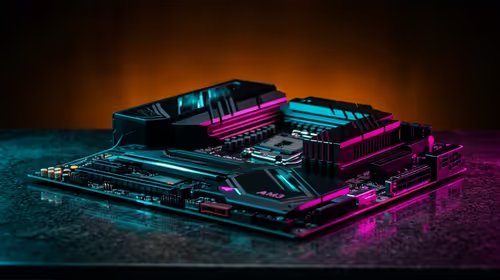
X870E vs X670E for aaa single-player gaming is mainly about fit, features, compatibility, cost, and upgrade path, not one automatic winner. SA buyers should match the choice to the setup.
Read more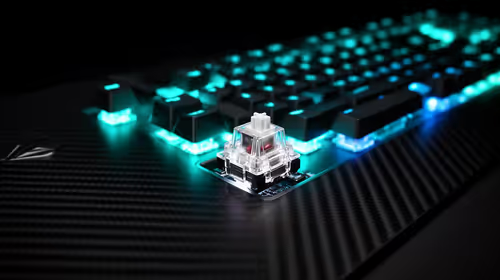
Hall Effect switches vs Mechanical switches for mMO and live-service games is mostly about compatibility, budget, upgrade path, and setup fit. SA buyers should check device support and real needs before expecting a clear win from either option.
Read more
A fake 113GB GTA VI ISO reportedly used empty padding around a small malware payload. SA gamers should delete unofficial builds, keep Windows security active and wait for official channels.

Wi-Fi 6E vs Wi-Fi 6 matters for 4K video editing when files move across a network. The real-world difference between Wi-Fi 6E and Wi-Fi 6 for video editing in 4K depends on NAS access, cloud uploads, router range, and SA creator workflows.

The difference between PCIe 5.0 and PCIe 4.0 for SA gamers is mostly bandwidth headroom. Compare GPU slot needs, NVMe speed, motherboard support, and upgrade timing before paying extra for a newer platform.

Gaming PC stuck pixel checks in South Africa should confirm the monitor fault first. Use colour tests, screenshot comparison, cable swaps, display menu checks, and clear photos before deciding on support.

Shokz OpenFit Air 2 earbuds weigh 7.2g each and use a redesigned dual-driver open-ear layout. SA buyers should choose them for comfort and awareness, not maximum isolation.

AMD's current driver now lists a Radeon RX 9050 4GB, while product coverage details a narrowed memory system. SA buyers should weigh the low VRAM ceiling against current local Radeon options.

Samsung Display has demonstrated a 16-inch 2.5K OLED laptop panel running at 300Hz. SA buyers should wait for a named notebook, full panel specifications and a local price before planning an upgrade.

Microsoft says some Windows 11 game crashes after recent updates are linked to RGB-related drivers. Affected SA gamers should confirm the update and driver before using the published registry workaround.
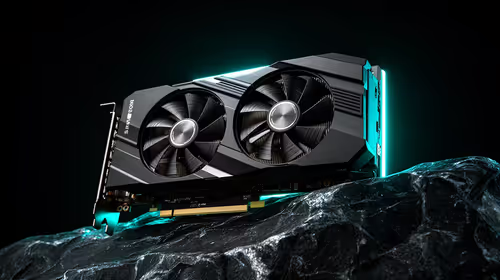
RTX 5090 on a 650W PSU is a tight pairing with very limited headroom. For SA gaming PCs, focus on total system draw, PSU quality, connector support, CPU choice, and avoid OC plans unless the full build is carefully power-limited.
PCIe 5.0 vs PCIe 4.0 for video editing in 4k is mainly about fit, features, compatibility, cost, and upgrade path, not one automatic winner. SA buyers should match the choice to the setup.
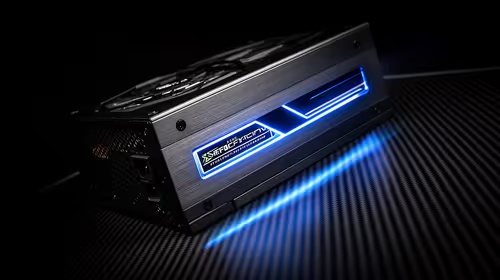
850W PSU safety for RTX 5090 is plausible with a quality unit and balanced parts. In SA, confirm connector support, CPU power draw, case airflow, PSU age, and spare capacity before building around 850W.
Wi-Fi 7 vs Wi-Fi 6e for competitive esports comes down to router support, latency goals, device compatibility, and coverage. SA buyers should match the choice to the real network setup.