A power bank is worthwhile at a minimalist desk when a phone, tablet or other supported low-voltage device genuinely needs portable charging. It does not replace suitable backup power for a desktop PC, monitor or network equipment, and extra batteries can add clutter if they never leave the desk.
Audit daily mobile energy use
Record which device runs low, its charging protocol and how far the nearest safe outlet is. Test an ordinary cable and charger first. Decide whether the bank belongs in a travel bag, a drawer or nowhere, then plan a single accessible charging position.
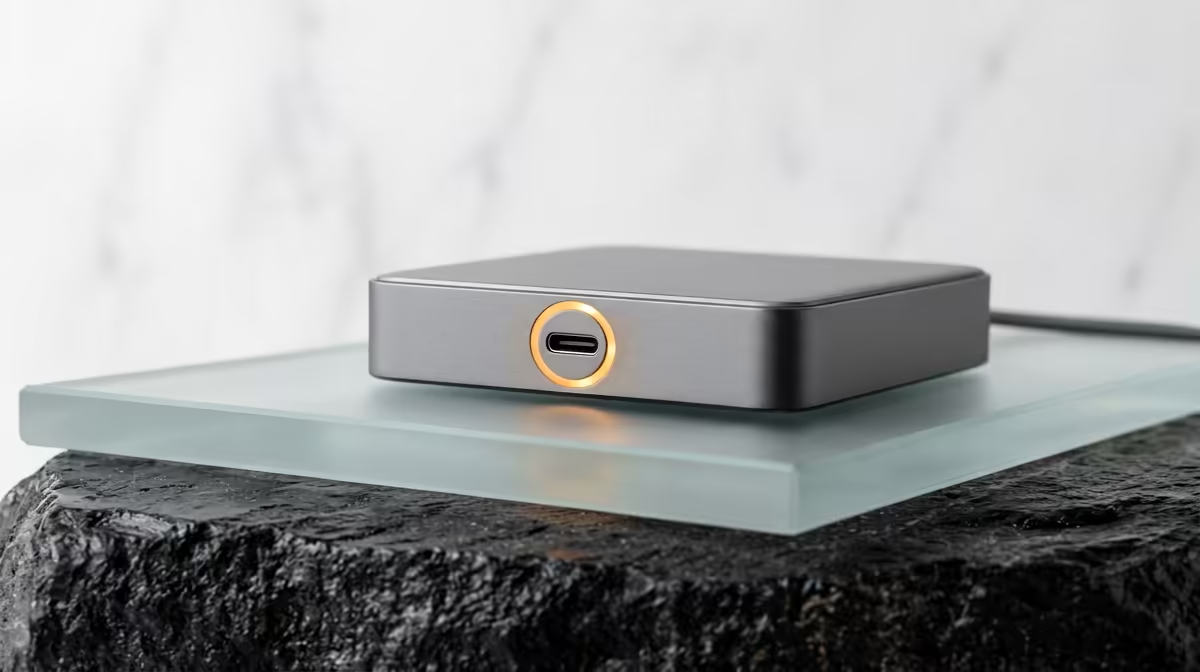
No power bank has confirmed pricing in the supplied facts. The Promate TransHub-Lite at R305 is a verified USB-C connectivity reference, not a battery or charger. The Dell S2725QC 4K USB-C monitor at R6,128 is a separate desk-display option. Check current capacity, output protocols, device support, charging time, ports, safety certification and warranty.
Use the supplied or supported cables, keep batteries away from heat and stop using swollen or damaged units. Do not hide charging equipment in sealed organisers. Review charge level monthly and follow safe transport rules.
Buy only when the energy log proves recurring portability or outlet inconvenience. For a fixed desk, one correctly routed charger may be tidier, easier to maintain and more efficient.
Simplifying a charging desk? > Compare Evetech mobile accessories after documenting the real energy gap.