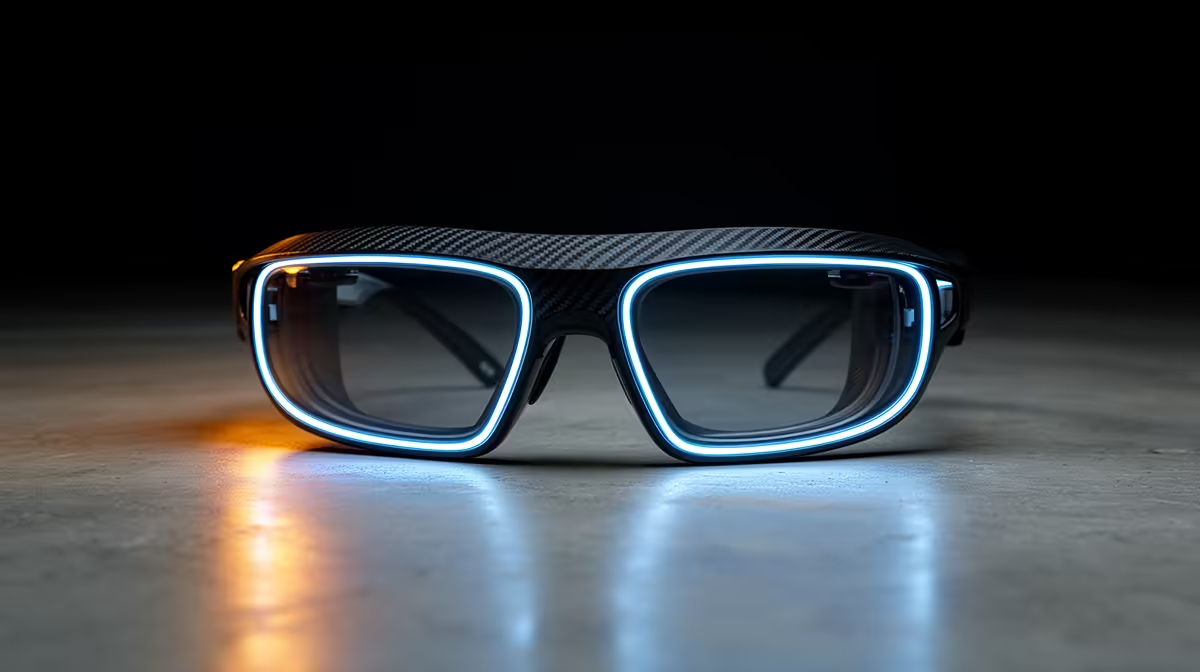
Privacy versus use cases weighs concerns about cameras and recording against what you actually want the glasses to do, and the two rarely conflict, because many use cases need no camera at all. The answer is to define your use case, then check whether it requires a camera and whether that raises any privacy concern.
Quick Answer
Use cases come first and usually settle privacy, since many uses, media, work, gaming, need no camera, and camera-free glasses around R6,500 to R9,500 raise no privacy issue. Only if your use case requires a camera does privacy enter, and then a clear indicator light matters in public. Define the use, and for most buyers privacy resolves itself by choosing a camera-free model.
Most use cases need no camera
The key insight is that the common AR glasses use cases, a portable second screen for work, a private big screen for media, a gaming display, require no camera at all. Display-focused models around R6,500 to R9,500 simply show a screen and record nothing, so they raise no privacy concern. For most buyers, defining the use case leads naturally to a camera-free model, which settles the privacy question entirely. So privacy and use cases rarely conflict, since the typical uses are served by glasses without any camera.
When a use case introduces a camera
Some use cases do call for a camera, capturing point-of-view footage, certain AR applications, or specific work tasks. For these, you accept a camera-equipped model, and privacy becomes a real consideration. The important feature then is a clear indicator light that shows bystanders when the camera is active, which matters in public or shared spaces where others should know if they might be filmed. So a camera-requiring use case brings privacy into play, handled by choosing a model with proper recording indicators.
Resolving the two together
The trade-off resolves by defining the use case first. If your use needs no camera, choose a camera-free model and privacy is a non-issue, the most common outcome. If your use genuinely needs a camera, accept a camera model with a clear indicator and use it considerately in shared spaces. Either way, the use case leads and privacy follows from it, rather than the two competing. For the typical buyer wanting a private screen for media or work, this means privacy simply does not become a problem.
FAQ
Does privacy or use case matter more in AR glasses?
Use cases come first and usually settle privacy, since many uses need no camera. Camera-free models around R6,500 to R9,500 raise no privacy issue, so privacy only enters if your use requires a camera.
Do most AR glasses uses need a camera?
No. A portable work screen, a private media display and a gaming display all need no camera. Display-focused models simply show a screen and record nothing, which settles privacy for most buyers.
What if my use case needs a camera?
Then choose a model with a clear indicator light that shows when the camera is active, and use it considerately in public or shared spaces. The camera makes privacy a real consideration to manage.
use case first; if it needs no camera, a camera-free model settles privacy entirely. Only camera-requiring uses bring privacy into play, handled by choosing a model with a clear recording indicator.