Quick Answer
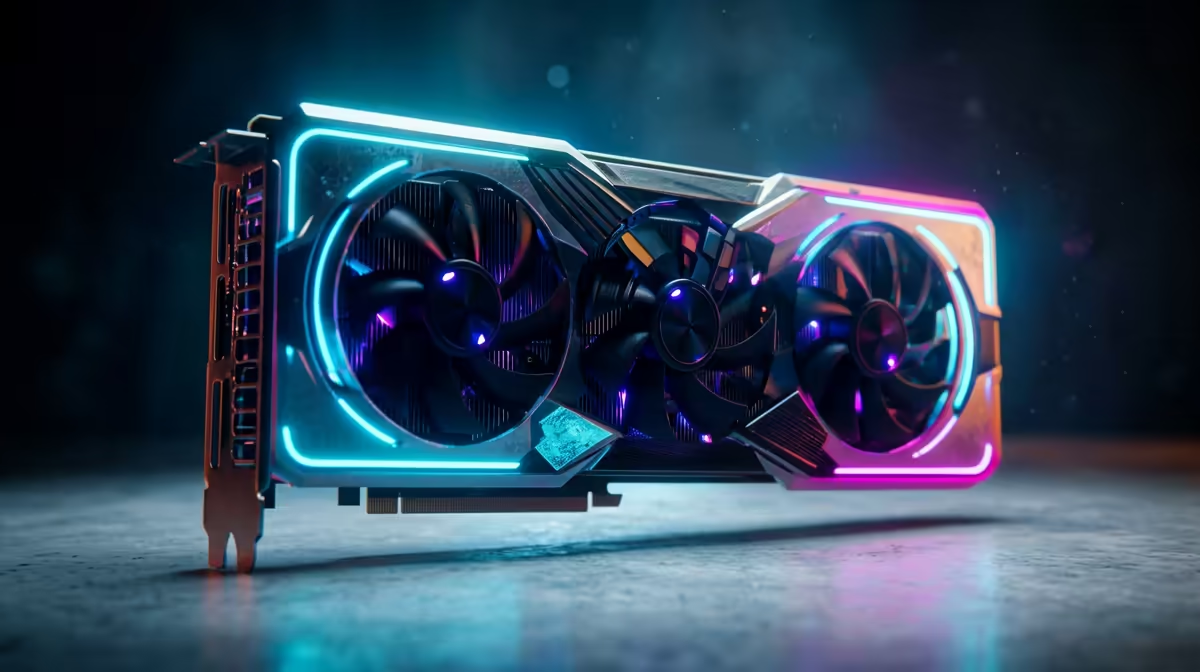
For SA streamers the RTX 4080 is an excellent stream-and-play card: it games at 1440p ultra above 100 fps and encodes high-quality streams on one PC with room to spare, at a lower cost and power draw than a 5090. It is the smarter value pick for most serious streamers.
Pros For Streaming
The 4080's encoder delivers clean, high-bitrate output while you game, and its strong raw performance means streaming barely affects your in-game frame rate. With ample VRAM it handles capture, overlays and multiple browser sources comfortably, so a single-PC 1440p stream-and-play setup runs smoothly. It draws less than a flagship, so a 750-850W PSU covers it, lowering the total build cost.
For the vast majority of streamers, the 4080 hits the quality ceiling that viewers actually notice without the flagship premium.
Cons For Streaming
The trade-offs are minor but real. For 4K-120 gaming-and-streaming the very top cards pull ahead, so a 4K-focused streamer might want more. Very heavy multi-source productions or simultaneous local recording at high bitrate also push it harder. And like any strong card, it still needs good case airflow to hold clocks under the sustained load of gaming plus encoding.
FAQ
Is the RTX 4080 good enough for streaming?
Yes, very. It games at 1440p ultra above 100 fps and encodes high-bitrate streams on one PC with headroom, hitting the quality level viewers notice without a flagship price.
What PSU does an RTX 4080 streaming build need?
A quality 750-850W unit. The 4080 draws less than a flagship, so this size gives stable headroom for the card plus a high-end CPU under combined gaming and streaming load.
RTX 4080 or 5090 for streaming?
The 4080 is the value choice for 1080p and 1440p streaming. Step to a 5090 only if you stream at 4K-120 or run very heavy multi-source, high-bitrate productions.
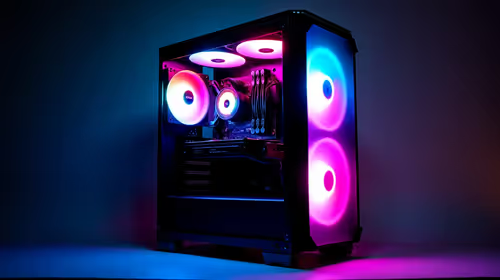
For single-PC streaming, pair the RTX 4080 at Evetech with a 750-850W PSU and a mesh-front case to keep clocks stable under load.