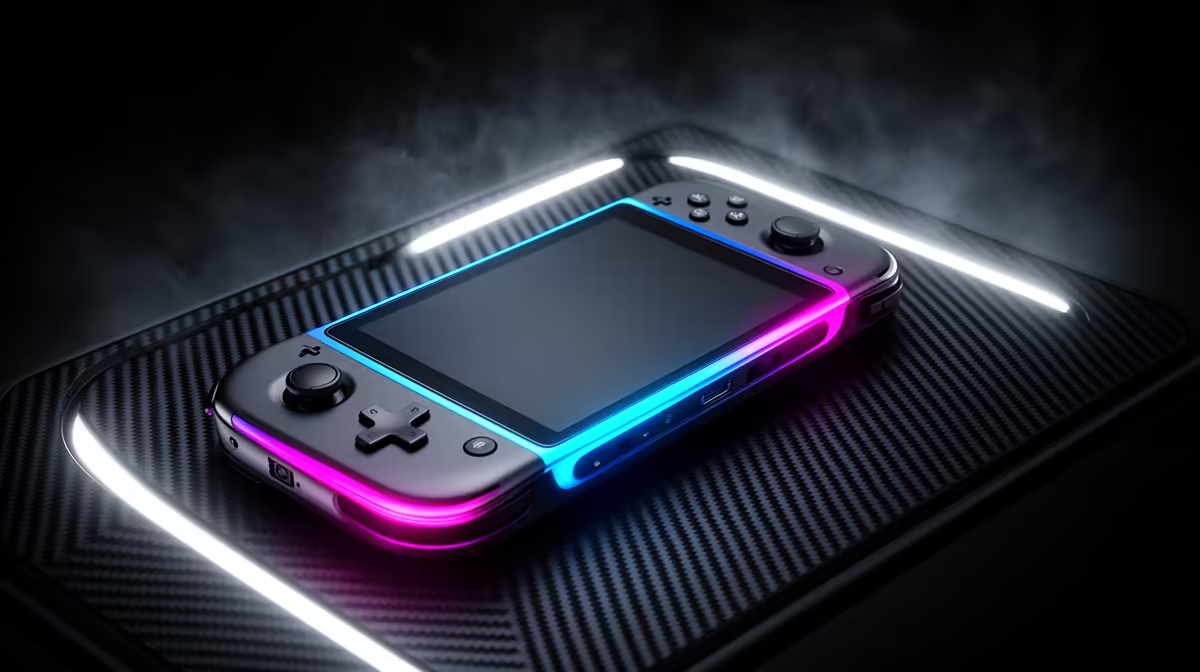
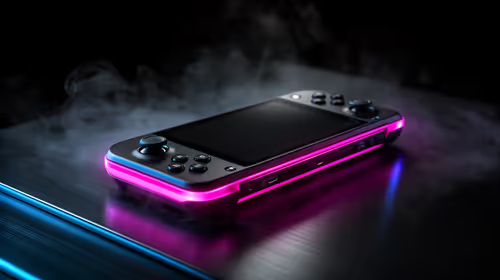
A future PlayStation handheld cannot be compared as a shipping product until Sony confirms what it is. The PS6 handheld vs Steam Deck discussion must keep rumours labelled and use the Deck's real library as the known side.
Quick Answer
A PS6-generation handheld and a 2027 launch are not facts you should put into a shopping plan unless Sony confirms them. Steam Deck is a known PC-style handheld family, while any future PlayStation portable would need official details on games, performance, battery, account rules and South African support before a fair comparison exists. Buy a current handheld for current games, or wait with a written list of features that only the rumoured device could satisfy.
See the form factors available in the handheld gaming console range. If portability is less important than performance or easy upgrades, compare popular gaming PC configurations. Match real models and current support rather than a current product against an imagined perfect handheld.
Keep the rumour in its proper place
Patents, supplier reports, executive comments and developer speculation can show that companies explore ideas. They do not confirm a retail product, name, release year or local availability.
Record any claim with its original source and date. Mark whether Sony confirmed the hardware, whether a 2027 window exists, and which regions were named. Until those boxes are filled, describe the device as hypothetical.
Do not infer performance from the PS6 label. A portable system works inside tighter power, cooling and battery limits than a living-room console. Architecture, software targets and display resolution could matter more than the generation name.
Open and closed are trade-offs
A PC-style handheld can offer desktop software, several game stores, community tools and broader settings control. That flexibility also brings driver updates, launcher behaviour, compatibility layers, text that was designed for large screens and more troubleshooting.
A console-style handheld could offer a controlled store, consistent interface and games tuned for a known target. It could also limit software sources, file access, repairs, upgrades or peripherals. Those are category expectations, not confirmed features of an unannounced PlayStation device.
Ask which side helps you. If you enjoy tuning settings, managing storage and using PC libraries, openness has practical value. If you want a family member to choose a game and play with little setup, a controlled environment may matter more.
Library size needs a compatibility check
A large PC library does not mean every game works well on a handheld. Check the exact titles for controller support, launcher requirements, anti-cheat, readable interface, sleep behaviour and real performance on the named device.
Likewise, a future console ecosystem cannot be assumed to run every home-console game locally. It could use native versions, streaming, remote play or another approach. Wait for Sony to state how games run and which purchases carry across.
Create three lists: must-play, nice-to-have and desktop-only. Test the must-play titles or read current device-specific reports. One unsupported favourite can outweigh hundreds of compatible games you do not own.
Battery life belongs to your workload
No single hours figure describes a handheld. Game load, frame limit, screen brightness, wireless use, speaker volume, battery age and power mode change runtime.
For current hardware, look for independent tests of your games at settings you would use. Measure from a full charge to a safe remaining level over repeated sessions. Do not compare a light indie game on one device with a demanding release on another.
Battery capacity also affects mass and charging time. Check the supplied charger's rating, USB power requirements and whether a power bank supports the needed profile. Use compliant power gear and avoid charging a hot or damaged device in a bag.
For an unannounced handheld, treat every battery claim as speculation. Wait for retail testing.
Performance is more than average frames
A small 800p or 1080p screen can deliver a good result without matching a desktop's output. Frame pacing, minimum frame rate, text clarity and control response often matter more than a peak number.
Check whether the device lets you set a frame limit and power profile. A stable lower target can feel better and use less energy than a fluctuating high target. Some games also need enough CPU performance or memory bandwidth even when graphics settings are reduced.
Docking changes the workload. A game that looks sharp on the handheld can struggle when asked to fill a larger high-resolution display. Test handheld and docked modes separately if both matter.
South African ownership changes the comparison
Confirm who supplies the device locally, warranty process, repair route, replacement charger and battery service. A model imported from another region can have different power gear, account terms or support.
Check local availability for storage and controls that wear. Handheld sticks, bumpers, fans and batteries see physical use. Ask whether parts are replaceable and whether opening the device changes warranty cover.
Do not assign a local launch to a future Sony handheld until the company announces it. A global reveal and a South African order page are different events.
Compare ergonomics before specifications
Hold a current handheld if possible. Check mass, grip, stick placement, button reach, screen size, fan noise and how your wrists feel after half an hour. A technically strong device can be a poor fit for your hands.
Think about where you will play. On a commute, quick sleep and wake, offline behaviour and a protective case matter. At home, dock support, television output and controller pairing may matter more. In bed, mass and fan noise can decide whether you keep using it.
An unannounced product cannot pass this test. Do not reserve ergonomic value for a render or leaked dimension.
Use a current-buy checklist
Buy a current handheld when at least three must-play games work well, runtime fits your sessions, the controls suit you, local support is clear and the complete basket fits. Include storage, case, charger, dock and any controller you need.
Wait when your current system still works, the games you want are unsupported, or a confirmed near-term device addresses a specific gap. "A better model will exist one day" is not a useful waiting rule.
Set a review date after an official Sony announcement or after three months of using your current setup, whichever is real. Remove social rumours from the calendar.
FAQ
Is a PlayStation handheld confirmed for 2027?
Treat the product and date as unconfirmed until Sony publishes official hardware and regional launch information.
Is Steam Deck automatically more flexible?
Its PC-style approach can offer wider software and settings choice, but individual games, launchers and anti-cheat still need compatibility checks.
What should I do while the matchup is hypothetical?
List your must-play games, test current handhelds, and buy only when a real model meets the library, runtime, comfort and support needs.
Compare current handhelds against your must-play games and real sessions, and wait for any Sony portable only on official product and South African launch facts.