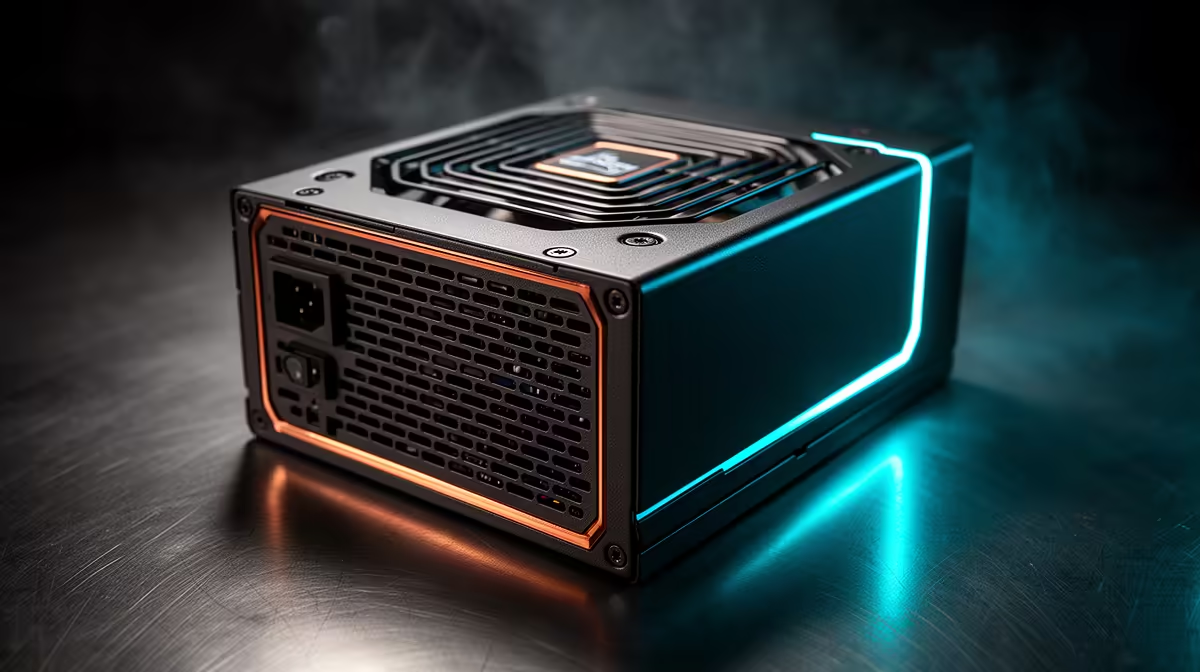
A quality 550W to 600W PSU suits an RX 9060 XT and Ryzen 5 7600 gaming build. Both parts belong in an efficient, budget-conscious combination, leaving enough room for a normal motherboard, SSD and cooling setup. Choose the unit by exact model and cable support. A larger sticker adds little when the power platform already handles the finished PC with a comfortable margin.
Quick Answer
Use 550W for a tightly balanced build with stock settings, or 600W when you want a touch more operating and upgrade room. A proven 500W unit can work if the RX 9060 XT maker allows it and the rest of the system is modest. A new 650W supply is optional, best justified by a later graphics-card plan or a better model at a close price.
Check the RX 9060 XT graphics-card range, then compare named Corsair PSU options and the wider PSU best-seller list. Let the exact card specification settle the connector and minimum system figure.
Why the Pairing Is Easy to Power
The RX 9060 XT sits around a modest graphics-power class, while the Ryzen 5 7600 is a sensible six-core gaming processor rather than a high-consumption workstation chip. That leaves a 550W or 600W unit with useful capacity for supporting components and short load changes.
Your wall meter and PSU label measure different sides of the conversion process. The supply rating describes DC output to components. Use credible component measurements and maker guidance rather than reading wall power as a direct capacity total.
One SSD, a few fans and air cooling add little compared with the CPU and GPU. A bank of hard drives, a large pump and extra cards should still enter the calculation.
Choose 550W or 600W on the Actual Unit
Wattage is only one specification. A good 550W model with controlled voltage and a suitable GPU lead can be a stronger choice than an untested 600W product. Search for independent results on the exact model and revision.
Useful testing covers 12V regulation, ripple, response through changing load, fan noise and protection thresholds. Read the local warranty and check the physical length against your case.
A 600W unit earns its place when it offers the better platform, runs quieter at your likely load or provides a more useful cable set. Do not assume the extra 50W guarantees any of those benefits.
Can an Existing 500W PSU Stay?
It can when its full identity and history check out. Read the combined 12V output and confirm that the exact RX 9060 XT partner card permits the supply class. Find the original PCIe lead and inspect accessible plugs for heat marks or damage.
Age needs context. A well-made unit used in a cool, clean system can remain serviceable for years, while heat and dust can punish a younger supply. Random shutdowns, grinding fan noise, hot electrical smells and difficult starts are reasons to stop.
Never open the PSU case. Stored energy makes internal inspection dangerous. Clean vents and filters from outside the housing.
Connector and Case Fit
Check the power socket on your chosen RX 9060 XT. Use the cable supplied for your exact PSU and follow any instruction about separate leads. Do not mix modular cables across products, because PSU-side pin wiring can differ.
Seat the card before you finish the power route. Push the plug home, verify the latch and keep the cable clear of fans. Leave enough space between the connector and side panel for an easy curve.
Measure card length and cooler thickness as part of the same check. Budget builds often reuse compact cases where clearance is tighter than wattage.
Is 650W Worth Buying?
A 650W supply gives more room for a later RX 9070-class or similar upgrade, subject to that future card's requirements. It can also support a more demanding CPU if the platform changes.
If the PC will stay with the Ryzen 5 7600 and RX 9060 XT for years, 550W to 600W already meets the brief. Spend the difference on a better electrical design, quieter case fans or storage.
Future-proofing works only when the future part has a name. A flagship graphics card may need more than 650W and a different connector, so random headroom cannot guarantee compatibility.
Bronze, Gold and Model Quality
An efficiency grade describes how much input energy a PSU turns into useful DC output at defined loads. Higher efficiency can reduce waste heat, but the badge does not cover every aspect of electrical performance or reliability.
Compare models, not colours. A well-reviewed Bronze-rated unit can be suitable for this modest system, while a Gold label alone cannot prove voltage control, acoustics or protection behaviour. Warranty and independent test results complete the picture.
The best unit is the one that meets the load, carries the right cable and has a credible design record within your budget.
What the Build Is Good For
This CPU and GPU combination makes sense for mainstream gaming where component balance matters more than flagship status. The appropriate resolution and settings depend on the specific games, refresh-rate target and image-quality choices.
Power sizing does not lock you to a monitor resolution. A demanding game at high settings can load the GPU fully at 1080p or 1440p, while an esports title may not. Size the supply for the card's possible behaviour rather than an average frame-rate scenario.
Good case airflow helps the card hold performance without making every fan race. Give the front intake a clear path and exhaust warm air near the CPU.
Test the Finished Build
Load sensible firmware defaults, install the supported graphics driver and begin without overclocking. Run the games you use while monitoring CPU and GPU temperatures. Add a controlled combined workload if the machine also performs production tasks.
A driver recovery, memory error and full power cut are different problems. Record what happened, reseat the GPU cable and check thermal behaviour before replacing parts.
Once stable, add any tuning one step at a time. A 550W or 600W supply should carry this build quietly in the background.
FAQ
What PSU wattage suits this pairing?
A quality 550W to 600W model is the natural range. Follow the exact RX 9060 XT card guidance and account for your supporting hardware.
Can I use a 500W PSU for this build?
Yes, when it is a proven unit in good condition, has the correct GPU lead and meets the partner card's stated requirement.
Does the Ryzen 5 7600 draw much power?
It is a manageable gaming CPU, which helps keep this combination inside a modest PSU class. Motherboard settings and workload still matter.
Is 650W overkill for this pairing?
It is more than the current parts need, though it can be a sound purchase for a defined later GPU or a better PSU platform.
Power the RX 9060 XT and Ryzen 5 7600 with a proven 550W or 600W unit, checking the exact graphics-card lead before you reuse an older supply.