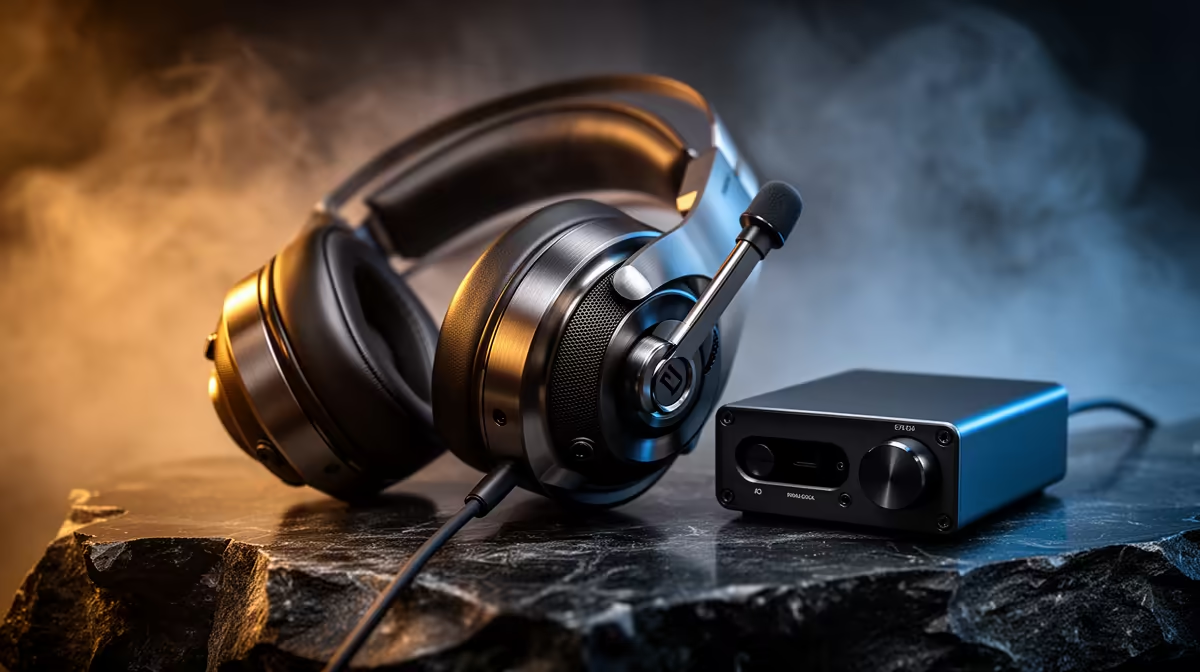
A balanced audio desk should improve what you hear and what everyone hears from you. An R10K audio setup needs its largest share directed at the weakest part of your current headset, microphone or source chain.
Quick Answer
Build an R10,000 audio desk by fixing the weakest signal first. Spend on the headset when comfort or playback is poor. Spend on the microphone when other people cannot understand you. Add a DAC or interface only when the chosen headphones, microphone, inputs, outputs, or monitoring route need it.
Compare named models in the gaming headset deals, then see which designs recur among headset best sellers. Use exact July 2026 prices for the complete path. An even three-way split is neat maths and weak buying advice.
Audit the audio desk you own
Record a normal voice sample with the keyboard, fans, game, and chat running. Listen for clipping, hum, room echo, plosives, and speech that changes when you lean back. Move the microphone closer, lower gain, and record again.
Play familiar music and a repeatable game scene through the current headset at a comfortable level. Check left-right balance, dialogue, bass masking, positional cues, and harsh peaks. Then wear it for an hour and note heat, clamp, pad contact, and glasses pressure.
Test the connection. An analogue headset may depend on the motherboard, controller, laptop, or external device. USB includes its own conversion path. Wireless adds a transmitter, battery, and radio environment. Noise can come from the source rather than the headset driver.
Write one problem for playback and one for capture. If neither is clear, keep the budget. New audio hardware should solve a named fault or unlock a defined workflow.
Keep those two notes beside the basket while you compare products.
Put the headset on the person, not the tier
Fit governs long-session value. Check weight, clamp, ear-cup depth, pad material, headband range, and whether the seal changes around glasses. Closed-back designs contain more sound and reduce room distraction. Open-back models leak sound and admit the room while often feeling airy.
Sound signature matters, but equalisation can adjust a capable headset within limits. Heavy bass may mask speech and footsteps. A bright tuning can become tiring. Start from the default, make small changes, and compare at matched volume.
Confirm platform connection, microphone support if included, cable length, replacement pads, and wireless battery behaviour. A high-end analogue headphone may need more output than a controller provides, while many efficient models do not need an external amplifier.
Do not buy from driver size or surround branding. Use reputable model-level measurements and your own comfort and direction tests.
Give the microphone a complete path
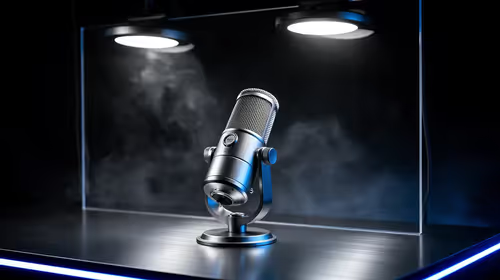
A USB microphone combines the capsule, preamp, converter, and connection. It can be a clean route for one voice. An analogue XLR microphone requires a compatible interface or mixer path, cable, stand, and perhaps phantom power depending on its design.
Choose pattern and sensitivity around the room. A condenser can capture detail and more environment. A dynamic microphone used close can raise the voice relative to the room. Neither label guarantees good speech.
Include the boom arm or stand, thread compatibility, shock mount when needed, pop control, cable, and headphone monitoring. A microphone that consumes the whole allocation and sits thirty centimetres away on a short stand is an incomplete purchase.
Set gain from the loudest normal voice and leave headroom. Keep raw speech clean before adding suppression, gate, compression, or EQ. Processing cannot restore clipped words.
Know when the DAC or interface earns money
A DAC converts digital audio to analogue. A headphone amplifier raises and controls output for suitable headphones. These functions may share one box. An audio interface adds microphone or instrument inputs, preamps, conversion, monitoring, and outputs according to the model.
Your PC, console, headset, or USB microphone already contains conversion somewhere. Add another device when the current output has audible noise after diagnosis, lacks volume for the exact headphones, needs a physical control, or cannot provide the required inputs and monitoring.
Do not expect a DAC to improve a USB headset whose audio path bypasses it. A console may support only selected USB audio devices. Confirm current platform and software support.
For one USB microphone and one efficient headset, the built-in paths may be enough. Cutting the external box can protect budget for the transducers, mount, room treatment, or simply leave money unspent.
Build three different R10,000 baskets
The playback basket keeps a working microphone and prices a comfortable named headset plus only the source device it requires. The capture basket keeps working headphones and builds the complete microphone, stand, cable, and monitoring route.
The balanced basket replaces both when matched tests prove both weak. It adds an interface only if the chosen microphone or headphones demand one. Use current named July 2026 prices and written compatibility.
Include delivery conditions, adapters, replacement cable needs, desk-clamp clearance, and platform support. Avoid a generic one-third allocation because product combinations do not divide that way.
Leave room for a return or fit problem under the current terms. Headset comfort and microphone-room interaction are personal. Keep packaging and do not modify the product before deciding.
Arrange the desk as an audio system
Place the microphone near your mouth and outside the direct breath path. Keep the rear rejection pointed towards the main noise when the pickup pattern supports it. Isolate the mount from keyboard vibration.
Route the headset cable away from mouse movement and chair wheels. Place a wireless transmitter in the open. Keep an interface reachable without forcing the microphone cable across the desk.
Separate signal and power cables where practical and test for hum with the full PC load. Use direct supported ports as the troubleshooting baseline. Label input and output devices in software so updates do not switch the stream to a webcam microphone.
FAQ
Should I split R10,000 evenly between headset, mic, and DAC?
No. Build the exact playback and capture paths. Spend according to the proven problem and omit a DAC or interface when the chosen devices do not need one.
Does every good headset need a DAC?
No. Many headsets include USB conversion or run well from supported built-in outputs. Add external hardware for a measured noise, power, control, input, or monitoring need.
Should the microphone cost as much as the headset?
Price does not need to match. The room, stand, distance, pattern, and gain affect capture. Buy a complete microphone path that produces clear speech, then choose playback for comfort and use.
Record and listen to your current desk, name the weakest signal, and build the July 2026 audio basket around that fault instead of an even split.