


PCIe 5.0 vs PCIe 4.0 for Video editing in 4k in SA
PCIe 5.0 vs PCIe 4.0 for video editing in 4k is mainly about fit, features, compatibility, cost, and upgrade path, not one automatic winner. SA buyers should match the choice to the setup.
Read moreBetween a R15K and a R40K racing simulator rig, the extra spend mainly buys torque, feedback resolution and PC headroom rather than a completely different racing experience. Evetech stocks both tiers, making the honest gap easy to see side by side.
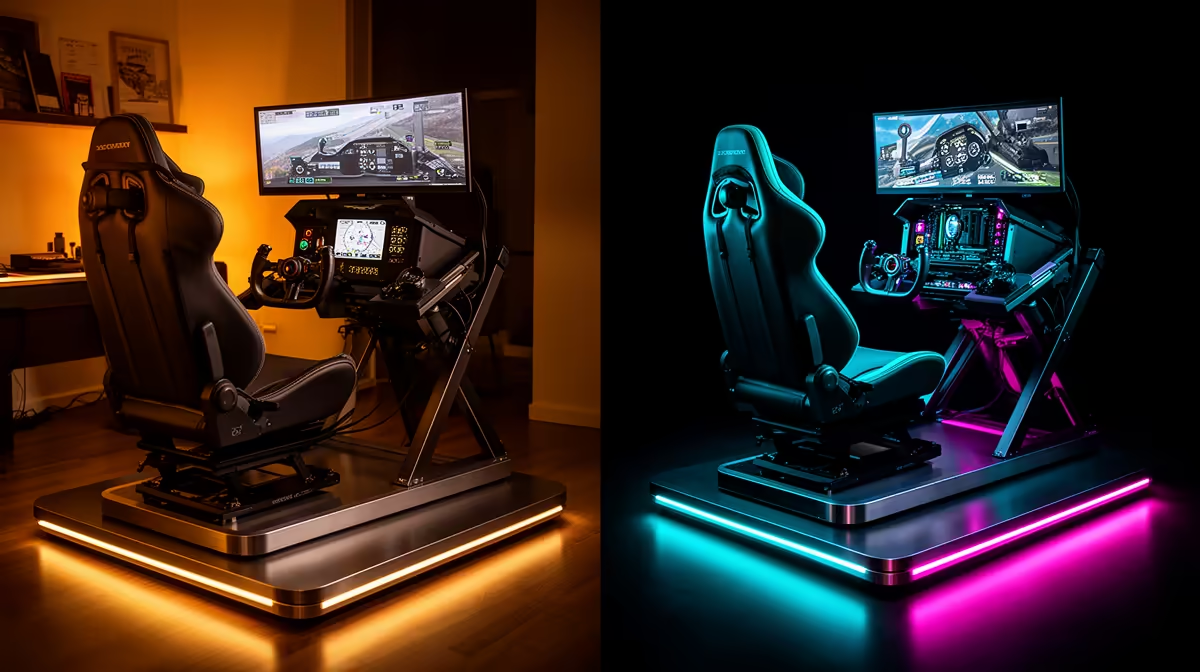
Moving from a R15,000 rig ceiling to R40,000 does not replace sim racing with another hobby. You still steer, brake, watch the track and practise. The extra money can buy stronger and cleaner force feedback, better braking, rigid mounting, wider vision and PC headroom. Its value depends on which of those limits your current laps.
At the lower ceiling, protect a stable PC or console, genuine force feedback, pedals and a secure mount. At the higher ceiling, improve the pedal and cockpit structure first, then add direct drive, display width or PC performance where the evidence points. Compare complete named July 2026 baskets. The title figures are budget limits, not category prices.
Evetech's sim-racing selection helps you map both complete rungs. A cockpit that will also support a yoke or throttle should include the flight-simulator equipment in its mounting plan.
The R15,000 basket needs a compatible platform, wheel, pedals and mounting. If the PC or display sits outside the total, state that.
A gear-drive wheel can deliver useful feedback. Entry pedals can work when they and the chair stay fixed.
One correctly placed monitor is enough. Spend time on field of view, steering calibration and stable frame time.
Fix movement. A strong wheel stand or cockpit links the seat, wheel and pedals so every input starts from the same position.
Improve braking when the stock pedal has become the consistency limit. A load cell measures force and needs that rigid frame.
Only then add a stronger base or display path. More torque on a loose table magnifies the wrong thing.
Direct drive removes gears and belts between the motor and steering shaft. It can deliver quicker detail and more force headroom.
The benefit is clearer tyre load, small corrections and distinct peaks when settings avoid clipping. It is not a guarantee of faster laps.
Use enough torque for information and comfort. Maximum output increases mount load and fatigue.
Stock travel-based pedals estimate input from position. A load-cell brake measures force, which can be easier to repeat through trail braking.
Hydraulic mechanisms can shape pressure and travel further, but setup and maintenance rise. They belong only when the rig and driver can use the difference.
Compare valid-lap spread over a stint. One late-braking personal best proves little.
The lower rig can use a desk clamp and pedal stop. The higher rig can fund a permanent cockpit, adjustable seat and rigid pedal tray.
Comfort matters across a league race. Set wheel height, distance, back support and pedal reach before buying accessories.
Measure doorways, floor space and monitor clearance. A cockpit becomes furniture.
A single monitor keeps PC load and space manageable. An ultrawide, triples or VR can expand vision and immersion.
Triples need panel matching, a large stand and GPU output. VR adds headset comfort, tracking and a stable high-refresh render target.
The R40,000 ceiling cannot cover every premium branch at once. Choose the one tied to your simulator and room.
Higher spend can improve CPU performance for full grids and GPU performance for resolution, mirrors or weather. It can also provide enough power, cooling and storage for later display changes.
Do not buy vague future-proofing. Set the next simulator, monitor and frame target.
Measure the busy race. A stronger PC has value when the frame-time log proves it.
Hardware can make inputs clearer and more repeatable. It cannot teach racing lines, reference points or race craft.
A skilled driver on the lower rig can beat a beginner on the higher one. The premium setup can reduce distractions and make practice more consistent.
Judge comfort, mistakes and lap spread beside the fastest time.
Choose parts at R15,000 that can carry forward: a supported wheel ecosystem, a stand rated for the next base and pedals that can connect to the future platform.
Keep the PC power supply, case and board capable of the likely GPU or storage step.
Avoid buying a disposable spring-centred wheel or a stand that cannot hold the planned brake.
The higher ceiling can make a used cockpit or wheel base tempting. Test the exact unit under load, in both steering directions and after it warms. Check pedal sensors, clamp threads, cables, power supply and every button.
Missing proprietary parts can erase the saving. Confirm current drivers, platform support and whether the warranty follows the product.
For a cockpit, inspect welds, profile fasteners, seat rails and mounting plates. Measure the frame in its assembled state. A bargain that cannot pass the doorway has no place in either basket.
The lower rig may clamp to a desk and pack away, which adds setup friction before each race. The higher rig can stay calibrated, seated and ready.
That convenience can increase practice time more than another torque step. Record how often a stored wheel remains unused because the room needs rearranging.
A permanent cockpit also consumes space every day. Choose the arrangement that creates more actual laps in your home, then judge the hardware difference.
Include assembly and calibration time too. A complex top-tier station can spend its first weekend in boxes, while the lower rig may be racing the same evening.
List every part included in each rig. Add seat, mount, display, PC and delivery only where the tier claims them.
For every rand number, use an exact named product from the approved pack and label it as of July 2026. Do not use an accessory minimum.
The extra R25,000 should map to specific improvements you can point at.
It can feel smoother, stronger and more stable, though the core racing task remains the same.
Fix mounting and braking first, then choose feedback, display or PC headroom from the measured limit.
Yes when the ecosystem, stand and PC were chosen for the later base, pedals and display path.
Put the R15,000 and R40,000 rigs in two complete named baskets and pay the delta only for mounting, braking, vision or frame-time gains you can test.
It can feel smoother, stronger and more stable, though the core racing task remains the same.
Fix mounting and braking first, then choose feedback, display or PC headroom from the measured limit.
Yes when the ecosystem, stand and PC were chosen for the later base, pedals and display path. {{PRODUCTS: { facets: { query: "racing simulator" }, limit: 12, title: "R15K vs R40K Sim Rigs", style: "4" } }}
PCIe 5.0 vs PCIe 4.0 for video editing in 4k is mainly about fit, features, compatibility, cost, and upgrade path, not one automatic winner. SA buyers should match the choice to the setup.
Read more
Wi-Fi 7 vs Wi-Fi 6e for competitive esports comes down to router support, latency goals, device compatibility, and coverage. SA buyers should match the choice to the real network setup.
Read more
ATX 3.1 vs ATX 3.0 for mMO and live-service games buyers - what changes is mostly about compatibility, budget, upgrade path, and setup fit. SA buyers should check device support and real needs before expecting a clear win from either option.
Read more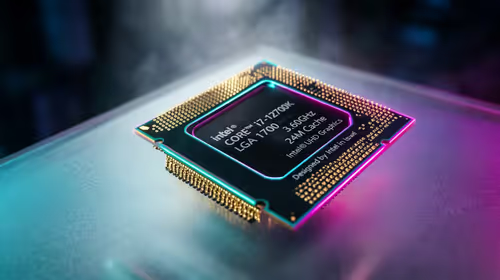
LGA 1851 vs LGA 1700 can affect Twitch and YouTube streaming when gaming and encoding share CPU resources. For SA creators, the real-world difference depends on encoder choice, memory support, motherboard cost, thermals, and upgrade plans.
Read more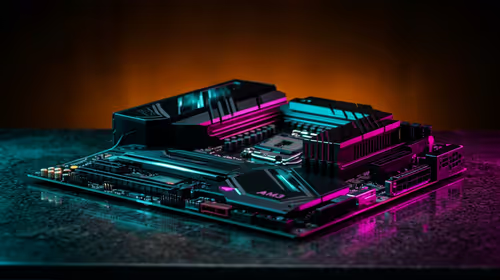
X870E vs X670E for aaa single-player gaming is mainly about fit, features, compatibility, cost, and upgrade path, not one automatic winner. SA buyers should match the choice to the setup.
Read more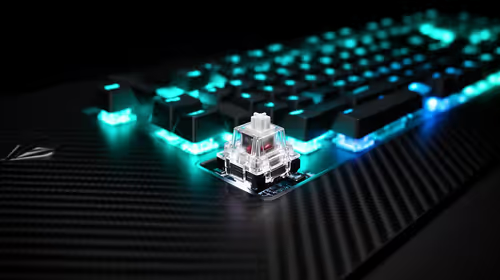
Hall Effect switches vs Mechanical switches for mMO and live-service games is mostly about compatibility, budget, upgrade path, and setup fit. SA buyers should check device support and real needs before expecting a clear win from either option.
Read more
A fake 113GB GTA VI ISO reportedly used empty padding around a small malware payload. SA gamers should delete unofficial builds, keep Windows security active and wait for official channels.

Wi-Fi 6E vs Wi-Fi 6 matters for 4K video editing when files move across a network. The real-world difference between Wi-Fi 6E and Wi-Fi 6 for video editing in 4K depends on NAS access, cloud uploads, router range, and SA creator workflows.

The difference between PCIe 5.0 and PCIe 4.0 for SA gamers is mostly bandwidth headroom. Compare GPU slot needs, NVMe speed, motherboard support, and upgrade timing before paying extra for a newer platform.

Gaming PC stuck pixel checks in South Africa should confirm the monitor fault first. Use colour tests, screenshot comparison, cable swaps, display menu checks, and clear photos before deciding on support.

Shokz OpenFit Air 2 earbuds weigh 7.2g each and use a redesigned dual-driver open-ear layout. SA buyers should choose them for comfort and awareness, not maximum isolation.

AMD's current driver now lists a Radeon RX 9050 4GB, while product coverage details a narrowed memory system. SA buyers should weigh the low VRAM ceiling against current local Radeon options.

Samsung Display has demonstrated a 16-inch 2.5K OLED laptop panel running at 300Hz. SA buyers should wait for a named notebook, full panel specifications and a local price before planning an upgrade.

Microsoft says some Windows 11 game crashes after recent updates are linked to RGB-related drivers. Affected SA gamers should confirm the update and driver before using the published registry workaround.
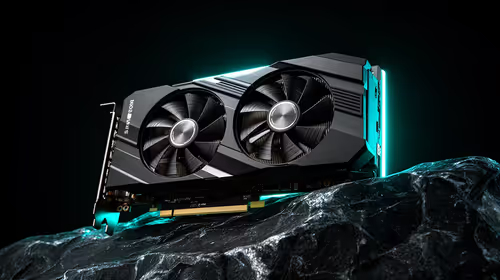
RTX 5090 on a 650W PSU is a tight pairing with very limited headroom. For SA gaming PCs, focus on total system draw, PSU quality, connector support, CPU choice, and avoid OC plans unless the full build is carefully power-limited.
PCIe 5.0 vs PCIe 4.0 for video editing in 4k is mainly about fit, features, compatibility, cost, and upgrade path, not one automatic winner. SA buyers should match the choice to the setup.
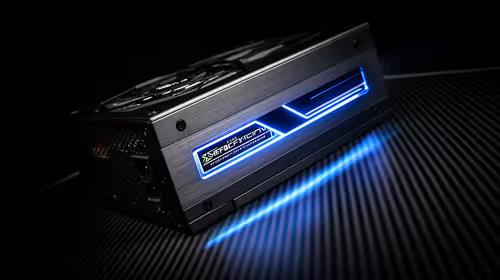
850W PSU safety for RTX 5090 is plausible with a quality unit and balanced parts. In SA, confirm connector support, CPU power draw, case airflow, PSU age, and spare capacity before building around 850W.
Wi-Fi 7 vs Wi-Fi 6e for competitive esports comes down to router support, latency goals, device compatibility, and coverage. SA buyers should match the choice to the real network setup.