Buying now is worthwhile when the available laptop meets the course and waiting would block assignments. Waiting is worthwhile when today's option misses a hard requirement and the student has a reliable bridge. The R5,200 figure alone cannot make that decision.
Quick Answer
First confirm the device value on the student's 2026 NSFAS and institution record. University guidance places a device within the learning-material allowance; it does not promise every student a separate R5,200 laptop payment.
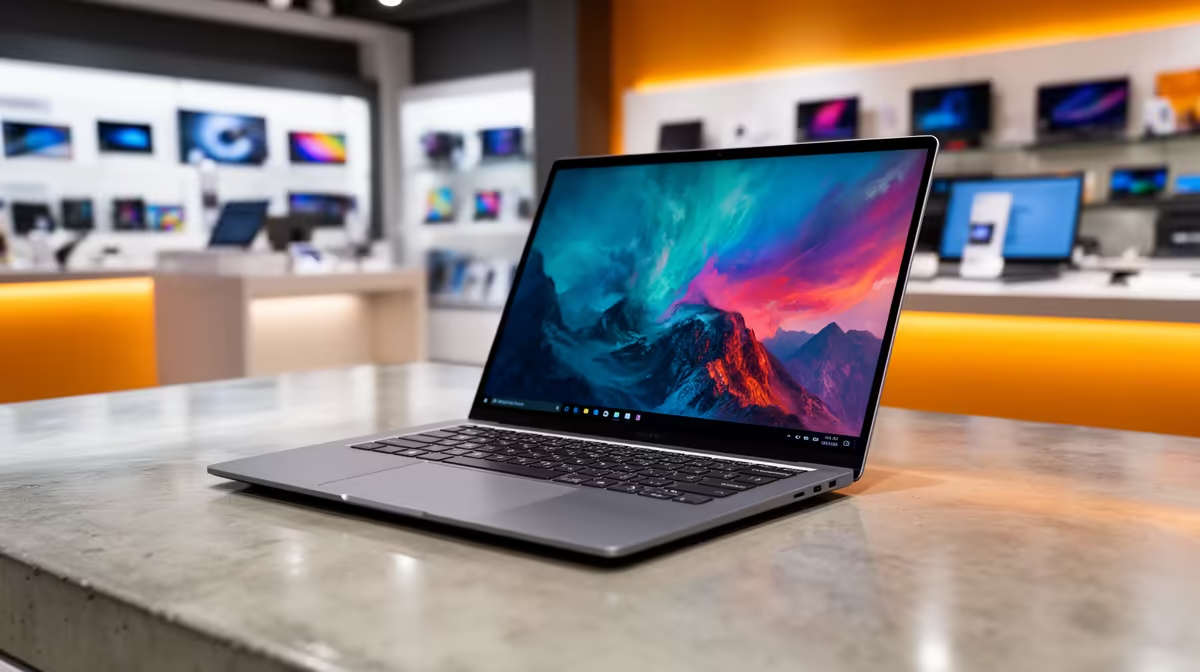
Then compare the machine available now with the course specification. July 2026 pricing placed the ASUS Vivobook Go 15 at R7,999. The named hardware combined a Core i3 with 256GB SSD capacity and 8GB memory. Against a confirmed R5,200 contribution, that example leaves R2,799.
If campus labs or a family laptop can cover four weeks, saving R700 a week would close that example gap with R1 left over. If the student has no dependable access, a modest eligible machine that meets the course can be more valuable today.
Browse popular laptop choices and current laptop deals only after the supplier and payment process are clear.
Decision 1: Does the Current Laptop Meet the Course?
Get the first- and second-year application list. Check operating system, memory, storage, processor and graphics. Ask the faculty whether specialist work happens in campus labs.
For essays, research and Office, 8GB RAM and SSD storage can be enough. For Revit, SolidWorks, virtual machines or video editing, the same machine may become a short-lived compromise.
If the current choice misses a published minimum, waiting for the right specification protects the student from paying twice. If it meets the work, delaying for an undefined upgrade can cost study time without a clear gain.
Decision 2: What Happens During the Wait?
Write down every task the student must complete before the proposed purchase date. Name the device or lab that will handle it. Check lab hours, booking pressure, installed software and file rules.
A borrowed laptop is useful only when the owner agrees to the schedule and the software can be installed. Protect the owner's files and accounts. Set up a separate user profile where possible.
A phone can receive notices and edit a small document, but it is weak for research, spreadsheets and formal submissions. Do not describe a phone as a complete semester plan.
Decision 3: Is the Better Laptop Defined?
Waiting needs a named target. "Something better" can drift for months. Record the exact model, course benefit, price and date.
R8,499 was the July 2026 price of the ASUS Vivobook X1504ZA. Its 512GB SSD accompanied 8GB RAM and a Core i3 processor. Compared with the R7,999 example, R500 buys an extra 256GB of listed storage. That can be a clear reason to wait.
As of July 2026, R9,499 bought the named Ninkear A15 Pro configuration. It paired a Ryzen 5 5500U with 16GB memory and a 512GB SSD. Its extra memory can matter for coding and heavier multitasking. A general humanities student may gain less from the step.
Build a Four-Week Wait Test
Use a short trial rather than an open delay. At the start, confirm the target and final quotation. Divide the gap by four and mark each weekly deposit.
For the R2,799 example, three deposits of R700 and one of R699 close the difference. Choose a longer schedule when that amount harms essential student costs.
At the end of each week, ask whether the bridge failed any assignment. Record missed lab access, software problems and travel time. Those costs belong in the decision.
Check the target price once a week. A discount reduces the gap. A stock change triggers the backup model comparison, not a random purchase.
When Buying Now Wins
Buy now when the machine passes the course checklist, the payment route accepts it, and the student lacks dependable access. Immediate ownership gives time to learn the software, create backups and solve setup problems before exams.
It also wins when the expected upgrade is cosmetic. A premium finish, larger screen or faster refresh rate has little academic value for a document-centred degree.
The current model should still have a credible warranty and enough software support for the expected use. Urgency does not excuse an eMMC drive, 4GB memory ceiling or unclear ownership.
When Waiting Wins
Wait when a defined amount reaches 16GB memory required by the course, dedicated graphics for a named application, or a 512GB SSD the student will fill. The improvement should solve a problem you can describe.
Wait when the current R5,200-range option is used hardware with poor battery health, no invoice or management locks. A low price cannot make ownership evidence optional.
Wait when registration or NSFAS processing is incomplete and the supplier route is uncertain. Ordering first can leave the student responsible for a purchase the funding process will not recognise.
Check Other Support
Ask the institution about loan devices, campus labs, faculty assistance and external bursaries open in 2026. Each route can have eligibility and combination rules. Get decisions in writing.
A family contribution can shorten the wait where the payment system accepts a top-up. Confirm how the invoice and refund will show the funded and personal portions.
Refurbished business hardware can also close the specification gap. Demand a battery report, SSD health, clean Windows setup, invoice and written warranty. Compare its total cost with the named new target.
Protect the Deadline
Set a latest acceptable purchase date based on assignments, not hope. If the savings goal is missed, choose between the approved backup and an extended bridge with proven access.
Allow time for delivery, Windows updates and software installation. A laptop arriving the night before a submission is not truly available for that task.
At handover, match the box model, invoice and system information. Test keyboard, webcam, Wi-Fi, charging and every port while return options are open.
FAQ
Should a student spend R5,200 at once?
Only after confirming the value, permitted use and eligible supplier. Buy when the selected machine meets the course and the payment route.
Is borrowing a good bridge?
It can be for a defined period with dependable access and the required software. Agree the schedule and protect the owner's data.
When is waiting the right call?
Wait when a date-bound plan reaches a requirement the current option misses and the student can complete coursework during the delay.
Compare the course-ready laptop available now with one named better target, then set a four-week bridge and a firm decision date.