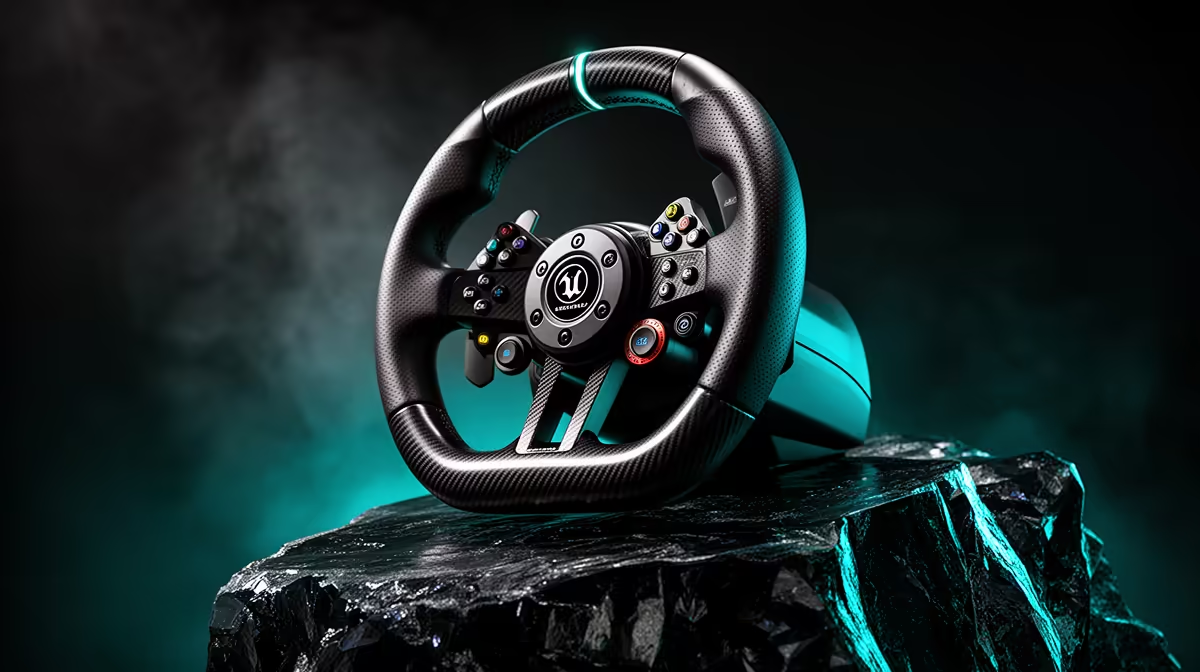
A racing wheel has no practical role in Blender. It is worthwhile only when the same user plays supported driving simulators often enough to justify the cost, mounting and floor space. Blender budget should first cover processor, graphics, memory, storage and input tools.
Separate the workstation and cockpit
Open the largest Blender scene, render it and identify the real bottleneck. Then check wheel support in the intended games, desk clamp clearance, pedal position and force-feedback power. Make sure the controls can be removed without disturbing a drawing tablet or colour display.
A rigid mount affects simulation more than visual styling. Protect the desk surface, route cables away from chair wheels and consider neighbour noise. Borrowing a wheel can reveal whether the interest persists after setup effort.
Force-feedback wheels may transmit vibration through a desk into the drawing tablet, microphone or neighbouring room. Test a temporary mount at moderate force before buying a cockpit. Protective pads can reduce movement, but the desk must still remain structurally secure.
Confirm that pedal placement leaves a safe path to the workstation and does not force an awkward seated posture during creative work.
No racing-wheel SKU or confirmed price appears in the supplied product facts. Compare supported titles, force feedback, mounting, pedal set, drivers, warranty and return terms.
Balancing Blender with racing games? > Browse Evetech controls after checking compatibility.