


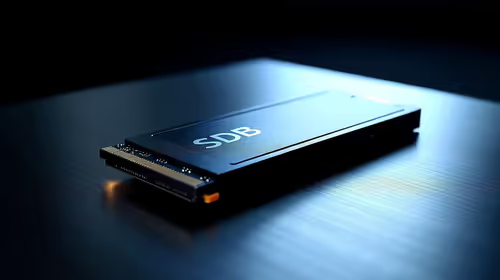
PCIe 5.0 vs PCIe 4.0 for Video editing in 4k in SA
PCIe 5.0 vs PCIe 4.0 for video editing in 4k is mainly about fit, features, compatibility, cost, and upgrade path, not one automatic winner. SA buyers should match the choice to the setup.
Read moreAudio choice for Rand-Conscious Earphone Buying Guide: When starts with IPX4 splash resistance. For rand-conscious earphone buying, check device support, secure fit and call controls before judging bass.
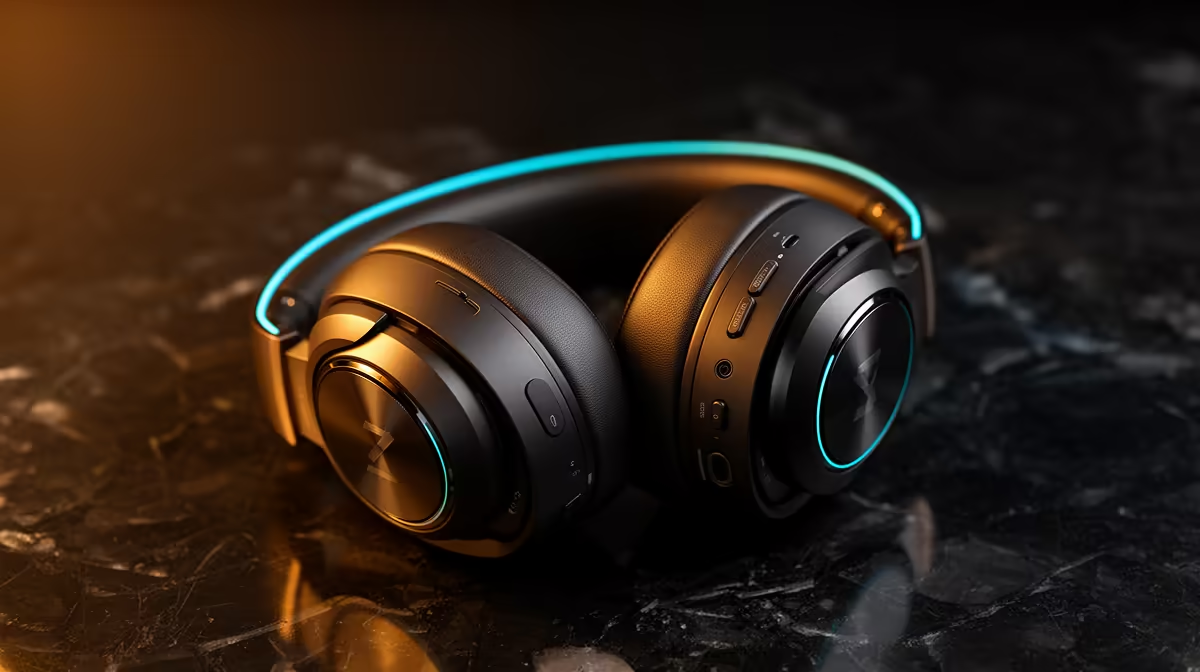
With low-latency wireless, THX spatial audio and IPX4 in earphone buying, a lower-priced option can still be the wrong daily choice if it creates dropouts between devices. Check 50 ms low-latency check, THX spatial audio and IPX4 sweat resistance before treating value as only a number.
For most local buyers, low-latency wireless, THX spatial audio and IPX4 in earphone buying comes down to three checks: 50 ms low-latency check, THX spatial audio and IPX4 sweat resistance. With low-latency wireless, thx spatial audio, clear support beats vague claims before changing accessories.
Begin with the device chain you already use for low-latency wireless, THX spatial audio and IPX4 in earphone buying. If 50 ms low-latency check is unclear, the rest of the comparison becomes guesswork, especially when commuting demands secure fit. Check THX spatial audio for low-latency wireless, THX spatial audio and IPX4 in earphone buying on the actual phone, laptop, console or desk where the product will live. For local handheld players, IPX4 sweat resistance is the detail that often decides whether dropouts between devices stays away.
Do not separate comfort from compatibility when judging low-latency wireless, THX spatial audio and IPX4 in earphone buying. A product can list 50 ms low-latency check and still feel wrong if THX spatial audio is awkward on your device or if IPX4 sweat resistance adds friction to commuting. For low-latency wireless, THX spatial audio and IPX4 in earphone buying, local buyers may use the same gear across work, study and entertainment, so the practical winner travels between those roles cleanly. With low-latency wireless, THX spatial audio and IPX4 in earphone buying, that matters more than a rarely used feature.
Keep the decision grounded in the first week of ownership for low-latency wireless, THX spatial audio and IPX4 in earphone buying. You will notice 50 ms low-latency check and THX spatial audio quickly, but IPX4 sweat resistance decides whether the product stays convenient after the novelty fades. With low-latency wireless, thx spatial audio, clear support beats vague claims on the main device. For low-latency wireless, THX spatial audio and IPX4 in earphone buying, that is usually better than chasing the longest feature list.
Compare low-latency wireless, THX spatial audio and IPX4 in earphone buying on your main device before choosing. IPX4 sweat resistance should support low-latency wireless, THX spatial audio and IPX4 in earphone buying in commuting, not complicate it.
Good value for low-latency wireless, THX spatial audio and IPX4 in earphone buying means 50 ms low-latency check, THX spatial audio and IPX4 sweat resistance all support the way you actually use the product. For this audio setup, Rand-Conscious Earphone 2.4GHz THX Spatial should make repeat reliability easier to repeat.
Step up when the stronger option removes dropouts between devices or improves secure fit in commuting. If the upgrade only adds unused extras to low-latency wireless, THX spatial audio and IPX4 in earphone buying, stay simpler.
Start with 50 ms low-latency check, then use THX spatial audio as the practical filter. IPX4 sweat resistance is the final check before comparing design details.
If your primary gaming is PC or console, 2.4GHz is worth R300-R500 more. The 40ms latency advantage over Bluetooth matters in ranked shooters and fighting game inputs.
Below R2,500 THX certification ensures validated spatial audio tuning.
Choose IPX4 if you exercise, commute in SA summer heat, or game in a warm room. Non-rated earphones are fine for air-conditioned desk-only use without physical activity.
R1,000-R1,500 buys solid mid-tier Bluetooth 5.3 earphones with IPX4, 10-hour battery and clear call quality.
A 25-hour case extends between-wall-charge intervals by 10 hours of bud use.
aptX Adaptive reduces Bluetooth latency to under 50ms and improves audio resolution to 24-bit.
PCIe 5.0 vs PCIe 4.0 for video editing in 4k is mainly about fit, features, compatibility, cost, and upgrade path, not one automatic winner. SA buyers should match the choice to the setup.
Read more
Wi-Fi 7 vs Wi-Fi 6e for competitive esports comes down to router support, latency goals, device compatibility, and coverage. SA buyers should match the choice to the real network setup.
Read more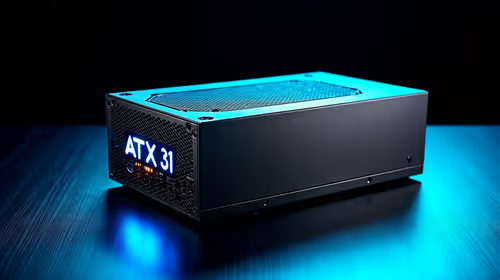
ATX 3.1 vs ATX 3.0 for mMO and live-service games buyers - what changes is mostly about compatibility, budget, upgrade path, and setup fit. SA buyers should check device support and real needs before expecting a clear win from either option.
Read more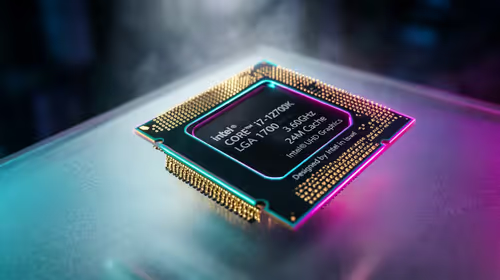
LGA 1851 vs LGA 1700 can affect Twitch and YouTube streaming when gaming and encoding share CPU resources. For SA creators, the real-world difference depends on encoder choice, memory support, motherboard cost, thermals, and upgrade plans.
Read more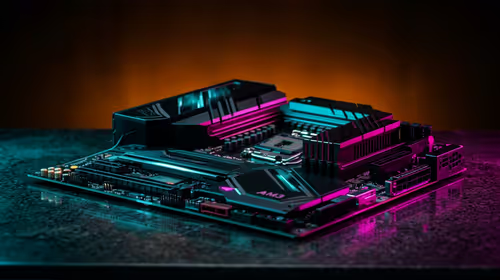
X870E vs X670E for aaa single-player gaming is mainly about fit, features, compatibility, cost, and upgrade path, not one automatic winner. SA buyers should match the choice to the setup.
Read more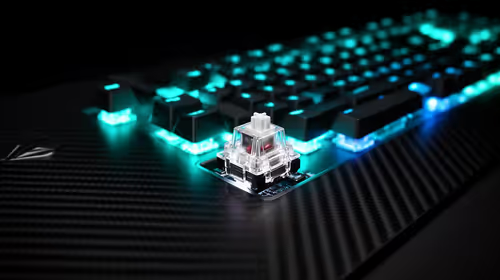
Hall Effect switches vs Mechanical switches for mMO and live-service games is mostly about compatibility, budget, upgrade path, and setup fit. SA buyers should check device support and real needs before expecting a clear win from either option.
Read more
A fake 113GB GTA VI ISO reportedly used empty padding around a small malware payload. SA gamers should delete unofficial builds, keep Windows security active and wait for official channels.
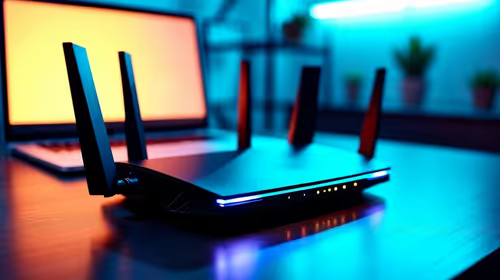
Wi-Fi 6E vs Wi-Fi 6 matters for 4K video editing when files move across a network. The real-world difference between Wi-Fi 6E and Wi-Fi 6 for video editing in 4K depends on NAS access, cloud uploads, router range, and SA creator workflows.

The difference between PCIe 5.0 and PCIe 4.0 for SA gamers is mostly bandwidth headroom. Compare GPU slot needs, NVMe speed, motherboard support, and upgrade timing before paying extra for a newer platform.
Gaming PC stuck pixel checks in South Africa should confirm the monitor fault first. Use colour tests, screenshot comparison, cable swaps, display menu checks, and clear photos before deciding on support.

Shokz OpenFit Air 2 earbuds weigh 7.2g each and use a redesigned dual-driver open-ear layout. SA buyers should choose them for comfort and awareness, not maximum isolation.

AMD's current driver now lists a Radeon RX 9050 4GB, while product coverage details a narrowed memory system. SA buyers should weigh the low VRAM ceiling against current local Radeon options.

Samsung Display has demonstrated a 16-inch 2.5K OLED laptop panel running at 300Hz. SA buyers should wait for a named notebook, full panel specifications and a local price before planning an upgrade.

Microsoft says some Windows 11 game crashes after recent updates are linked to RGB-related drivers. Affected SA gamers should confirm the update and driver before using the published registry workaround.
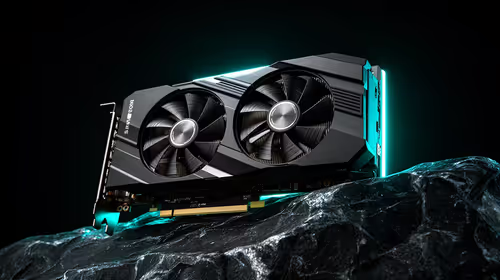
RTX 5090 on a 650W PSU is a tight pairing with very limited headroom. For SA gaming PCs, focus on total system draw, PSU quality, connector support, CPU choice, and avoid OC plans unless the full build is carefully power-limited.
PCIe 5.0 vs PCIe 4.0 for video editing in 4k is mainly about fit, features, compatibility, cost, and upgrade path, not one automatic winner. SA buyers should match the choice to the setup.
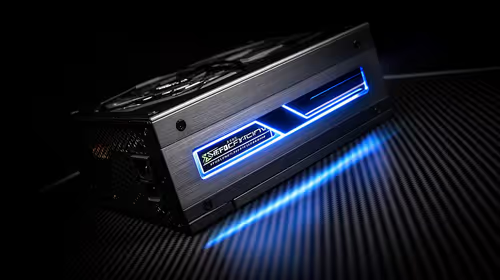
850W PSU safety for RTX 5090 is plausible with a quality unit and balanced parts. In SA, confirm connector support, CPU power draw, case airflow, PSU age, and spare capacity before building around 850W.
Wi-Fi 7 vs Wi-Fi 6e for competitive esports comes down to router support, latency goals, device compatibility, and coverage. SA buyers should match the choice to the real network setup.