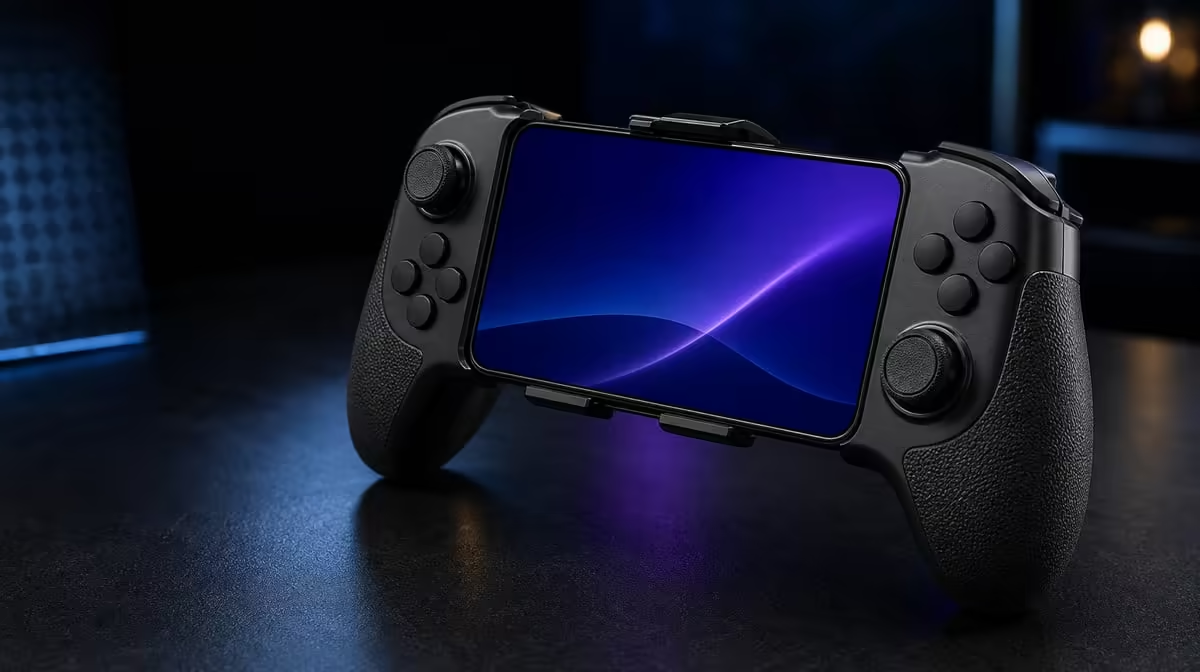
A premium feature is valuable only when it changes a session for the better. The question which controller features deliver real value should be answered through connection flexibility, input consistency, useful motion, informative feedback and customisation that solves a recurring problem. At R699, the GameSir X5s places tri-mode connectivity, Hall Effect sticks, 6-axis gyro and HD Vibration below a R1,000 ceiling.
Quick Answer
Hall sticks deliver broad value by addressing contact-related drift wear, while tri-mode connectivity matters to players who move between Android and PC. Gyro, HD Vibration, swappable ABXY buttons and Turbo earn their place only in games and routines that use them. The R699 GameSir X5s is a strong value reference, with the missing 2.4GHz dongle counted separately.
🧲 Start with features used every minute
Stick input affects movement and aim throughout most controller games. Hall Effect sensing measures position magnetically, avoiding the rubbing potentiometer tracks linked with a common source of drift. That makes anti-drift Hall sticks a practical hardware benefit rather than a decorative item.
The X5s includes Hall sticks at R699. Buyers should still test neutral input and adjust deadzone carefully, because calibration, software and physical condition remain relevant. The feature delivers value through improved resistance to contact wear, not through an impossible promise that no stick can ever show unwanted movement.
Analog triggers can also be part of the control foundation. They report graduated travel where a game supports it, allowing more than a simple pressed state. Test sticks and triggers separately because they represent different inputs and may be interpreted differently by each title.
Give core controls the highest score only after they pass real tests. A Hall label is meaningful, but a stable centre and comfortable response are the evidence a player feels. A trigger earns value when a regular game uses its graduated travel. This method keeps the scoring tied to play rather than prestige.
The Evetech gaming controller range is the useful comparison surface for these core controls.
🔌 Value flexibility by the switches you make
Tri-mode connectivity is worth paying for when a controller genuinely moves between devices or playing positions. Bluetooth provides a receiver-free Android route. USB-C creates a direct wired path. The 2.4GHz option can serve a receiver-based arrangement when compatible extra hardware is present.
The X5s dongle is not included, so the R699 price should not be treated as the full 2.4GHz setup cost. This exclusion can matter greatly to a PC player who needs that mode and barely at all to someone who uses Bluetooth on mobile and USB-C at a desk.
Count the transitions in a normal week. If the controller changes device frequently, multiple connection choices reduce friction and provide troubleshooting alternatives. If it remains paired to one phone, the extra modes are insurance rather than daily value.
List each mode with a location and device. Bluetooth may serve an Android commute, USB-C a fixed desk and 2.4GHz a planned PC arrangement. Any mode without a scenario receives a lower weight. This makes tri-mode value personal without denying its technical flexibility.
Do not confuse controller response with internet response. Tri-mode can help compare the local input route, while South African server distance and network conditions affect a separate path. A local menu test protects the connection feature from being blamed for online delay.
🧭 Make motion and feedback prove themselves
Six-axis gyro adds physical movement as an input in supported games. It can improve fine aim when paired with broad Hall-stick turns, but only if the title recognises external motion data and the player enjoys the technique. Calibrate on a still surface and begin with moderate sensitivity.
HD Vibration can deliver varied physical cues when the game sends detailed feedback. More intensity is not automatically more value. A useful profile distinguishes events without disturbing grip or motion correction. If vibration fights precise gyro aim, lower it for that title rather than assigning the same setting everywhere.
These features may feel premium because they add another sensory or control channel. Their real value is conditional. A supported game and a repeatable use case must exist. Without those, Hall sticks or a suitable connection may deserve more weight.
Run a one-week thought experiment. Count the sessions where motion aim would be enabled and the moments where distinct vibration helps interpret an event. If both features appear regularly, they strengthen the R699 package. If neither enters the routine, do not pretend they carry the same weight as the sticks.
For the surrounding mobile setup, browse Evetech gaming accessories after deciding whether motion and feedback make the controller shortlist.
🧩 Treat customisation as saved effort
Swappable ABXY buttons can align visible labels with a preferred convention. Software mapping changes the transmitted action. Turbo repeats a suitable input. These are three separate tools, and their value appears when they reduce a recurring inconvenience.
Record the original cap layout, save a default profile and alter one action at a time. A player who moves between Android and PC may benefit from distinct mappings. Someone using a single familiar title may never need to change the defaults.
Software customisation also supports measured aim tuning, but it cannot fix a poor wireless connection or create controller support in a game. Connection, game recognition and default input should pass before a profile is changed.
A useful scoring method gives features different weights. Mark essentials that affect every session, frequent benefits used weekly and optional extras used occasionally. For one player, Hall sticks and Bluetooth may lead. For another, gyro and physical ABXY changes may justify the whole package.
Add one column for friction. A feature may be useful yet demand an extra accessory, game support or repeated setup. The absent 2.4GHz dongle belongs in that column for receiver users. Gyro depends on game support. Software mappings require profile discipline. Naming friction makes the final score more realistic.
Then write a decision sentence: "I would choose this controller because these three features solve these three jobs." If that sentence cannot be completed, the feature list has not yet become value. Return to the essential, frequent and optional groups instead of using price alone as the conclusion.
At R699, the X5s demonstrates that a broad feature set does not automatically require a four-figure price. It is worthwhile when several features cross from optional to useful for the buyer. The Evetech accessory favourites can supply broader context once that controller value has been established.
Frequently Asked Questions
Which feature has the broadest everyday value?
Hall Effect sticks are a strong candidate because stick input appears across many games and magnetic sensing addresses contact-related drift wear. Compatibility still comes first.
When does tri-mode justify its place?
When the player switches between mobile and PC routes or needs a wired comparison for troubleshooting. It has less daily value in a single-device routine.
Does HD Vibration improve every title?
No. The game must provide suitable feedback, and the chosen intensity must suit the player's grip and genre. Treat it as a supported experience rather than a universal upgrade.
How does R699 shape the value judgement?
It puts the GameSir X5s below R1,000 while including Hall sticks, gyro, vibration and tri-mode support. Remember that the 2.4GHz receiver is separate.
Ready to pay for features that solve real control problems?
Compare Evetech gaming controllers and rank each input, connection and tuning option by how often you will use it.