Quick Answer
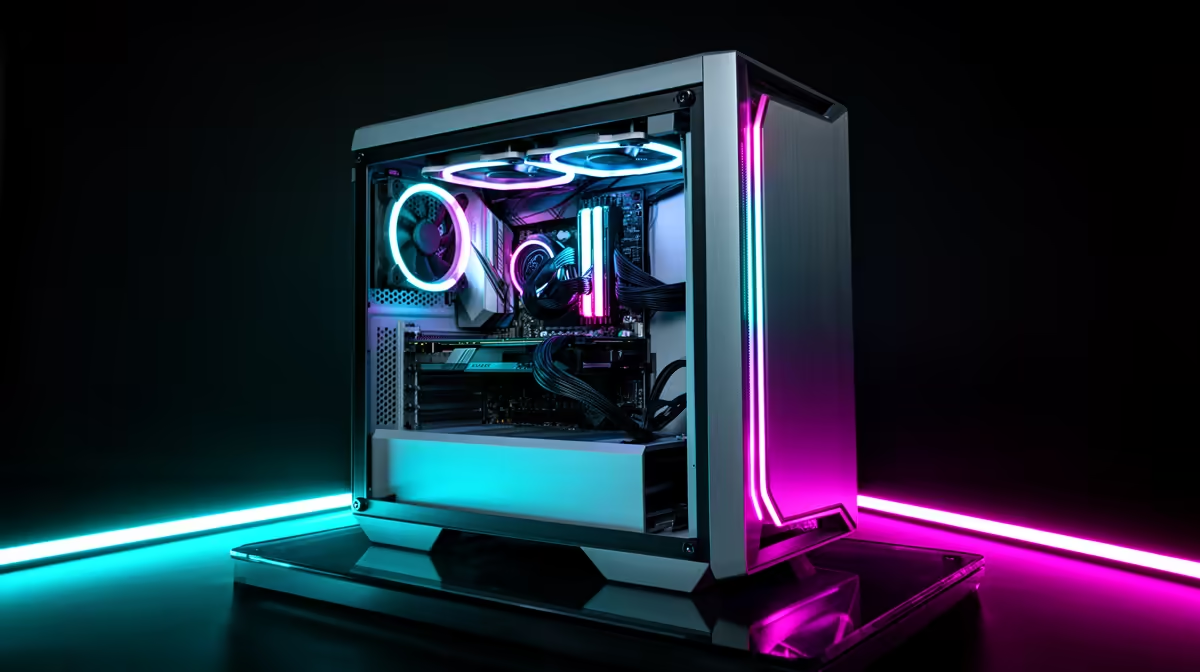
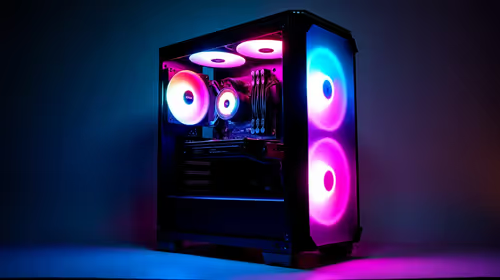
For rand-conscious South African builders, the most cost-effective ATX case tier is R2,000 to R3,500, which typically includes three to four ARGB fans, 360mm front radiator support, and 380mm or more GPU clearance. Spending below R1,500 risks losing front radiator support or cable management space; spending above R5,000 adds mainly aesthetic premium over functional gains.
Matching Case Budget to Total Build Spend 💰
PC case budget should scale proportionally with total build spend. A rough framework: allocate five to eight percent of total build cost to the case. On a R25,000 build that is R1,250 to R2,000, on a R40,000 build it is R2,000 to R3,200, and on a R60,000 flagship build it is R3,000 to R4,800. The case is the one component that does not directly affect gaming performance, so sizing it appropriately within total spend is sensible. Overspending on a R6,500 showcase case when the rest of the build is mid-tier is a misallocation, just as using a R900 budget case for a R70,000 flagship build leaves a premium system poorly housed.
Getting Cooling and Clearance Right Without Overspending 🔧
The two case specifications with the biggest practical impact are radiator support and GPU clearance. A case that supports a 360mm front radiator and offers 380mm GPU clearance at the R2,500 price point gives you the same thermal capability as a R5,000 case for those two specifications. Where the R5,000 case adds value is build quality, included fan quality, and aesthetic details. For a builder whose priority is gaming performance over showcase presentation, the R2,500 case with the right specs is the correct choice. Check the product listing for both figures rather than assuming price correlates directly with these specifications.
Included Fans as a Budget Multiplier 🌟
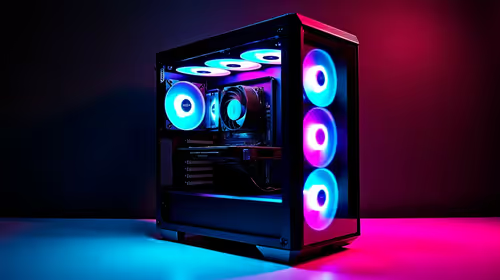
Cases that include three or four ARGB fans represent a genuine rand saving over cases sold without fans. At R300 to R500 per quality standalone ARGB fan, a case bundled with four fans effectively adds R1,200 to R2,000 of value over a bare case priced similarly. When comparing two cases at similar price points, prioritise the one with more and better-quality included fans, as the fans are components you will use daily and whose quality you will hear when the system is running. Fan bearing quality, CFM ratings, and noise levels are worth checking on the included fans specifically, not just accepting them as a minor bonus.
Compare Total System Cost, Not Just Case Price ⚡
When evaluating a case on a rand-conscious build, calculate total fan cost separately. A case at R2,800 that includes four ARGB fans costs effectively R1,600 to R1,800 in chassis value after crediting the fans. A bare case at R2,200 without fans requires R1,200 to R2,000 in fan purchases to reach the same fan count, making the bundle case the better value despite the higher sticker price.
FAQ
Is a R1,500 ATX case enough for a gaming build with a 360mm AIO?
Some R1,500 cases do support 360mm front radiators, but cable management space and included fans are usually more limited at this price.
Do I need to spend over R3,500 for a tempered glass side panel?
No, tempered glass side panels appear on ATX cases from around R1,200 upward. The quality of the glass, its thickness, and the panel latch mechanism improve with price, but basic tempered glass visibility is not a premium-only feature.
Which costs more over time: a cheap case upgraded later or a quality case bought once?
A quality case bought once is almost always cheaper over a three to five year period. Cheap cases often require replacement when a panel cracks, a latch breaks, or the cable management space proves inadequate for a component upgrade. A case in the R2,500 to R3,500 range bought once for a first build typically carries through two or three component upgrade cycles before replacement is needed.
Making every rand count on your gaming PC case?
Browse ATX gaming cases at Evetech across the R1,500 to R5,000 range to compare fan counts, clearance specs, and build quality at each tier.