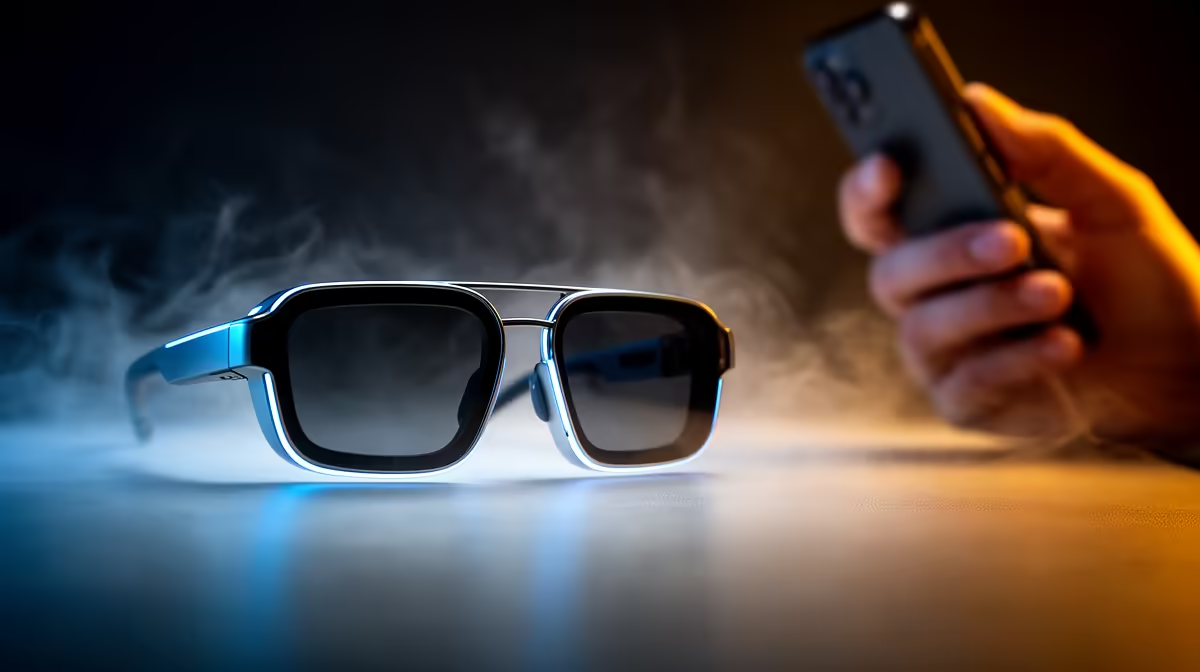
The pitch is seductive: a turn-by-turn arrow, an incoming message or a live translation floating in the corner of your vision, no phone in hand. The honest question behind Ray-Ban Display glasses vs just using your phone is whether a small in-lens screen genuinely changes your day, or whether it is a R14,000-plus answer to a problem your pocket already solves. The technology is real and clever. Whether the gain justifies the cost and the import hassle is a different matter.
Quick Answer
The Ray-Ban Display, priced at $799 including the Neural Band, puts a monocular in-lens screen in front of your right eye for messages, navigation and translations, controlled by subtle wrist gestures rather than a touchpad. It removes the reach-for-your-phone moment for glanceable tasks. But it is sold only in the US, with international rollout paused, so SA buyers must import, and that changes the value maths considerably.
What the Display actually is
This is not the audio-and-camera Ray-Ban Meta most people picture. The Ray-Ban Display adds a real screen: a monocular display built into the right lens at 600 by 600 pixels, with a 20-degree field of view and brightness that ranges from 30 nits indoors up to a remarkable 5,000 nits so it stays readable in bright SA sun.
Its companion is the Neural Band, a wrist-worn controller that uses EMG sensors to read subtle muscle signals, letting you control the glasses with small finger and hand gestures rather than tapping the frame. The band weighs 42 grams, lasts up to 18 hours and carries an IPX7 water-resistance rating. The glasses themselves manage around six hours of mixed use, with the charging case adding roughly 24 more. If wearable tech is your interest, the AR and smart glasses range at Evetech shows what is locally available right now.
What you actually gain over your phone
Strip away the novelty and the real benefit is glanceability: information appears without the deliberate act of pulling out, unlocking and looking down at a phone.
Navigation
Walking directions sit in your eyeline, so you keep your head up in an unfamiliar area instead of staring at a screen on a busy street. This is one of the genuinely strong use cases, navigation is naturally glanceable and benefits from staying heads-up.
Messages and notifications
You see who is messaging and the content without reaching for the phone, then dismiss or reply with a wrist gesture. For quick triage (is this urgent or not) it saves the constant phone-checking loop.
Live translation
Translated text appears in-lens during a conversation, which is compelling for travel and multilingual settings where holding up a phone feels awkward.
What you do not gain, and where the phone still wins
Be clear-eyed about the limits. A small monocular display is for glances, not work. You will not browse, watch video, type long messages or do anything visually rich on it. Your phone remains better for almost everything beyond quick, hands-free information.
There is also a social and practical dimension. The Neural Band is an extra device to wear and charge, the glasses last only about six hours, and wearing a camera-and-display on your face carries the usual etiquette questions in shared spaces. None of this kills the concept, but it tempers the idea that the glasses replace your phone. They supplement it for specific moments. The accessories that move fastest at Evetech are a fair indicator of how mainstream local appetite for wearables is growing.
The South African reality
This is the decisive factor for a local reader. The Ray-Ban Display is sold only in the United States, and Meta paused its planned international rollout because demand outstripped supply, with US waitlists stretching well into 2026. The expansion to other markets has been deferred with no firm date.
For SA buyers, that means importing through a third party, on top of the $799 price you face shipping, duties and the rand-dollar exchange gap. It also means limited local support if something goes wrong. The technology is genuinely a glimpse of where smart glasses are heading, but as a practical purchase today it is an enthusiast import, not a mainstream buy. For most people, the matured audio-and-camera smart glasses make far more sense locally right now.
Who it is for
- Worth considering if: you are an early adopter who values heads-up navigation and glanceable messages, you travel and want in-lens translation, and the import cost and effort do not deter you.
- Skip it if: you want a smart-glasses device you can buy and support locally, you do most things on a full screen anyway, or six hours of battery and an extra wristband sound like more friction than the glances are worth.
Frequently Asked Questions
Does the Ray-Ban Display replace my phone?
No. It supplements your phone for glanceable tasks like navigation, message triage and translation. Its small monocular screen is not built for browsing, video or anything visually rich, so your phone remains the device for almost everything beyond quick heads-up information.
What is the Neural Band and do I have to wear it?
The Neural Band is a wrist-worn controller that reads subtle muscle signals with EMG sensors, letting you control the glasses with small hand gestures instead of tapping the frame. It is part of the package and the primary way you interact, so yes, you wear it alongside the glasses and charge it separately.
Can I buy the Ray-Ban Display in South Africa?
Not officially. It is sold only in the United States, and Meta paused its international rollout due to high demand and limited supply, with no confirmed date for other markets. SA buyers would need to import through a third party, adding shipping, duties and the exchange-rate cost on top of the price.
How long does the battery last?
The glasses manage around six hours of mixed use, with the charging case adding roughly 24 more for about 30 hours total away from a wall plug. The Neural Band lasts longer, up to about 18 hours. The six-hour glasses figure is the practical limit to plan your day around.
Is the in-lens display readable outdoors in bright sun?
Yes. The display brightness scales up to 5,000 nits, which is specifically designed to stay visible in bright daylight, an important point for SA conditions. Indoors it dims down to around 30 nits so it is not distracting in low light.
In-lens display glasses are an exciting glimpse of what is coming, but for a device you can actually buy and support locally today, the matured smart-glasses options make more sense. Browse the AR and smart glasses at Evetech and choose wearable tech that fits the SA market right now.