Spend two minutes on the decision and you'll skip the most common buyer mistake with a Bluetooth versus 2.4GHz headset.
Quick Answer
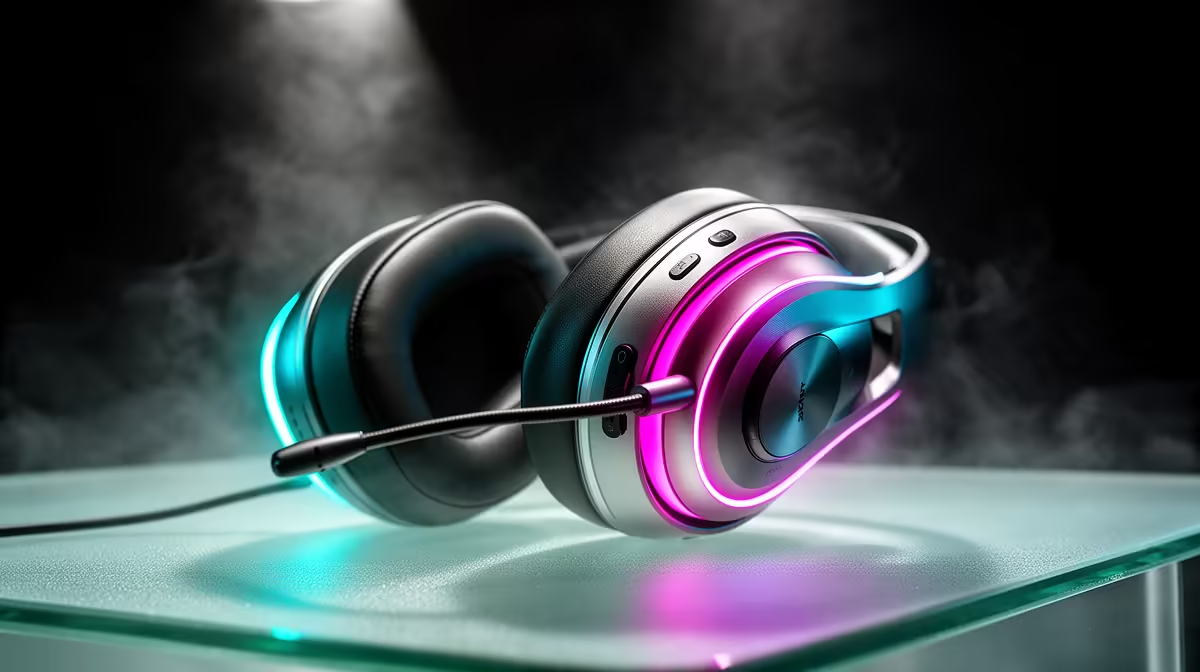
For MMO and live-service play, a 2.4GHz wireless headset is the better pick because the USB dongle delivers near-zero added latency, often under 20ms, with stable voice chat. Bluetooth suits convenience and phone pairing, but its higher latency and codec compression make it second choice for serious gaming. Solid 2.4GHz sets start near R1,200.
Why latency matters for MMO and live-service play
Long communication-heavy sessions reward a connection that stays locked. 2.4GHz keeps audio and party chat in sync, so callouts and cues land on time. Bluetooth adds delay and can stutter when your phone or other devices compete for the same band.
Battery, range and comfort
Modern 2.4GHz headsets run 20 to 40 hours per charge and reach across a typical room without dropouts. Comfort over a four-hour raid comes from clamp force and earpad material, so weigh fit as heavily as the spec sheet.
When Bluetooth still makes sense
If you want one headset for your PC, phone and a quick walk, Bluetooth multipoint is genuinely handy. Several sets offer both: 2.4GHz for the game, Bluetooth for everything else. That hybrid approach is often the smartest pick if the budget allows.
Keep your eye on real frame rates and daily comfort rather than spec-sheet bragging rights.
FAQ
Is 2.4GHz really lower latency than Bluetooth?
Yes. A 2.4GHz dongle typically adds under 20ms, while Bluetooth can add 100ms or more depending on the codec, which is audible in fast play.
Can one headset do both 2.4GHz and Bluetooth?
Many do. Hybrid models keep the dongle for gaming and Bluetooth for your phone, switching on the fly. They cost a little more but cover every use.
Does Bluetooth audio quality suffer?
It can, because Bluetooth compresses audio more aggressively. For music it's fine; for positional game audio, the 2.4GHz link is cleaner.
part to the games you actually play, not the spec sheet's biggest number.