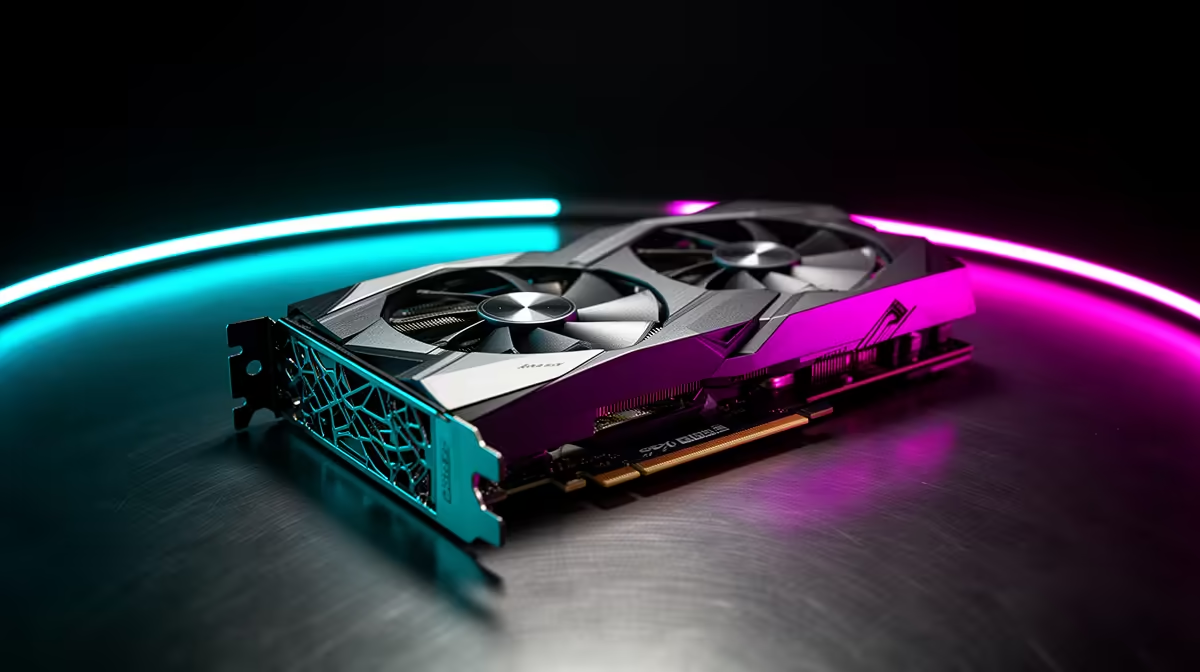
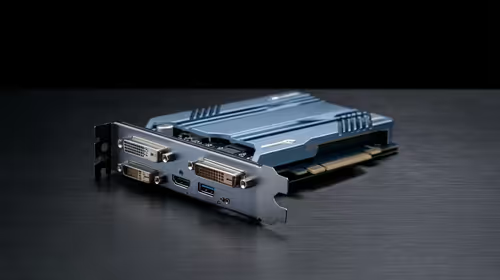
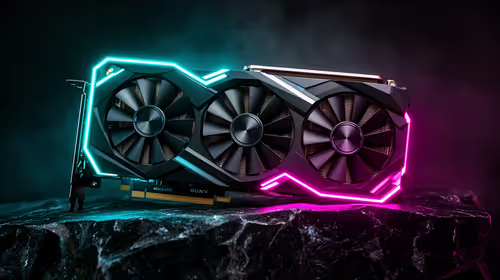
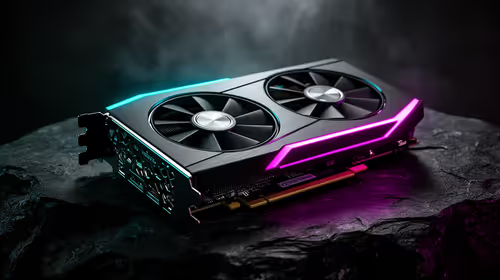
If you are pairing GPU with a Stellar Blade for 1080p gameplay, here is a realistic look at frame rates, settings and the rest of the build you need around it.
Quick Answer
Expect a smooth 120-200 fps in Stellar Blade at 1080p with a GPU, easily clearing a 60Hz panel and comfortable on a 144Hz one. Pair it with at least 32GB of DDR5 and a Gen 5 NVMe SSD so loading and streaming never become the bottleneck.
Settings that matter most
Ray tracing and high-resolution shadows cost the most frames in Stellar Blade. Turn on upscaling in quality mode for a near-free boost, and reserve the heaviest settings for screenshots rather than everyday play.
Monitor and refresh pairing
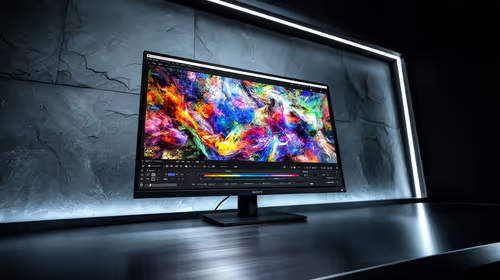
Match the panel to the frame rate you expect. At 1080p the GPU suits a 144Hz screen; a 240Hz panel only pays off if you cap settings to chase the highest numbers.
The rest of the build
A GPU is only as fast as the parts around it. Feed it 32GB of DDR5, a fast Gen 5 NVMe SSD and a CPU that will not stall at 1080p, or you will leave frames on the table.
Quick recap
Keep the steps above in order, test one change at a time, and only spend money once a single cause is confirmed. For a South African build, a clear diagnosis beats an expensive guess every time.
FAQ
Is a 144Hz monitor enough for Stellar Blade?
For most players, yes. The GPU feeds a 144Hz panel well at 1080p; a 240Hz screen only helps if you trim settings to chase the highest frame rate.
What CPU and RAM should pair with the GPU?
Aim for 32GB of DDR5 and a current high-clocked CPU. That keeps frame pacing tight at 1080p so the GPU is never waiting on the rest of the build.
Can a GPU run Stellar Blade at 1080p?
Yes, comfortably. It holds 120-200 fps at high settings, so the panel and CPU become the limit before the GPU does.
Pro Tip
Turn on quality-mode upscaling first; it is the cheapest way to add frames in Stellar Blade before you touch other settings.