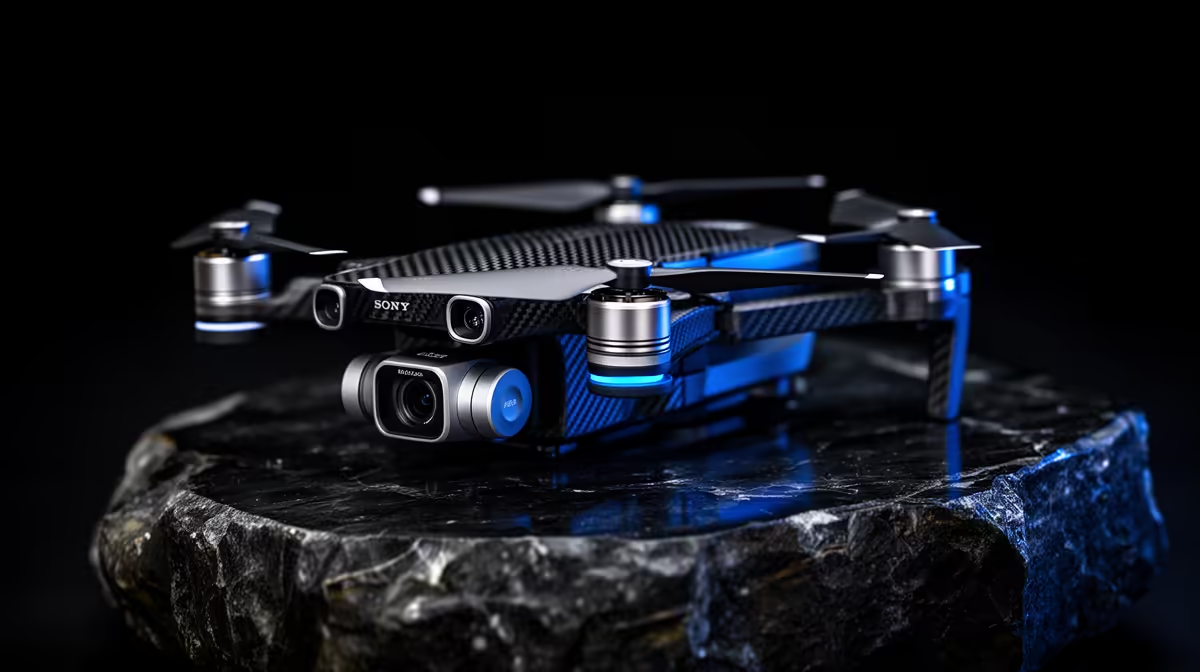
A remote worker should choose a camera drone only when client projects repeatedly require lawful aerial footage and remote delivery covers the added planning. It is irrelevant to ordinary calls, documents and online collaboration.
Convert upcoming briefs into flight requirements
Mark the exact aerial shots, locations, formats, weather limits and permissions in several real briefs. Calculate operator time, travel, batteries, editing and backup. Compare hiring an experienced pilot or borrowing before buying occasional hardware.
No camera drone has confirmed pricing in the verified product facts. The ASUS ExpertBook P1503 laptop at R9,858 and LaCie Rugged 2TB external drive at R1,920 are separate mobile-work references, not aerial equipment. For any drone, verify legal category, mass, camera formats, stabilisation, flight controls, batteries, app support, travel rules, repair access and warranty.
Fly only in authorised areas away from people, traffic, private property and wildlife. Obtain permission for identifiable subjects, follow safe battery handling and back up footage before clearing cards. Protect client files and remote-work accounts.
Buy after signed work justifies ownership and operating time. Hiring can provide stronger results with lower compliance and maintenance burden for occasional projects.
Include insurance, storage, spare propellers and travel protection in the ownership estimate, then compare that total with hiring for the same confirmed projects.
Preparing remote aerial work? > Compare Evetech laptops and rugged storage while evaluating drones separately.