Quick Answer
Rhodes Data Science students should buy around Core i7 or Ryzen 7, 32GB RAM preferred, 1TB SSD. The realistic SA budget band is R16,000-R28,000, with Lenovo LOQ 15, ASUS Vivobook Pro, or MSI Prestige class worth comparing by specification rather than by name alone. The NSFAS R5,200 device allowance does not cover even the cheapest practical laptop, which starts closer to R8,000, so students should plan a separate approved budget where the course needs stronger hardware.
Minimum Spec That Will Not Age Quickly
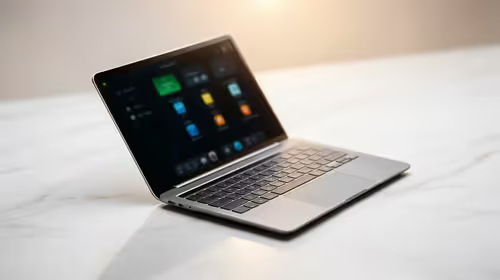
The safe floor is 16GB RAM, a 512GB NVMe SSD, Wi-Fi, HDMI or USB-C display output, and a comfortable keyboard for long assignments. Move to 32GB RAM and 1TB storage when the course uses local datasets, CAD files, Adobe projects, or virtual machines. A 14-inch laptop is easier to carry; a 15.6-inch screen is better for spreadsheets, drawings, timelines, and split-window study.
For Data Science, the workload is mainly Python, R, Jupyter, Power BI, SQL, and local notebooks. A 60Hz screen is enough for this workload; spend first on RAM, SSD capacity, and keyboard comfort rather than gaming extras.
Best SA Pick By Student Type
First-year students can start with the lower end of the band if the laptop has 16GB RAM and an SSD. Senior students, project-heavy students, or anyone using external monitors should move toward the stronger CPU and 32GB RAM tier. If the laptop will be the only machine in residence or digs, choose reliability, thermals, and warranty support over a thin design.
Avoid 4GB and 8GB RAM models for this course path. They may open documents, but multitasking with browser tabs, Teams, PDFs, and course software becomes the real problem.
Campus And Daily Use Checks
Check charger size, battery life, webcam, keyboard feel, and whether the laptop fits a backpack safely. Students at Rhodes may move between lecture venues, libraries, labs, and residence rooms, so weight and repair turnaround matter. Add a mouse for CAD, spreadsheets, or design work; it is a small cost with a large comfort gain.
FAQ
What laptop spec is enough for Rhodes Data Science?
Start with Core i7 or Ryzen 7, 32GB RAM preferred, 1TB SSD. If the course uses heavier project files, 32GB RAM and a 1TB SSD are the upgrades that keep the laptop useful for longer.
Can the NSFAS R5,200 allowance buy this laptop?
Not for a new laptop that meets the safer spec. R5,200 is below the practical R8,000 entry band, and Data Science students often need a higher approved budget for course software.
Should students buy a gaming laptop for this course?
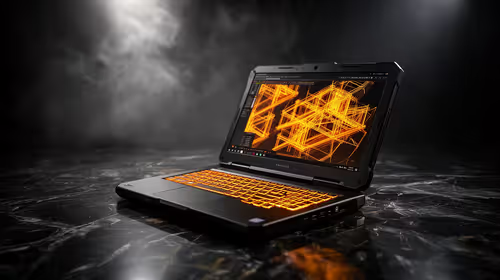
Buy a gaming laptop only when the workload needs a dedicated GPU, such as CAD, rendering, animation, game engines, or video editing. For writing, coding, accounting, and law, a lighter productivity laptop is usually easier to carry.
Buyer Check
Before buying, list the exact Data Science apps required for the semester and choose the cheapest laptop that meets the RAM, SSD, and screen needs without dropping below 16GB memory.