Quick Answer
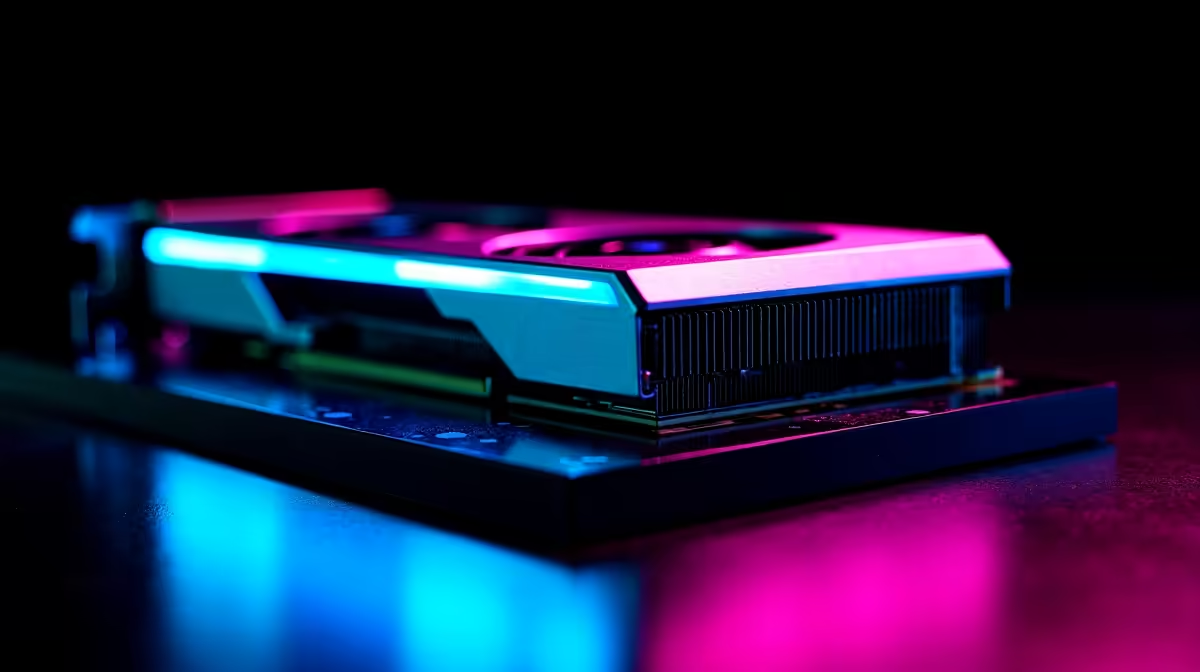
Upgrading to the RTX 5090 from a previous-gen card only pays off if you game at 4K, drive a high-refresh panel, or run heavy creative work. With 32GB VRAM and roughly 90-130 fps at 4K maxed in demanding titles, it is overkill for a 1080p 60Hz screen. Match the display and CPU first, or the card cannot show its value.
Check Your Current Bottleneck First
Start with the reason for the upgrade. If games feel rough because settings outrun your current GPU, the RTX 5090 helps enormously. If the limit is an older CPU, slow storage, heat, or a 1080p 60Hz monitor, the card alone will not fix it. Be honest about your target: a 4K 144Hz panel or an ultrawide is what unlocks a flagship, while a basic screen leaves most of that 32GB and horsepower unused.
Platform, Power And Display Checks
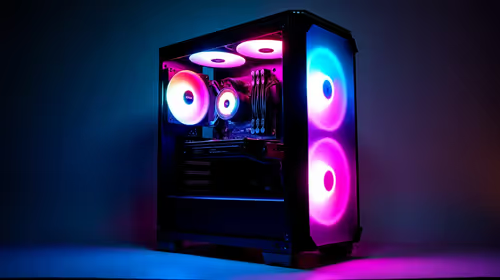
The RTX 5090 wants a strong 1000W power supply, around 300-360mm of case clearance, and a CPU that will not choke its minimum frame rates. Pair it with at least a 4K 144Hz display to feel the upgrade, and confirm your DisplayPort cable and GPU output support that refresh. In a warm SA room, airflow and the cooler's noise profile matter for daily comfort as much as peak benchmarks.
FAQ
Is the RTX 5090 worth upgrading to from a previous-gen card?
Yes, if you game at 4K, use a high-refresh display, or do GPU-heavy creative work. For 1080p or 1440p on a 60Hz screen, a 5080 or 5070-class card is the smarter spend.
What power supply does the RTX 5090 need?
Plan for a quality 1000W unit with the correct connectors. Headroom keeps the rail stable during CPU and GPU spikes in demanding titles.
Will an older CPU bottleneck the RTX 5090?
At 4K the GPU carries most of the load, but an older CPU can still drag minimum frame rates and frame pacing. A modern 8-core or better chip is the safe pairing.
drop your current game to 1080p low. If the frame rate barely climbs, a CPU, RAM, or storage limit is the real problem and the RTX 5090 will not fix it.