


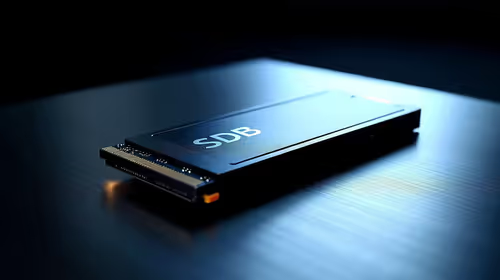
PCIe 5.0 vs PCIe 4.0 for Video editing in 4k in SA
PCIe 5.0 vs PCIe 4.0 for video editing in 4k is mainly about fit, features, compatibility, cost, and upgrade path, not one automatic winner. SA buyers should match the choice to the setup.
Read moreSouth African PC builders should begin with AM4 board support and total installation cost before comparing headline CPU features. The Ryzen 7 5800X3D then offers eight Zen 3 cores, 16 threads, 100MB cache and up to 4.5GHz boost at R7,199.
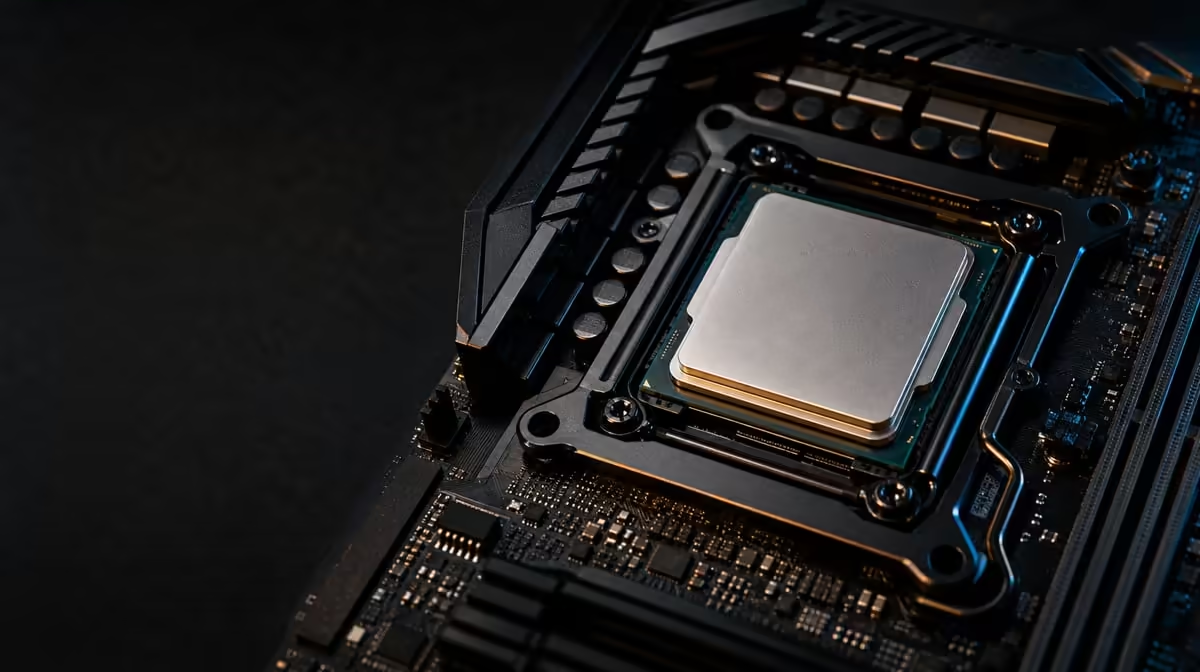
A feature matters to a builder when it changes compatibility, supporting hardware or the result of a real workload. Ryzen 7 5800X3D features that matter to SA builders therefore begin with board support and complete cost, then move to cores, cache and clocks. The R7,199 AM4 processor is only ready for use after cooling and discrete graphics are in place.
The essential planning facts are AM4 motherboard and BIOS support, a 105W rating, no included cooler and a need for discrete graphics. Once those are covered, the Ryzen 7 5800X3D offers eight Zen 3 cores, 16 threads, 100MB cache, a 3.5GHz base clock and boost up to 4.5GHz. South African builders should add the missing hardware to its R7,199 price.
AM4 describes the socket family, but a builder needs the exact motherboard model and revision. Its processor support information must name the Ryzen 7 5800X3D and identify a suitable BIOS. A board that physically accepts the CPU but cannot recognise it is not compatible in practice.
Firmware preparation should happen while the current CPU can still start the PC when an update is required. Record the working BIOS and important settings, follow the board maker's procedure and keep the old processor safe until the new configuration is stable. That sequence reduces avoidable downtime.
The processor's R7,199 price excludes cooling. Its 105W rating calls for an AM4-compatible solution with appropriate capability, chassis clearance and airflow. The CPU cooler range can be compared after the case and surrounding components have been measured.
Graphics are equally fundamental. The 5800X3D has no display output capability, so install a discrete GPU and connect the monitor to that card. A complete new system must budget for the GPU, suitable power and case space as well.
Eight cores give the processor multiple physical execution resources, while 16 threads describe its ability to work on more software threads. That can support a game alongside background activity and applications that use parallel processing. It cannot guarantee one level of multitasking responsiveness, because memory, storage and software design also affect the experience.
The 100MB cache figure describes fast on-chip data capacity. Games that repeatedly reuse information may benefit when more of it can stay near the cores. Other titles can be limited by graphics, engine behaviour or settings and show a smaller difference. Builders should look for representative tests instead of converting cache capacity directly into FPS.
Zen 3 identifies the processor architecture. It gives context to the core and cache arrangement but is not a standalone benchmark. Compare exact models and full configurations when using test results.
Evetech's AMD CPU selection helps put those resources beside other processor choices in the current build budget.
The base frequency is 3.5GHz, and the CPU can boost as high as 4.5GHz. Maximum boost describes an upper operating target under suitable conditions. It is not a fixed speed for all cores in every game. Workload, temperature, active cores, power and board firmware influence the reading.
The 105W rating changes the parts list because the processor arrives without cooling. It does not define one universal operating temperature. Cooler design, mounting contact, case airflow, ambient conditions and fan control all influence the measured result.
Validate a finished build before tuning. Begin with stable BIOS settings, confirm processor and memory detection, check fan or pump operation and observe temperatures through a repeatable load. One peak clock screenshot is less valuable than consistent operation.
The broader CPU processor category lets builders compare frequencies and platform requirements without treating any one figure as the verdict.
Reusing a supported AM4 motherboard and serviceable memory can make the Ryzen 7 a focused upgrade. The value is strongest when tests show that the current CPU is limiting relevant games and the existing GPU can benefit from quicker frame preparation.
If the graphics card is the active limit, spending there may create a more visible result. If the board lacks support or several old parts need replacement, a wider platform comparison is appropriate. Neither decision should rest on a tier name or an unspecified future claim.
Create a complete South African total: R7,199 for the processor, plus an appropriate cooler and any installation hardware. Include graphics only where it must be added or replaced. Then compare that number with the measurable outcome expected from the target games and tasks.
The features that matter are the ones tied to a decision. AM4 and BIOS determine whether the CPU starts; 105W and the empty cooler position shape thermal planning; discrete graphics enables the screen; eight cores, 16 threads and 100MB cache serve workloads; and the clock specification describes operating frequency under changing conditions.
Builders should turn that list into an order of operations. First confirm board support and complete any firmware preparation. Next measure the case and choose cooling. Then check the graphics, power and monitor path. Only after the machine has started reliably should performance tests and optional settings enter the process.
The old configuration provides a valuable baseline. Record a representative game route, its graphics preset and frame behaviour before the swap. If the new result differs, the same route helps isolate the processor effect from a changed patch, resolution or background workload.
Keep the previous CPU safely stored until the replacement passes temperature, memory and game tests. This is not pessimism; it is a practical recovery path for a build whose board may have changed firmware and hardware at the same time.
For South African budgets, compare the total with the expected use over the period the machine is meant to serve, without promising a fixed lifespan. A focused AM4 upgrade can be excellent value today when it retains sound parts and fixes a measured constraint. It can be poor value when several other weaknesses remain.
Verify exact motherboard and BIOS support first. A socket-family match cannot replace a processor entry for the board model and revision.
They provide resources for gaming and parallel software work. Their value depends on the applications, memory and other system constraints.
It can keep more reused data near the processor and help suitable game workloads. The benefit remains engine-specific rather than a fixed FPS gain.
It informs the cooling requirement. Since the processor includes no cooler, the builder must add an AM4 solution that fits the case and airflow plan.
This CPU cannot generate display output. The build needs a discrete GPU, with the monitor attached to the card.
Expand it into an installed total that includes cooling and any required supporting hardware. Compare that total with the performance constraint the CPU is expected to solve.
Up to 4.5GHz is the upper boost figure, not an all-core guarantee. Load, temperature, power and firmware conditions affect observed frequency.
Ready to turn every CPU feature into a checked build decision? Compare Evetech's AMD processors, price compatible cooling and verify that the R7,199 AM4 path fits your board, GPU and workloads.
Verify exact motherboard and BIOS support first. A socket-family match cannot replace a processor entry for the board model and revision.
They provide resources for gaming and parallel software work. Their value depends on the applications, memory and other system constraints.
It can keep more reused data near the processor and help suitable game workloads. The benefit remains engine-specific rather than a fixed FPS gain.
It informs the cooling requirement. Since the processor includes no cooler, the builder must add an AM4 solution that fits the case and airflow plan.
This CPU cannot generate display output. The build needs a discrete GPU, with the monitor attached to the card.
Expand it into an installed total that includes cooling and any required supporting hardware. Compare that total with the performance constraint the CPU is expected to solve.
Up to 4.5GHz is the upper boost figure, not an all-core guarantee. Load, temperature, power and firmware conditions affect observed frequency.
PCIe 5.0 vs PCIe 4.0 for video editing in 4k is mainly about fit, features, compatibility, cost, and upgrade path, not one automatic winner. SA buyers should match the choice to the setup.
Read more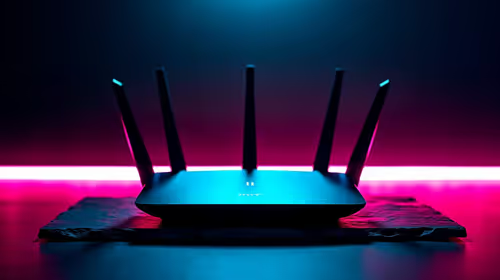
Wi-Fi 7 vs Wi-Fi 6e for competitive esports comes down to router support, latency goals, device compatibility, and coverage. SA buyers should match the choice to the real network setup.
Read more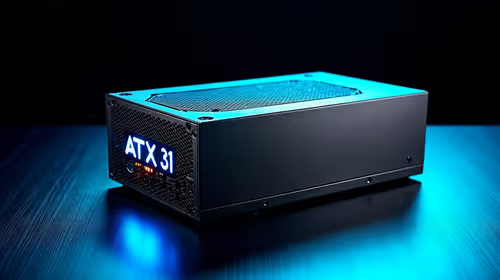
ATX 3.1 vs ATX 3.0 for mMO and live-service games buyers - what changes is mostly about compatibility, budget, upgrade path, and setup fit. SA buyers should check device support and real needs before expecting a clear win from either option.
Read more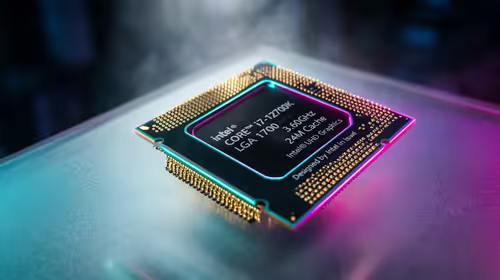
LGA 1851 vs LGA 1700 can affect Twitch and YouTube streaming when gaming and encoding share CPU resources. For SA creators, the real-world difference depends on encoder choice, memory support, motherboard cost, thermals, and upgrade plans.
Read more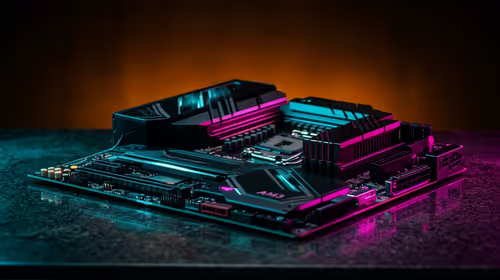
X870E vs X670E for aaa single-player gaming is mainly about fit, features, compatibility, cost, and upgrade path, not one automatic winner. SA buyers should match the choice to the setup.
Read more
Hall Effect switches vs Mechanical switches for mMO and live-service games is mostly about compatibility, budget, upgrade path, and setup fit. SA buyers should check device support and real needs before expecting a clear win from either option.
Read more
A fake 113GB GTA VI ISO reportedly used empty padding around a small malware payload. SA gamers should delete unofficial builds, keep Windows security active and wait for official channels.

Wi-Fi 6E vs Wi-Fi 6 matters for 4K video editing when files move across a network. The real-world difference between Wi-Fi 6E and Wi-Fi 6 for video editing in 4K depends on NAS access, cloud uploads, router range, and SA creator workflows.

The difference between PCIe 5.0 and PCIe 4.0 for SA gamers is mostly bandwidth headroom. Compare GPU slot needs, NVMe speed, motherboard support, and upgrade timing before paying extra for a newer platform.

Gaming PC stuck pixel checks in South Africa should confirm the monitor fault first. Use colour tests, screenshot comparison, cable swaps, display menu checks, and clear photos before deciding on support.

Shokz OpenFit Air 2 earbuds weigh 7.2g each and use a redesigned dual-driver open-ear layout. SA buyers should choose them for comfort and awareness, not maximum isolation.

AMD's current driver now lists a Radeon RX 9050 4GB, while product coverage details a narrowed memory system. SA buyers should weigh the low VRAM ceiling against current local Radeon options.

Samsung Display has demonstrated a 16-inch 2.5K OLED laptop panel running at 300Hz. SA buyers should wait for a named notebook, full panel specifications and a local price before planning an upgrade.

Microsoft says some Windows 11 game crashes after recent updates are linked to RGB-related drivers. Affected SA gamers should confirm the update and driver before using the published registry workaround.
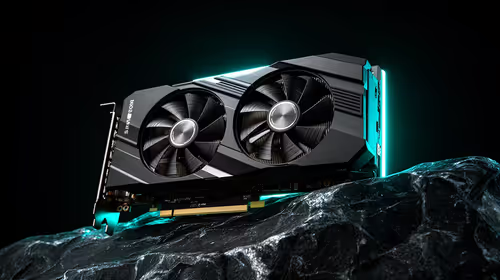
RTX 5090 on a 650W PSU is a tight pairing with very limited headroom. For SA gaming PCs, focus on total system draw, PSU quality, connector support, CPU choice, and avoid OC plans unless the full build is carefully power-limited.
PCIe 5.0 vs PCIe 4.0 for video editing in 4k is mainly about fit, features, compatibility, cost, and upgrade path, not one automatic winner. SA buyers should match the choice to the setup.
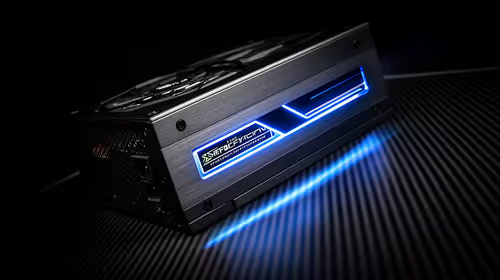
850W PSU safety for RTX 5090 is plausible with a quality unit and balanced parts. In SA, confirm connector support, CPU power draw, case airflow, PSU age, and spare capacity before building around 850W.
Wi-Fi 7 vs Wi-Fi 6e for competitive esports comes down to router support, latency goals, device compatibility, and coverage. SA buyers should match the choice to the real network setup.