


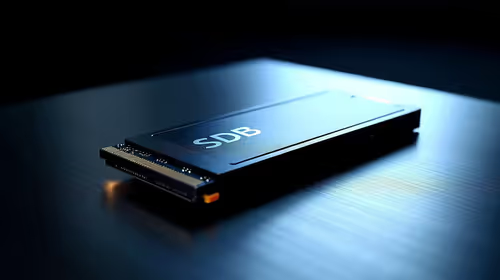
PCIe 5.0 vs PCIe 4.0 for Video editing in 4k in SA
PCIe 5.0 vs PCIe 4.0 for video editing in 4k is mainly about fit, features, compatibility, cost, and upgrade path, not one automatic winner. SA buyers should match the choice to the setup.
Read moreSpreading a laptop purchase across a single term, saving a modest fixed amount weekly, comfortably closes the gap between an NSFAS allowance and a dependable device without any credit. Evetech's laptop pricing makes that target easy to plan around from week one.
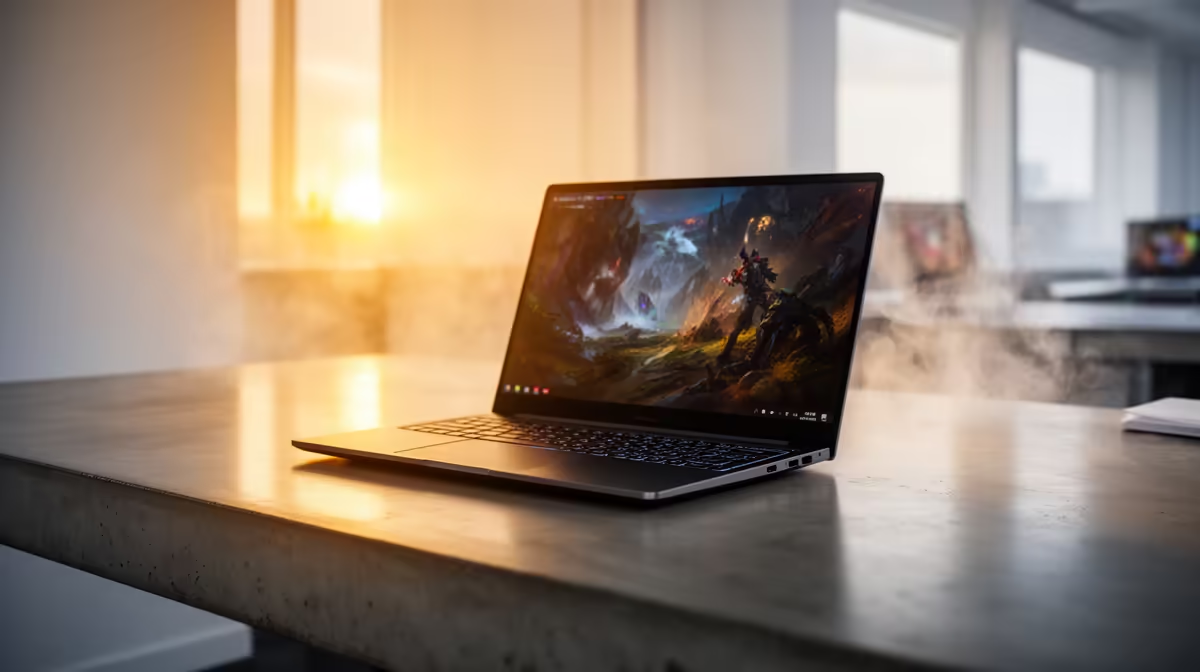
A term is long enough to build a useful laptop fund when the target comes from a named machine. The plan below uses 14 weeks, protects essential student costs and includes a review point before the final purchase.
As of July 2026, R9,499 was the price of the HP 15-fc0003ni. Its Ryzen 5 configuration included 512GB SSD capacity and 8GB RAM. Against a confirmed R5,200 contribution, the illustrative shortfall is R4,299.
Across 14 weeks, saving R307 per week reaches R4,298. Add R1 in the final week and the gap is covered. If R307 strains the student's food, transport or materials budget, extend the period or choose a lower valid target.
Start by checking popular laptop configurations and dated laptop offers, then get a final quotation through the payment route your institution approves.
Get the faculty software list and the student's 2026 funding notice. Ask the financial-aid office whether device spending is permitted, which supplier process applies, and whether personal funds can be added.
Choose a primary and backup laptop. Record each full model code, RAM, SSD, operating system, warranty and delivered price. The backup should meet the same course need rather than share the same brand.
Set the purchase date near the end of term, but leave time for delivery and setup before exams. Write every important date in one place: voucher expiry, funding confirmation, quotation expiry and expected collection.
Move R307 into a separate laptop pocket each week. At the end of week four, the target balance is R1,228. Record the deposits in a two-column note and resist using the balance as spare spending money.
Find one modest source that fits the timetable. Tutoring two school learners, helping with campus events or completing trusted admin work can contribute. Agree the task, hours and payment before doing it.
Check the target product once at the end of week four. Record the price without changing direction for a tiny promotion. A plan that chases listings can lose sight of the specification.
The target balance at week eight is R2,456. Compare that with the actual balance. If you are R200 behind, adding R34 across the six remaining weeks recovers the miss with R4 to spare.
If the weekly amount has affected meals, transport or printing, reduce it and move the purchase date. The laptop supports the degree; it should not break the rest of the term.
Ask the authorised supplier to reconfirm top-up and refund handling. Find out whose name will appear on the invoice and how each payment portion returns after a cancellation.
At R307 each week, the balance reaches R3,684 by week twelve. Request fresh quotations for the primary and backup models. Compare final delivery cost, warranty and stock status.
If a family member has offered a fixed contribution, confirm when it will be available. Keep the purchase ceiling unchanged unless the course requirement changed. A larger pool of money does not create a need for a decorative upgrade.
Decide where the parcel can arrive safely. Check who may sign and how transit damage must be reported. If collecting, bring the quotation and confirm the sealed box model before leaving.
Week thirteen brings the balance to R3,991. Week fourteen reaches R4,298, so add R1 to match the R4,299 example. Recalculate from the current quotation before payment; the July price is a snapshot, not a promise for a later date.
Confirm that the student's funding is active and the supplier remains accepted by the payment process. Pay only through the named authorised route. Save the order confirmation and any voucher receipt.
If the model has sold out, pause. Match the backup's processor class, memory, SSD and warranty against the original requirement. Obtain a revised final amount before approving the substitution.
Switch to a 20-week plan. R215 per week reaches R4,300, one rand beyond the example gap. The extra six weeks reduce the pressure by R92 each week.
Choose a course-suitable lower target. The ASUS Vivobook X1504ZA cost R8,499 as of July 2026; the listed unit paired a Core i3 with 512GB SSD storage and 8GB RAM. Against R5,200, that example gap is R3,299, or about R236 across 14 weeks.
Consider a properly refurbished business laptop when its exact processor, battery condition and warranty meet the course need. Inspect it in person or demand a written condition report and return route.
Photograph the box and serial label, then match the invoice to Windows system information. Test the display, keyboard, webcam, Wi-Fi, audio, ports and charger.
Install the actual course applications while the return period is open. Update Windows, save the recovery key and create two copies of important work. Keep the invoice and supplier contact in a folder the student can reach from another device.
Review the final plan. Record the total personal contribution, funded amount and purchase price. That makes a future warranty claim or family discussion much easier.
Use ten minutes to update the balance, weeks left and target price. Note any missed deposit without judging it. Then decide whether to recover the amount, extend the date or reduce a non-essential part of the target.
Keep the review short enough to repeat. A basic table with week, planned deposit, actual deposit and balance is enough. Attach the latest quotation only when the price changes.
At weeks four, eight and twelve, check the faculty requirement again. A lecturer may name a platform or application after the term starts. If that changes the laptop specification, update the model before pushing more money toward the wrong target.
Divide the exact shortfall by the weeks left. In the R4,299 example, 14 weeks needs R307 per week plus R1 at the end.
Recalculate from the new quotation. Use the backup model or extend the plan if the rise exceeds your buffer.
A sale has no fixed date or amount. Build from the current named price and let any valid discount reduce the final gap.
Put the target model, weekly amount and purchase week on one page, then fund the first week before the term gets busy.
Divide the exact shortfall by the weeks left. In the R4,299 example, 14 weeks needs R307 per week plus R1 at the end.
Recalculate from the new quotation. Use the backup model or extend the plan if the rise exceeds your buffer.
A sale has no fixed date or amount. Build from the current named price and let any valid discount reduce the final gap.
PCIe 5.0 vs PCIe 4.0 for video editing in 4k is mainly about fit, features, compatibility, cost, and upgrade path, not one automatic winner. SA buyers should match the choice to the setup.
Read more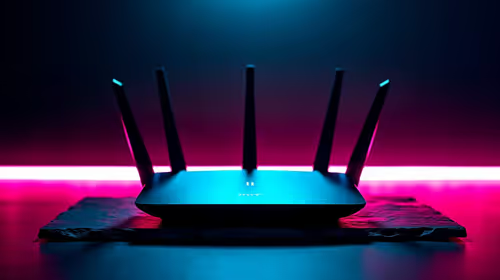
Wi-Fi 7 vs Wi-Fi 6e for competitive esports comes down to router support, latency goals, device compatibility, and coverage. SA buyers should match the choice to the real network setup.
Read more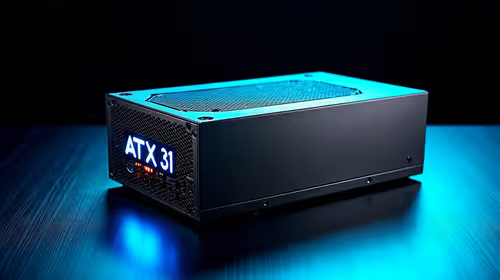
ATX 3.1 vs ATX 3.0 for mMO and live-service games buyers - what changes is mostly about compatibility, budget, upgrade path, and setup fit. SA buyers should check device support and real needs before expecting a clear win from either option.
Read more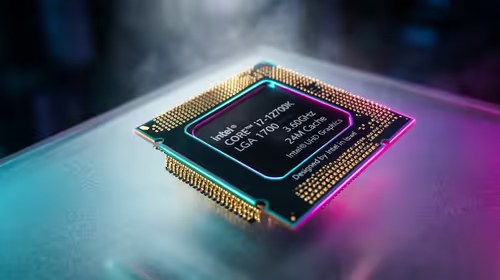
LGA 1851 vs LGA 1700 can affect Twitch and YouTube streaming when gaming and encoding share CPU resources. For SA creators, the real-world difference depends on encoder choice, memory support, motherboard cost, thermals, and upgrade plans.
Read more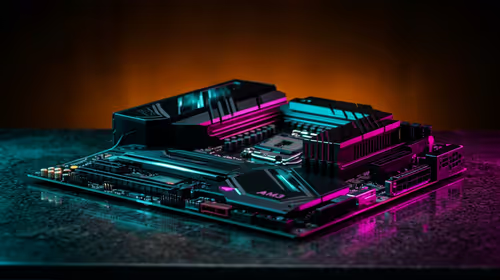
X870E vs X670E for aaa single-player gaming is mainly about fit, features, compatibility, cost, and upgrade path, not one automatic winner. SA buyers should match the choice to the setup.
Read more
Hall Effect switches vs Mechanical switches for mMO and live-service games is mostly about compatibility, budget, upgrade path, and setup fit. SA buyers should check device support and real needs before expecting a clear win from either option.
Read more
A fake 113GB GTA VI ISO reportedly used empty padding around a small malware payload. SA gamers should delete unofficial builds, keep Windows security active and wait for official channels.

Wi-Fi 6E vs Wi-Fi 6 matters for 4K video editing when files move across a network. The real-world difference between Wi-Fi 6E and Wi-Fi 6 for video editing in 4K depends on NAS access, cloud uploads, router range, and SA creator workflows.

The difference between PCIe 5.0 and PCIe 4.0 for SA gamers is mostly bandwidth headroom. Compare GPU slot needs, NVMe speed, motherboard support, and upgrade timing before paying extra for a newer platform.

Gaming PC stuck pixel checks in South Africa should confirm the monitor fault first. Use colour tests, screenshot comparison, cable swaps, display menu checks, and clear photos before deciding on support.

Shokz OpenFit Air 2 earbuds weigh 7.2g each and use a redesigned dual-driver open-ear layout. SA buyers should choose them for comfort and awareness, not maximum isolation.

AMD's current driver now lists a Radeon RX 9050 4GB, while product coverage details a narrowed memory system. SA buyers should weigh the low VRAM ceiling against current local Radeon options.

Samsung Display has demonstrated a 16-inch 2.5K OLED laptop panel running at 300Hz. SA buyers should wait for a named notebook, full panel specifications and a local price before planning an upgrade.

Microsoft says some Windows 11 game crashes after recent updates are linked to RGB-related drivers. Affected SA gamers should confirm the update and driver before using the published registry workaround.

RTX 5090 on a 650W PSU is a tight pairing with very limited headroom. For SA gaming PCs, focus on total system draw, PSU quality, connector support, CPU choice, and avoid OC plans unless the full build is carefully power-limited.
PCIe 5.0 vs PCIe 4.0 for video editing in 4k is mainly about fit, features, compatibility, cost, and upgrade path, not one automatic winner. SA buyers should match the choice to the setup.
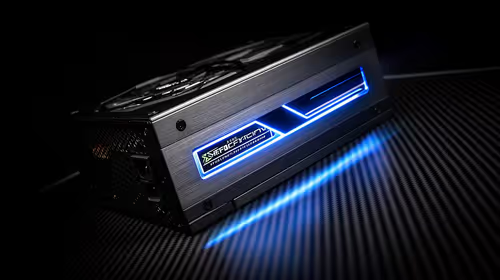
850W PSU safety for RTX 5090 is plausible with a quality unit and balanced parts. In SA, confirm connector support, CPU power draw, case airflow, PSU age, and spare capacity before building around 850W.
Wi-Fi 7 vs Wi-Fi 6e for competitive esports comes down to router support, latency goals, device compatibility, and coverage. SA buyers should match the choice to the real network setup.