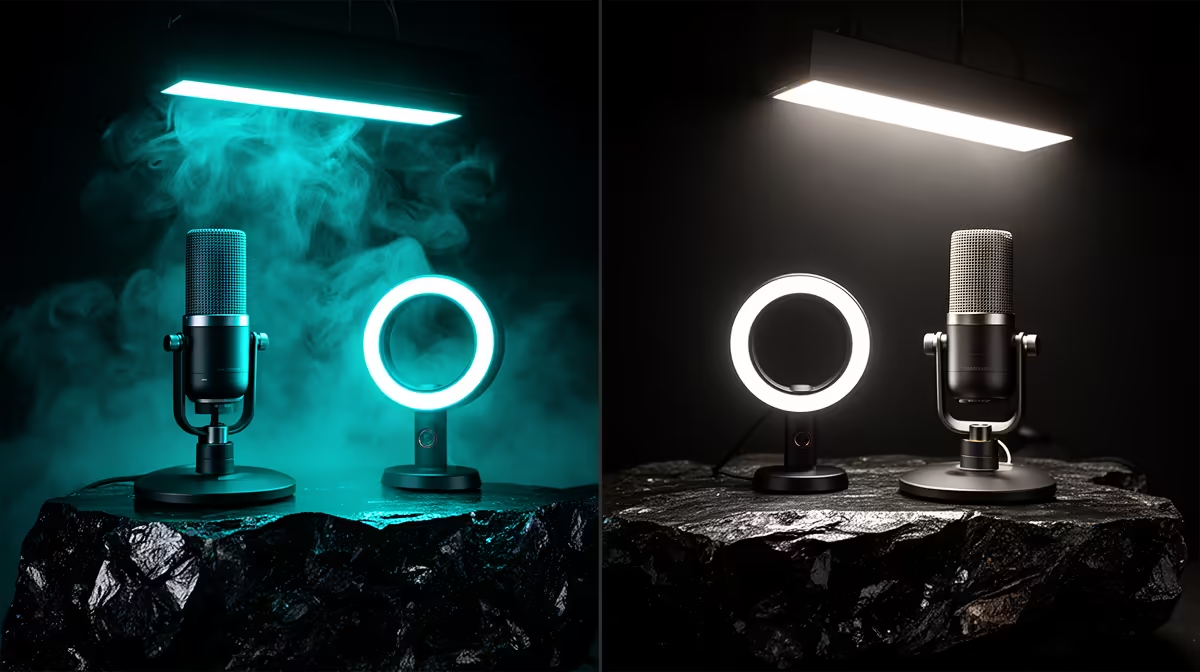
Doubling a streaming-kit ceiling from R7,500 to R15,000 should improve the weak links your audience can hear and see. It does not create a different stream when the PC, room and upload stay the same. The higher rung often buys more controlled lighting and a complete XLR audio path. That only pays when you need the control.
Quick Answer
At the lower ceiling, protect a clear USB microphone or good headset mic, one soft key light, a usable camera and stable mounting. At the higher ceiling, improve room-aware lighting and move to XLR only when gain control, monitoring, multiple sources or future mic choice gives it a job. Keep capture hardware and PC upgrades outside the kit unless the written basket includes them.
Use Evetech's streaming essentials to map the audio, light and control pieces. The webcam range helps you compare cameras after the room light is settled.
Define the Kit Boundary
List microphone, interface where needed, boom arm or stand, headphones, camera, lights, mounts and cables. State whether a capture card is included.
The gaming PC, console, monitor and network may already exist. If they do not, the two title ceilings answer a different question.
Keep delivery and adapters in the total. A microphone without the right cable is not a complete tier.
Lower Tier: Fix the Voice
Put the microphone close to your mouth and away from keyboard, PC fans and bare walls. A modest mic at correct distance can beat an expensive one across the room.
A USB microphone combines capsule, preamp and converter in one device. It keeps setup simple.
Use a boom arm only when its clamp, reach and weight rating fit the desk and mic.
Lower Tier: Add One Useful Light
Place a soft key light slightly above eye level and off to one side. Control window light where possible.
One large soft source can improve a webcam more than moving straight to a larger camera. Avoid a small harsh light directly beside the lens.
Set exposure and white balance after the light is stable.
Lower Tier: Choose the Camera Last
A 1080p webcam can serve a small face box when focus, exposure and framing are controlled.
Check how it behaves in your actual room, not a bright product sample. Mount it near eye line and keep the background deliberate.
Four-K capture adds little when the stream layout shows a small 720p face window.
Higher Tier: What XLR Adds
An XLR microphone separates the mic from the interface. The interface can provide gain, conversion, headphone monitoring and inputs for another source.
That flexibility helps when you want a dynamic broadcast mic, hardware controls or a future second microphone. It adds cables, gain staging and desk space.
Do not buy XLR for the connector. Buy it for the signal path you will use.
Dynamic or Condenser at the Higher Rung
A dynamic microphone used close can reduce the room and keyboard relative to your voice. It may need more clean gain.
A condenser can capture detail and more room sound. It suits a controlled quiet space and good placement.
The room decides before the price tier. Neither type removes echo after it reaches the mic.
Better Lighting Beats More Pixels
The higher budget can add a fill light, background separation or larger modifiers. Build one layer at a time.
Match colour temperature and avoid mixed green or orange patches. Keep fixtures out of monitor reflections and glasses.
Use brightness that your eyes can tolerate through a long stream.
Treat the Room Before Buying Another Mic
Move the microphone closer and angle its least sensitive side towards the keyboard or PC. Add soft furnishings already in the room before covering walls with random foam.
Record thirty seconds of speech, silence and typing. Listen on headphones at normal volume. Echo, fan noise and desk vibration need different fixes.
A shock mount can reduce bumps through the arm, while it cannot remove room reflections. The higher tier should solve the noise you recorded, not add studio-looking pieces around it.
Listen first.
Camera Changes at the Higher Rung
A better webcam can improve autofocus, dynamic range and low-light handling. A mirrorless camera adds lens choice and image control, plus capture, power and heat requirements.
Do not assume a camera body fits inside the tier without a lens, capture device, dummy battery and mount.
The improved light may let the existing webcam remain.
Where a Stream Controller Fits
A button controller can switch scenes, mute audio and trigger actions without hunting through software. Keyboard shortcuts can do the same early on.
Buy it when live operation causes mistakes and the core audio and light are clean.
It belongs later than the microphone position and key light in both tiers.
Capture Hardware Is a Separate Decision
Single-PC streaming can use software capture without a card. Console video or a two-PC path can need one.
Check input resolution, refresh, passthrough, HDR handling, USB bandwidth and audio path. A cheap card that drops the console's display features can spoil the setup.
Include it only when the source demands it.
The PC and Upload Can Cap Both Tiers
Run OBS with the full scene and game. Check render lag, encoding lag, CPU, GPU and memory.
Test upload stability, not only speed. Leave headroom between stream bitrate and the line's sustained clean upload.
A R15,000 peripheral kit cannot repair a PC that misses frames or an unstable connection.
Price the Two Complete Baskets
For each rand figure, use a named product supported by the approved July 2026 price pack. The title ceilings are planning limits, not claims that every kit starts there.
Compare the same room, camera framing and stream target. Mark every component that carries from lower to higher.
A good lower-tier light, arm and headphones should not need replacing.
FAQ
Does audio improve most at the higher tier?
It can when XLR control or a room-suitable microphone solves a real limit. Placement remains more important than connector prestige.
Does camera quality change much?
It can, though better lighting may produce the larger visible gain with the camera you own.
Which tier suits a beginner?
Start at the lower complete rung and learn placement, OBS and the upload path before adding complex hardware.
Build both streaming baskets around the same room and upload, then spend the extra R7,500 only on audio control, lighting or camera limits the audience can notice.