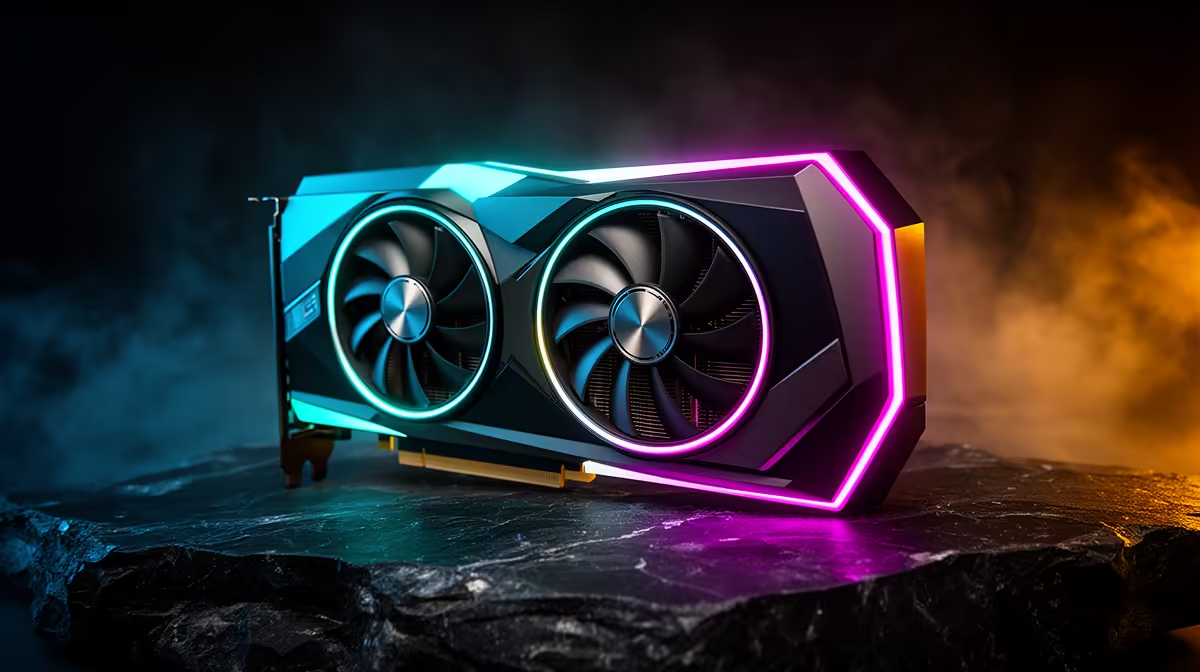
The advice to hold out for the next graphics card is usually sound, except when there is no next card coming. That is exactly where 2026 sits. If you are weighing whether to buy a GPU now or wait for next-gen, the calendar has already made the decision: no flagship desktop generation lands this year, and the cards people are waiting on have slipped well into 2027.
Quick Answer
Buy now. No new flagship desktop GPU generation launches in 2026. The RTX 50 Super refresh has slipped to a CES 2027 reveal, and the RTX 60 Rubin architecture is H2 2027 at the earliest. For SA builders paying in Rand, current-gen cards are the smart purchase before prices drift further.
The 2026 release calendar is empty at the top
The reason this question is unusually easy to answer is that the roadmap is bare. There is no headline desktop launch scheduled for 2026 that would reward waiting. The next meaningful steps both sit in the following year.
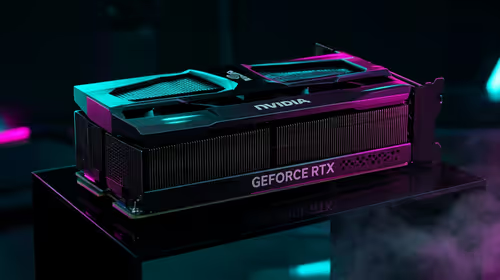
The RTX 50 Super refresh, which would normally be the mid-cycle upgrade worth holding for, has moved to a CES 2027 reveal. The planned Super lineup is built around boosting VRAM capacity by roughly 50 percent, which would put 18GB on the RTX 5070 Super and 24GB on both the RTX 5070 Ti Super and the RTX 5080 Super. Those are genuinely useful upgrades, but a reveal at CES is not a release, and cards shown at CES typically take additional weeks or months to reach shelves in volume, with South Africa lagging behind global availability on top of that. The genuinely new architecture, RTX 60 built on Rubin, is not expected before the second half of 2027. Waiting today means waiting a year and a half on the optimistic timeline, with your current PC sitting underpowered the whole time.
What waiting actually costs a SA builder
There is the obvious cost: eighteen months of gaming on whatever you have now instead of the card you could own this month. For anyone running a tired GPU, that is a long stretch of compromised frame rates and skipped settings.
Then there is the Rand factor. GPU pricing in South Africa is exposed to the exchange rate and import costs, and those tend to drift upward rather than down over long stretches. A card you can afford today may sit at a higher Rand price by the time the next generation arrives, which means waiting can leave you paying more for hardware that is still a year away.
The Super series' extra VRAM also makes the trade-off more nuanced than it first appears. If 18GB or 24GB of GDDR7 would genuinely improve your workflow, it may be worth waiting for, but only if you can accept that the waiting period is measured in over a year rather than months. For most gamers playing at 1080p or 1440p on current titles, the extra memory headroom in the Super cards does not justify the wait compared with a card you can own and use today.
How to choose a current-gen card the right way
With waiting off the table for most buyers, the real work is matching the card to your monitor and games. Buy for the resolution you actually play at rather than the one you might reach someday.
For 1080p and high-refresh esports
A mid-range current card drives 1080p at high frame rates comfortably and leaves headroom for the fast-paced titles where refresh rate matters more than raw detail. This is the sweet spot for most SA gamers on a sensible budget.
For 1440p and 4K
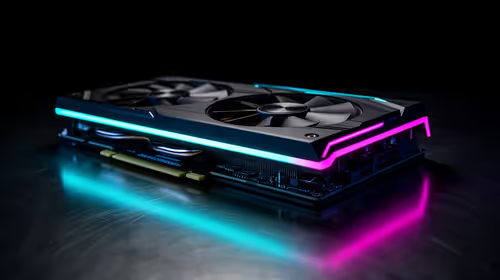
Step up to a stronger card if you game at 1440p or 4K, where the GPU does far more work each frame. Here the extra spend buys you stable frame rates at high settings rather than a card that struggles at your panel's native resolution. Every current RTX 50 and RX 9000 model across both tiers is listed in Rand at the NVIDIA and AMD graphics cards page.
The upscaling advantage no one talks about
One factor that tilts the decision toward buying now rather than waiting is upscaling maturity. Current-gen cards ship with NVIDIA's DLSS 4 and AMD's FSR 4, and game support for both has expanded significantly. A mid-range card today uses intelligent reconstruction to deliver 1440p-quality frame rates from a lighter render workload, so the effective performance you get is meaningfully higher than the raw spec suggests. A future Super card would need to deliver a tangible real-world jump beyond that reconstructed output to justify the wait.
Buy now, with eyes open
Buying current-gen in 2026 is not settling. It is recognising that the upgrade you would wait for does not exist yet and will not for a long while. Pick a card sized to your display, pay today's Rand price, and enjoy eighteen months of performance you would otherwise have skipped. If you want a shortlist rather than the full catalogue, the most popular GPUs right now are a fast way to find a proven card.
Frequently Asked Questions
Is a new GPU generation launching in 2026?
No flagship desktop generation launches in 2026. The roadmap's next steps, the RTX 50 Super refresh and the RTX 60 Rubin architecture, have both moved into 2027.
When is the RTX 50 Super coming out?
The RTX 50 Super refresh has slipped to a CES 2027 reveal, which means actual retail availability, especially in South Africa, will likely stretch into the middle of 2027 or later.
How much VRAM will the RTX 50 Super cards have?
Rumoured specs point to roughly 50 percent more VRAM than the current line: 12GB on the RTX 5060 Super, 18GB on the RTX 5070 Super, and 24GB on both the RTX 5070 Ti Super and the RTX 5080 Super.
When will RTX 60 Rubin arrive?
RTX 60 on the Rubin architecture is expected in the second half of 2027 at the earliest, making it roughly a year and a half away from mid-2026.
Will GPU prices drop if I wait?
There is no guarantee they will. In South Africa, Rand-denominated GPU prices are exposed to exchange-rate and import pressure that tends to push prices up over long periods, so waiting can cost more.
Which current GPU should I buy?
Match the card to your resolution. A mid-range card suits 1080p high-refresh gaming, while 1440p and 4K call for a stronger card to hold steady frame rates at high settings.