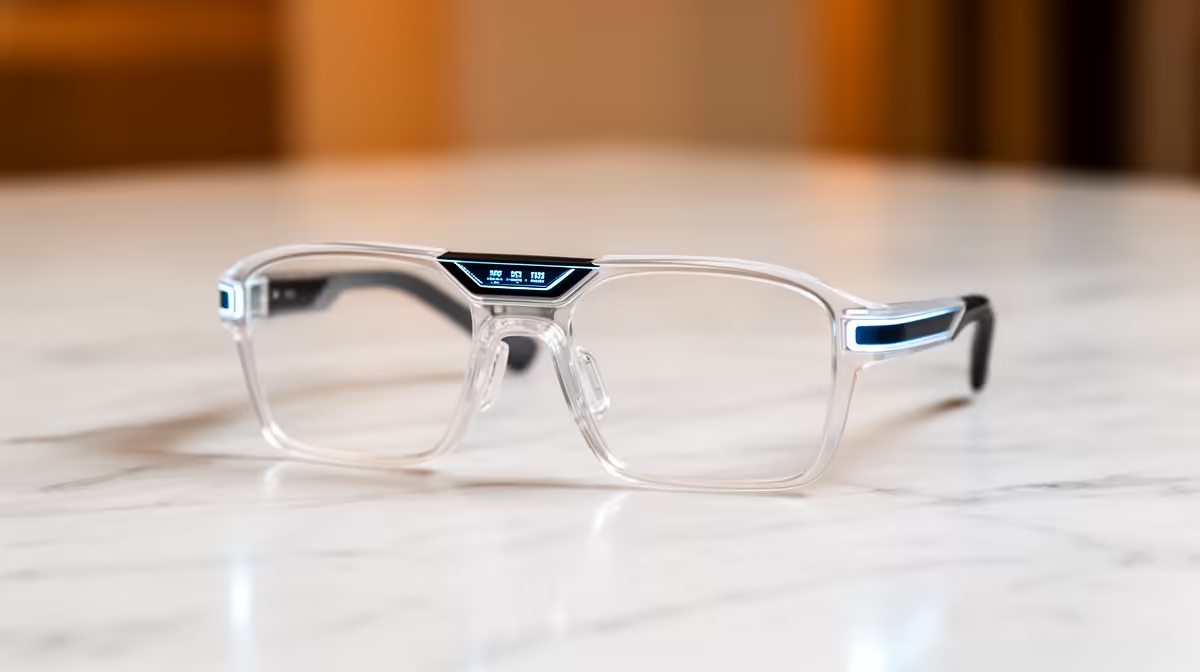
The smart glasses market is about to get crowded, and that changes the buying calculation. Right now one brand dominates, but Google and Samsung have a competitor landing in fall 2026 and Apple is rumoured for late 2027. So the real question is not whether smart glasses are good, but whether to buy smart glasses now or wait for the wider field to arrive. The answer depends on how much you value having them today versus more choice tomorrow.
Quick Answer
If you want smart glasses for daily use now, buying the current Meta options makes sense, since they are mature and the wait for alternatives is long. If you can hold out, Google and Samsung's Android XR glasses with Gemini arrive in fall 2026 and Apple's are rumoured for late 2027, so the field widens significantly within a year or so.
What is actually coming, and when
The current market is led by Meta's Ray-Ban and Oakley glasses, which set the template for audio-and-camera AI eyewear. That near-monopoly is ending. At its developer event in 2026, Google revealed Android XR glasses built with Samsung and Qualcomm, running the Gemini assistant, with audio models launching first in fall 2026 through eyewear partners. Notably, these are planned to work with both Android phones and iPhones, a cross-platform stance that sets them apart from the current lineup.
Apple is the other shoe yet to drop. Reports point to a first pair of Apple smart glasses in late 2027, built around contextual AI rather than an in-lens display at launch. So the timeline is staggered: a real second option this fall, and a third major player roughly a year after that.
The case for buying now
The strongest argument for buying today is that the current glasses already work well. The hardware has had two generations to mature, the audio-and-camera experience is genuinely useful, and you get the benefit immediately rather than waiting out a year of release dates. Early adopters who want a hands-free camera and an on-the-go assistant have a proven product available now.
There is also a practical point about availability. New launches arrive in select markets first, and South African availability of any device tends to lag the initial release, sometimes by months. So even the fall 2026 alternatives may not reach local shelves the moment they launch. If you want glasses in hand this year, the existing options are the reliable route, and they sit in the AR glasses range for comparison.
The case for waiting
The argument for patience is choice and competition. Three serious players instead of one usually means better hardware, sharper pricing and more frame styles. The Android XR glasses bring Gemini and cross-platform support, which matters if you are on an iPhone but want an alternative to Apple's own future product. Waiting also lets you read real reviews of the new entrants before committing.
The cost of waiting is time and uncertainty. Fall 2026 is the earliest for the second option, local availability later still, and Apple's late-2027 timeline is a rumour that could slip. If you wait for the perfect lineup, you may sit on the sidelines for well over a year while the technology you wanted was usable the whole time.
What the 2026 wave actually changes
It is worth being precise about what more competition delivers, because not every change matters to every buyer. The clearest gain is choice of style and platform. The Android XR glasses arrive through established eyewear partners, which means more frame designs, and their cross-platform support means an iPhone owner finally has a credible alternative built around a different assistant. That breaks the current single-brand lineup open in a way that benefits buyers regardless of which one they eventually pick.
The less certain change is the pace of display technology. The current display model is impressive but early, and a wider field could push in-lens displays forward faster. Apple's rumoured entry is reportedly built around contextual AI rather than a display at first, so even the newest player may not lead with a screen at launch. That tempers the idea that waiting guarantees a dramatically more advanced product soon; the near-term competition is more about choice and refinement than a leap in capability.
The risk of waiting indefinitely
There is a quiet cost to holding out that is easy to overlook. Smart glasses improve in generations, and there will always be a better pair roughly a year away. If you defer every purchase until the next launch, you can spend years never owning the thing you wanted while the available product was already useful. The honest framing is that today's glasses are good enough to enjoy now, and the 2026 wave widens choice rather than rendering current hardware pointless. Waiting makes sense for a specific reason, such as wanting Gemini or holding for Apple, but waiting simply because something newer is coming is a loop with no end.
How to decide for your situation
Buy now if you have a clear daily use for the camera, audio or assistant, you are comfortable with the current feature set, and you would rather have a working product than the newest one. The maturity of today's glasses makes them a low-risk purchase.
Wait if you are not in a hurry, you specifically want Gemini or cross-platform support, or you are an iPhone user inclined to hold out for Apple's entry. Just be realistic that the wait is measured in many months, with local availability adding more. The accessories and cases that pair with smart glasses often turn up among the popular add-ons, useful whenever you do buy.
Frequently Asked Questions
When do Google and Samsung smart glasses launch?
The Android XR glasses with Gemini are slated for fall 2026, with audio models first, through eyewear partners. They are planned to work with both Android and iPhone, unlike the current Meta-led lineup.
When are Apple smart glasses expected?
Reports point to late 2027 for Apple's first pair, built around contextual AI rather than an in-lens display at launch. That timeline is a rumour and could shift, so it is the latest of the three to arrive.
Are current smart glasses worth buying before the new wave?
For daily use, yes. The existing audio-and-camera glasses are mature and useful now, and the alternatives are many months away, with local availability later still. If you want them today, the current options are proven.
Will the new glasses reach South Africa at launch?
Probably not immediately. New devices usually arrive in select markets first and reach local shelves later, sometimes by months, so even the fall 2026 entrants may take time to appear locally.
Should an iPhone user wait?
Possibly. The Android XR glasses work with iPhones and arrive in 2026, and Apple's own glasses are rumoured for late 2027. If cross-platform choice matters to you, waiting gives more options, but the wait is long.
Torn between buying today and holding out for the 2026 wave? If you want the experience now, the current glasses are proven and ready. Browse what is in stock in the Evetech AR glasses range and weigh it against the timeline above.