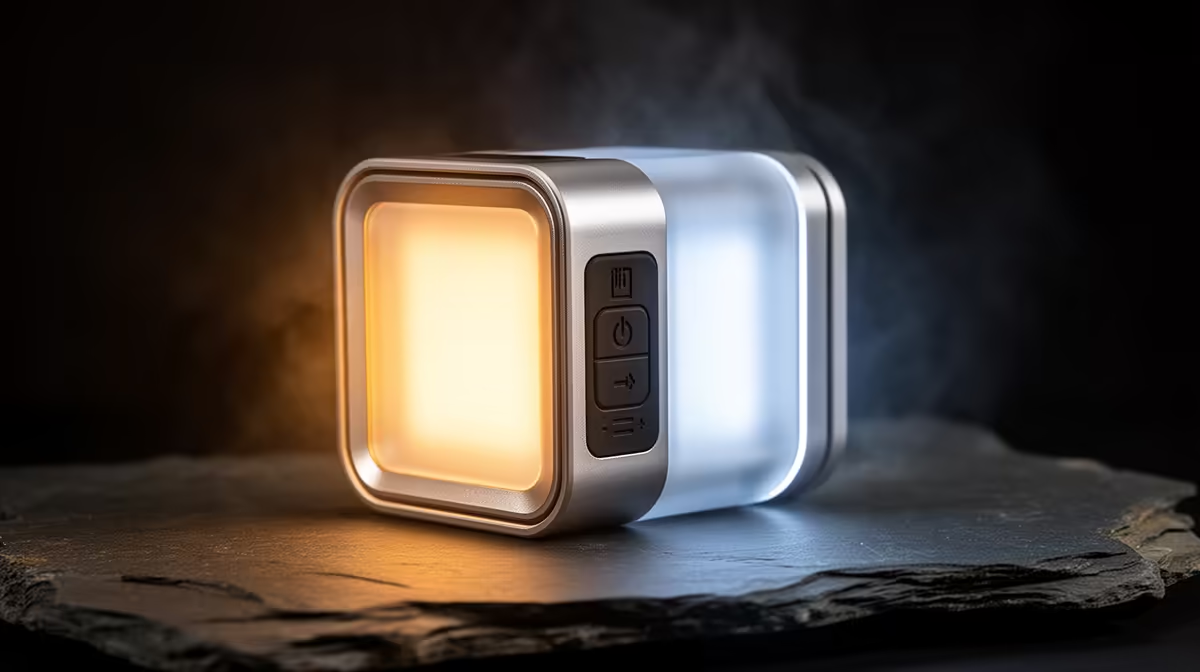
The idea that professional content requires professional-sized lighting rigs is worth questioning. A single compact LED light with the right specifications handles the majority of one-person content creation work, and knowing exactly where those limits fall helps you decide whether one panel is genuinely sufficient or whether a second unit is actually going to be used.
Quick Answer
A single compact LED light covers professional single-person work when it offers a full 2700K to 6500K Kelvin range and a CRI rating above 95. For talking-head video, streaming, and one-on-one interviews it is enough. Multi-angle setups and two-person scenes are where the single-light approach starts to show its limits.
🎙️ What Makes a Compact Light Professionally Capable
Physical size matters less than the quality of what comes out. A palm-sized panel with CRI above 95 renders colours with an accuracy that matches much larger studio fixtures at comparable intensity. CRI measures how faithfully a light reproduces a reference colour spectrum, and the gap between a rating of 85 and one of 96 is visible in skin and product footage.
Kelvin range determines how many different room types the single light can handle without a colour mismatch. A panel spanning 2700K to 6500K covers the full spread from warm domestic interiors to cool studio environments, which means one piece of hardware suits a home office, a café shoot, or a borrowed workspace in Joburg or Durban without compromise.
These two specifications, CRI and Kelvin range, are the ones worth prioritising over a wider panel or a higher maximum lux output when the use case is close-up talking-head content.
Output and Distance
A compact panel at close range produces a spread of light perfectly suited to a single face. The softness of the light, its quality of wrapping around facial features, improves as the panel gets closer to the subject. This is actually an advantage of working small. A compact light 40 to 50cm from a face is softer and more flattering than a larger panel at two metres.
The limitation appears when the scene is physically larger. Full-body framing, two people in shot, or a wide product table all need either a bigger source or the compact panel moved back. Moving it back concentrates the light into a harder beam and may require supplementary fill.
🔆 Stretching One Light Into Two With Bounce
A reflector, a sheet of white foam board, or even a well-positioned white wall converts a single key into a two-source result. The compact panel acts as the key, hitting the subject from one angle, while the reflected output from a nearby surface fills in the opposite side.
This technique costs almost nothing and is standard among solo creators who want a more three-dimensional lit look without carrying extra hardware. For South African creators who shoot in consistent home environments, a fixed white wall or ceiling bounce is predictable and repeatable from session to session.
Pro Tip ⚡
Before deciding you need a second light, test a white card or foam board held 60 to 80cm opposite your key on the shadow side of your face. Check the result on camera before assuming a second panel is necessary. Many creators discover the bounce is enough for their format.
🧠 Where One Light Stops Being Enough
Two scenarios reliably exceed what a single compact panel can cover cleanly.
The first is a two-person setup. Interviewing a guest who sits beside or across from you means both faces need adequate front light. A single key serves one person well and the other poorly, with the off-axis subject getting spill rather than clean frontal illumination.
The second is separation lighting. Creating visible depth between subject and background requires at least a background or rim light as a distinct source. A single key produces a flat result against any background without some separation. For productions where visual depth matters, the second panel earns its place.
For SA mobile creators, podcasters, and streamers working solo in consistent environments, the single compact light genuinely covers the brief. Adding a second panel before the first scenario applies is a hardware purchase that produces no visible improvement to the final output.
Frequently Asked Questions
What does CRI actually change in a professional result?
CRI measures how accurately the light reproduces colour compared to a reference. A high-CRI source above 95 renders skin tones, clothing, and product colours as the eye would see them in natural light. A low-CRI panel in the 80 to 85 range creates a slightly off result where reds and warm tones appear dull, which affects skin and product footage noticeably in close-up work.
When does a single panel stop covering a professional brief?
When you need to light two people simultaneously or when you want visual separation between a subject and the background. A single key light handles one person with bounce fill very well, but as soon as the scene geometry requires two independent light sources at different angles, a second unit becomes genuinely necessary rather than optional.
Is compact size a limitation for output in professional work?
For close-range talking-head content, no. A compact panel at 40 to 60cm from the subject delivers sufficient intensity for most cameras at base ISO with room to spare. For broader scenes or any situation where the panel needs to be moved further back, a larger source or additional unit becomes relevant because the output at distance may not be sufficient.
How do professionals use one light to simulate a two-light setup?
By adding a reflector opposite the key. A white surface roughly 50 to 80cm from the subject on the shadow side catches the spill from the key light and redirects it as a softer fill. The result on camera reads as a key-plus-fill look without the cost, weight, or complexity of a second panel and stand.
Is a single compact panel the right choice for SA mobile shooting?
For most on-the-go content, yes. A compact panel charges via USB-C, weighs very little, and handles the close-up framing typical of mobile vlogs and social content. The combination of flexibility, battery compatibility, and high-CRI output makes it the most practical single-light solution for creators who change locations frequently.
Ready to see what a single well-specified compact LED can actually do?
Browse the portable LED video light range at Evetech and find the panel that delivers professional output without the professional-sized kit list.