The difference between a flat, washed-out stream and one that looks like it was produced in a proper studio often comes down to how many light sources are in the room, and where they are placed. Single versus multi-point lighting for streamers is not just about budget; it is about the look you are going for and the space you have to achieve it. A single well-positioned light does the job cleanly for most setups. Adding a second and third light source builds depth and separation that one fixture simply cannot deliver.
Quick Answer
A single key light at 45 degrees covers most casual and talking-head streams well. A two-point setup with a softer fill opposite the key lifts the shadowed side of the face without flattening it. Three-point rigs add a backlight for true studio depth. Scale up only when the space and budget allow.
💡 The Single Light Setup: Fast, Simple, Effective
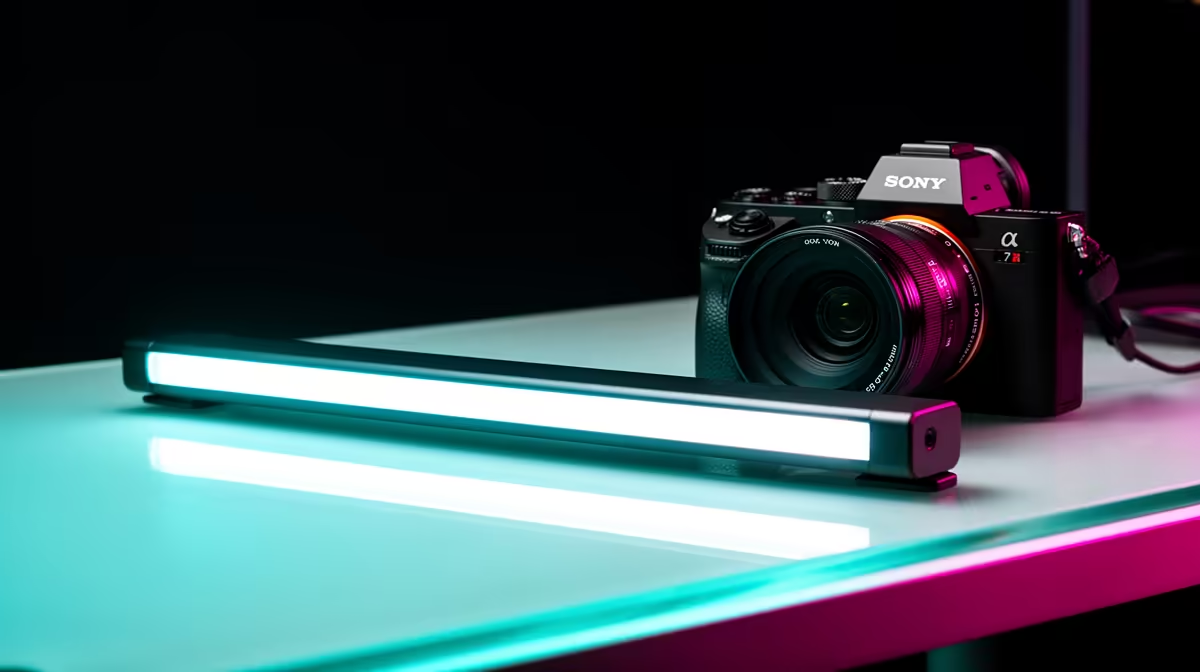
A single key light placed at roughly 45 degrees to the side of your face and just above eye level gives an even, pleasant result that works on nearly every stream. This is the entry point most solo streamers start with, and for good reason: it requires one fixture, one power point, and five minutes of positioning.
The main limitation of one light is the shadow it creates on the side of your face that the light is not hitting. Whether that reads as a problem depends on the look you want. For gaming streams and casual talking-head content, a single-side shadow reads as natural and can add visual interest. For professional presentations or talking-head educational content, that shadow can look unintentional.
A diffuser in front of the key light softens the shadow edges considerably, moving the single-light result closer to what two lights produce. A softbox panel is inherently diffused. A bare LED panel is harsher and benefits from a clip-on diffusion cloth or a sheet of frosted acrylic in front. At R700 to R1,000 for a quality single panel, this is the value option.
✨ Two-Point Lighting: Depth Without Complexity
Adding a second light on the opposite side of the key completes the basic two-point configuration. The second light, called the fill, runs at roughly half the brightness of the key. This ratio, called a 2:1 key-to-fill, is the most versatile starting point. It lifts the shadow from the dim side of your face without cancelling the dimensionality the key creates.
Going brighter with the fill produces a flatter result. A fill at the same power as the key gives a face that reads as evenly lit but lacks modelling. Going dimmer below half power deepens the shadow rather than lifting it. The 2:1 starting point is the result most streamers are looking for when they describe wanting to look "studio-lit."
Two-point setups work in small bedroom spaces because the fill can sit close. The fill does not need to be a large panel; even a smaller secondary LED at half power positioned about 1m away on the opposite side does the job. The total cost of a two-panel setup runs from roughly R1,500 to R3,000 depending on panel quality.
Pro Tip ⚡
Before buying a second light, try placing a sheet of white card or a foam board on the unlit side of your setup at roughly arm's length. This bounces some of the key light back as a makeshift fill. If it improves the look, a dedicated fill panel will do the same job more reliably and at adjustable intensity.
🚀 Three-Point Rigs: The Full Studio Look
A three-point lighting setup adds a backlight positioned behind and above the subject, aimed at the top of the head and shoulders. The backlight creates a rim of light that separates you visually from the background, adding the depth that makes studio production look three-dimensional rather than flat.
This is the configuration that distinguishes polished broadcast setups from home streams. The backlight does not need to be bright; it is often run at 20 to 30 percent of the key's output. Its job is to create an edge highlight, not to light the face.
A full three-light kit runs from roughly R2,500 to R4,000 for functional setups, not including stands. It also requires a room with enough space to position three stands without crowding each other. A bedroom streamer in a compact Joburg flat will quickly run out of practical positions for three stands. Two-point lighting often delivers 80 percent of the three-point look at half the cost and fits tighter spaces.
🎯 Matching the Setup to the Stream Type
The choice between one, two, and three lights should be decided by the type of content, the room, and the upgrade path you are actually on.
For casual gaming, reaction content, and informal chats, a single quality key light is all you need. For IRL content, tutorial streams, and educational material where your face is the primary focus, two points creates the kind of polished look that matches the content's tone. For streamers building toward a broadcast-quality studio setup with a defined background, three points is the natural endpoint.
Build the lighting in stages rather than buying everything at once. Start with one strong key and evaluate whether the fill shadow actually bothers you before spending on a second panel. The majority of streamers who start with one light find it meets their needs for months before the itch to upgrade appears.
Frequently Asked Questions
When is a single light genuinely enough for streaming?
For casual gaming, talking-head streams, and any content where a natural one-side shadow suits the tone, a single key light at 45 degrees is entirely sufficient. It simplifies the setup, requires only one power point, and at R700 to R1,000 for a quality panel, it is the sensible starting point.
What does adding a fill light actually change?
The fill light brightens the shadowed side of your face, reducing the contrast between the lit and unlit sides. At half the key's power, it lifts the shadow without flattening the face. The result is a more evenly lit face that reads as intentionally lit rather than having one naturally bright side.
How many lights make up a three-point rig?
Three: a key light as the primary source, a fill light at reduced power on the opposite side, and a backlight positioned behind and above you to separate your outline from the background. Each light handles a distinct part of the on-camera image.
Does a three-point setup cost significantly more than one light?
Yes. A one-light setup runs from R700 to R1,000. A full three-light kit with stands runs from R2,500 to R4,000 depending on panel quality. The jump is real, so build in stages rather than buying all three points at the outset.
Which lighting setup suits a small bedroom stream?
A single key or a simple two-point setup. A full three-light rig requires floor space for three stands, which a compact room often cannot accommodate without the stands appearing in the background or creating awkward cable paths. Two lights, one key and one fill, give most of the studio look in a confined footprint.
Ready to build the lighting setup your stream deserves?
Browse LED panel lights, softboxes, and ring lights for South African streamers, from single-key starters to full multi-point studio rigs.