Quick Answer
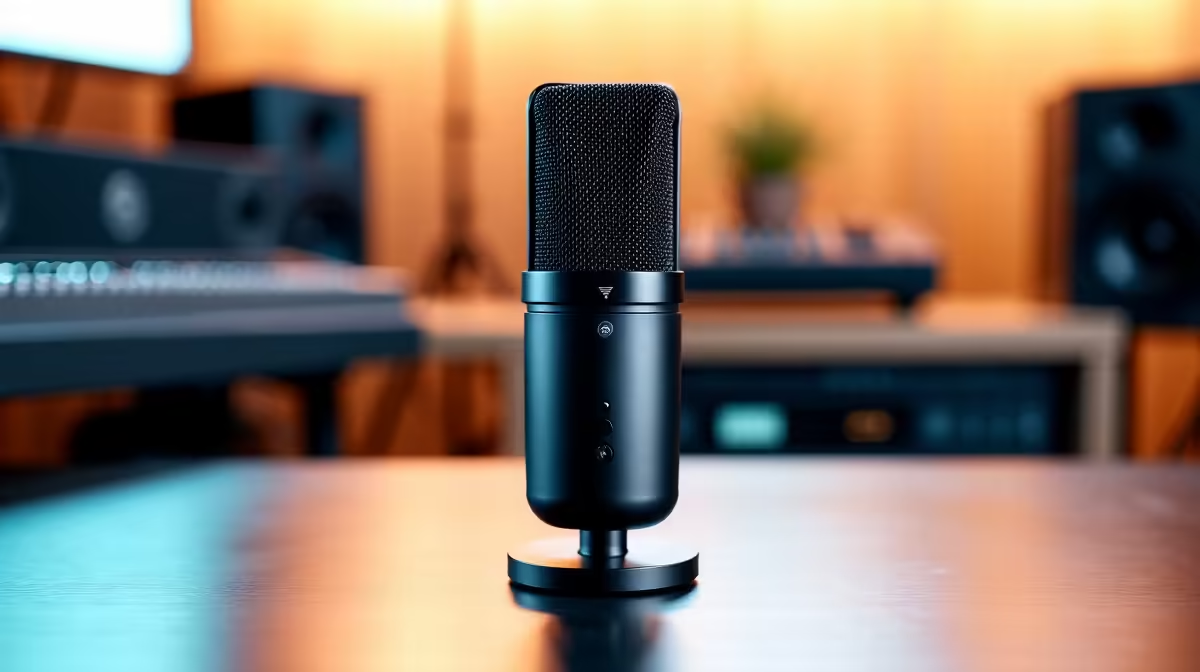
Skip RTX 5070 Ti Super for podcast recording when its broad SA band of R27,000 to R36,000 crowds out the parts that shape the result. Compare RTX 4060, RX 7600, and Intel Arc B580 first. A useful setup starts around 24-bit 48kHz audio, a Shure SM58-style dynamic mic and fans quiet enough not to bleed into the take.
Better Picks To Compare
Start with these broad local bands: RTX 4060: R7,500 to R10,000; RX 7600: R5,500 to R7,500; Intel Arc B580: R6,500 to R9,000. For named examples, compare Shure SM58-style dynamic mic, Focusrite Scarlett 2i2-class interface, closed-back headphones. These are product-class examples, not promises of live stock or exact checkout pricing.
The useful target is 24-bit 48kHz audio, dynamic mic, low fan noise. If a cheaper card or non-GPU part reaches that target, the saving can go into the monitor, PSU, RAM, SSD, microphone, or cooling you notice every day.
SA Buyer Checks Before Checkout
RTX 5070 Ti Super sits around R27,000 to R36,000 with 16GB VRAM expectations and usually needs a 750W class PSU plan. Check 300mm case clearance, PCIe power connectors, two or three-slot cooler space, and whether the monitor or software can use the extra headroom.
For South African buyers in Johannesburg, Cape Town, Durban or smaller towns, local warranty handling and courier turnaround matter. A R3,000 to R10,000 saving is meaningful when it funds 32GB RAM, a 1TB NVMe SSD, a quieter cooler, a 144Hz or 240Hz monitor, or better recording gear.
FAQ
Should I skip RTX 5070 Ti Super for podcast recording?
Yes, skip it if one of the alternatives reaches 24-bit 48kHz audio, dynamic mic, low fan noise for less money. Keep RTX 5070 Ti Super only when the full basket still has enough RAM, storage, cooling and display quality.
What ZAR range should I compare?
Use broad ranges: RTX 5070 Ti Super is about R27,000 to R36,000, while RTX 4060: R7,500 to R10,000; RX 7600: R5,500 to R7,500; Intel Arc B580: R6,500 to R9,000. If the gap is more than R3,000, write down what that money improves elsewhere before paying more.
Which spec matters most here?
For podcast recording, start with 24-bit 48kHz audio, dynamic mic, low fan noise. Then confirm VRAM, PSU size, case fit and the real screen or app target. The better buy is the card that clears those numbers cleanly.