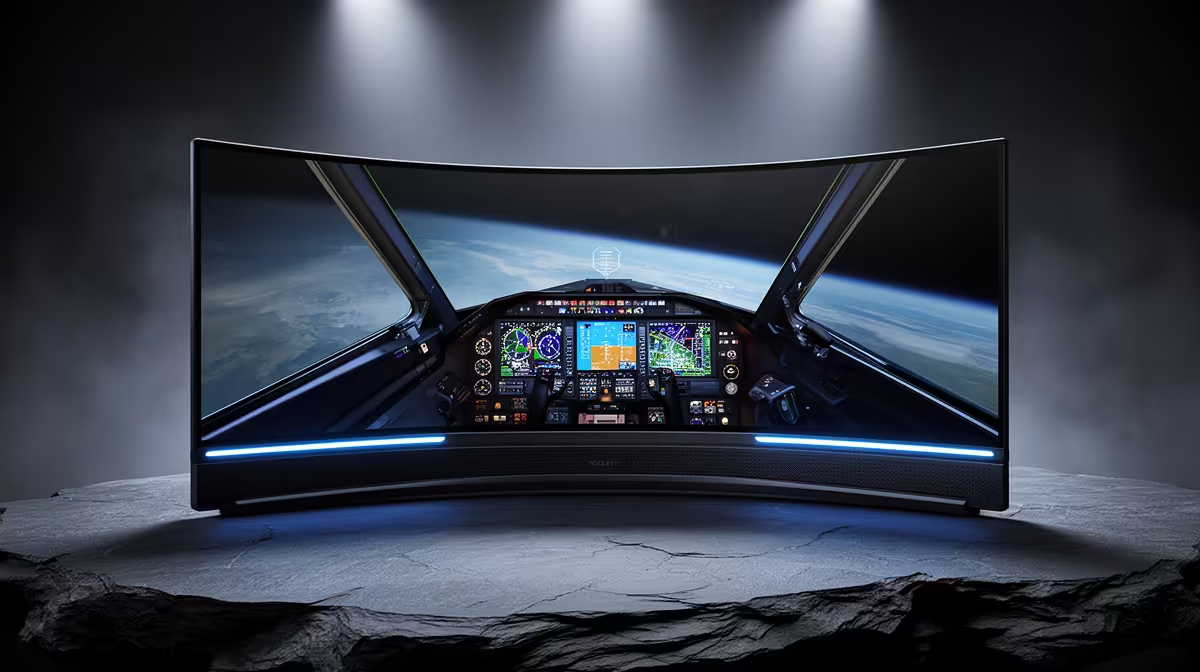
The MSI MAG 274F 200Hz at R3,006 is the smart pick for a simmer who wants a responsive gaming monitor without spending close to the stated budget. Its 200Hz refresh rate gives you more headroom than a 165Hz target, which helps cockpit panning, runway approaches, and fast camera movement feel smoother.
Smooth Monitor Choices For Flight Simulation
The AOC 27in QHD 200Hz at R3,200 is the stronger choice if you want extra desktop clarity for cockpit instruments and map windows. Its QHD spec gives the screen more working space than a basic 27-inch display, while the 200Hz refresh rate keeps the setup feeling quick.
The ViewSonic VX2779A 240Hz at R2,350 is the value option for players who prioritise motion smoothness. At 240Hz, it gives the highest refresh rate in this shortlist, which suits quick head-look movement and fast visual scanning.
Home Simulator Desk In South Africa
For a local home desk where space, budget, and comfort all matter, the Dell SE2726H 144Hz at R1,797 is a sensible lower-cost fallback. It does not reach 165Hz, but 144Hz is still a major step up from older office screens and keeps more budget available for controls, speakers, or a better chair.
The Dahua LM25 200Hz at R1,850 is the cheapest 200Hz option here, making it useful for a second screen beside the main panel. Use it for checklists, charts, or chat while the main display handles the cockpit view.
Ready to choose the right gaming monitor?
Start the gaming monitor shortlist shortlist with Dell SE2726H 144Hz at R1,797, especially if smart 165hz monitor flight simulation points you toward its listed spec.