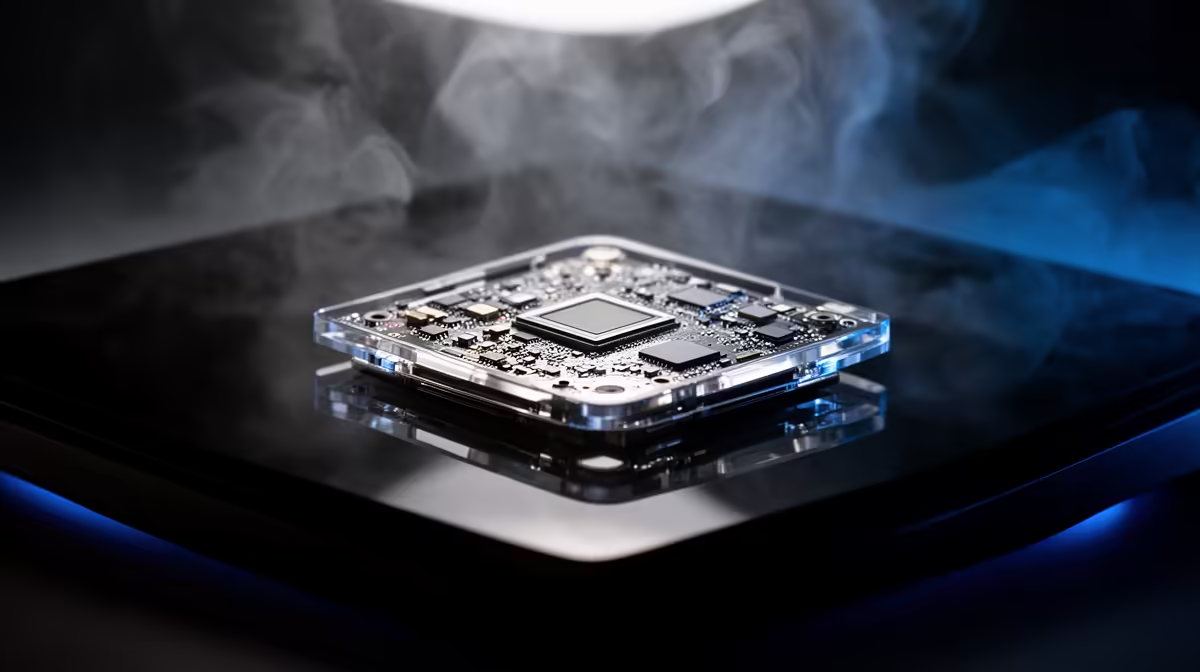
Cinematic 4K streaming is a specific look, not just a resolution number. It requires clean shadows, rich colour gradation, and the ability to work with soft, moody lighting without the image collapsing into noise. That is exactly what Sony STARVIS sensors for 4K streaming were designed to deliver, and understanding why they work changes how you approach both camera selection and lighting for a visually distinctive stream.
Quick Answer
Sony STARVIS sensors produce cinematic 4K streaming quality by stacking light-collecting photodiodes above their circuitry, drawing in more photons per pixel. The result is cleaner shadows, better colour depth, and the ability to stream beautifully under soft, low-intensity lighting that would grain out a conventional sensor.
🔬 The Physics Behind STARVIS Image Quality
Every camera sensor is built around a fundamental trade-off: each pixel needs circuitry to read and amplify its signal, but that same circuitry takes up space that could otherwise collect light. Front-illuminated sensors accept this trade, placing the wiring on the same surface layer as the photodiode. Each pixel ends up partly shadowed by its own electronics.
The STARVIS approach moves the signal-processing layer below the light-gathering layer. The entire top surface of each pixel faces incoming light without obstruction. More photons strike the active area per pixel, increasing the raw signal before amplification begins. A stronger raw signal needs less electronic boost to produce a visible image, and less boost means the accompanying electronic noise is proportionally smaller.
At 4K resolution the impact compounds across 8 million pixels. Shadow regions in the frame, the areas where a conventional sensor would grain heavily, retain genuine image information rather than random signal variation. Colours in transitional tones, the mid-shadow range where skin texture lives, hold gradation rather than banding or blotching.
Understanding Noise Floor in 4K
The noise floor of a sensor is the baseline level of unwanted signal variation present even when the image is perfectly exposed. At 4K resolution a high noise floor is visible at normal display sizes because the pixel density brings fine-grained noise into the visible range. STARVIS chips sit lower on this scale because the stronger per-pixel signal means less amplification is applied. Skin tones that hold smooth gradation across shadow and highlight transitions look natural and filmic; skin tones that band or grain look like a webcam, regardless of the resolution number.
✨ Building a Cinematic Lighting Setup Around STARVIS
The most direct benefit of STARVIS for aesthetics is the freedom it gives over lighting choices. A conventional 4K sensor needs meaningful light volume to keep shadows clean, often pushing creators toward bright, flat key lights that eliminate interesting shadows entirely.
STARVIS holds acceptable image quality at around 300 lux of soft diffused light, which is roughly the output of a medium-power softbox or a ring light with diffusion material applied. At that light level you can position the key light at an angle to the subject and create genuine shadow on one side of the face, the asymmetric lighting that gives a cinematic look its characteristic depth.
For streamers aiming for a specific aesthetic, this opens up visual possibilities that are difficult with a noisier chip. A low-key setup with a single diffused key at 45 degrees and a coloured accent behind the subject looks deliberate and considered on a STARVIS sensor. On a conventional chip at the same light levels, the dark areas grain out and the carefully designed shadow becomes ugly noise.
🌗 Colour Depth and Tonal Range
The extra light per pixel in STARVIS does more than reduce noise; it improves the accuracy of colour information across the tonal range. More photons mean more precise measurement of wavelength-specific data at each pixel site, which translates to better colour saturation, more accurate hue representation, and smoother gradients in areas like sky transitions or fabric folds.
For content with a distinct visual treatment, this colour depth is visible. A streamer running a dark-room aesthetic with coloured ambient lights behind them sees those accent colours rendered with more saturation and less bleed than a lower-quality sensor produces. The 4K30 frame rate STARVIS cameras use complements this colour quality: thirty frames per second carries a slightly heavier, more deliberate motion quality than 60fps smoothness, and for streamers building a specific visual identity the combination is a coherent aesthetic choice.
Pro Tip ⚡
Test your STARVIS camera at the exact lighting level you plan to stream under before finalising your setup. Set the key light, turn off overhead room lights, start the camera preview, and evaluate the shadow areas of your face. If they hold clean gradation and texture, your sensor is working as intended. If they grain, add one small fill card or reflector on the shadow side rather than increasing the key brightness. Preserving the lighting ratio while lifting shadow detail is how you keep the cinematic look without flattening the image.
🎯 Is STARVIS the Right Choice for Your Stream?
The sensor pays its price premium most clearly in two scenarios: dim or low-key lighting setups where visual atmosphere is part of the channel identity, and streams where colour accuracy matters, such as product reviews, art content, or anything where hue and tonal fidelity affect the viewer's perception of the subject.
For a brightly lit, clean-background stream where the setup sits under 500 lux of even white light, the STARVIS advantage is present but less decisive. Most decent 4K sensors look clean in those conditions, and the image quality gap narrows considerably.
The investment makes strongest sense when the streaming aesthetic leans into mood, shadow, or colour, and when the creator is prepared to light deliberately rather than compensating for poor sensor performance with blinding brightness.
Frequently Asked Questions
What gives a STARVIS sensor its core performance advantage?
The photodiode layer sits above the signal-processing circuitry, so the full pixel surface gathers light rather than sharing space with electronics. The larger effective capture area per pixel produces a stronger raw signal, which requires less amplification to reach a usable exposure level. Less amplification means the noise that amplification introduces is proportionally smaller, giving cleaner output in the shadow regions that most stress a camera sensor.
How does a STARVIS sensor create a cinematic streaming look?
The low noise floor allows streamers to work with soft, directional lighting at moderate intensity. Rather than needing bright flat illumination to keep the image clean, a STARVIS sensor holds clean detail at lower light levels where interesting shadow shapes are possible. The moody asymmetric lighting that characterises cinematic production becomes achievable on a webcam platform without the image quality falling apart in the darker areas of the frame.
Does STARVIS improve colour quality as well as noise performance?
Yes. More photon energy per pixel means more accurate colour data is collected at each site, producing richer tonal range in mid-shadow areas and better saturation in coloured accent elements. Skin tone gradation in particular benefits, holding smooth transitions across the shadow-to-highlight range rather than banding. For streams with a deliberate colour aesthetic, this is as useful as the noise performance improvement.
What frame rate do STARVIS webcams use for 4K?
Thirty frames per second is the standard output for STARVIS 4K webcams, and it is a frame rate with cinematic associations in both South African and international content production. It carries a heavier, more deliberate motion quality compared to the smooth flow of 60fps. For a stationary or slow-moving presenter this is a natural fit; for high-motion gaming content where frame fluidity matters, the 30fps ceiling is a trade-off to consider.
Is STARVIS overkill for a casual streamer with good room lighting?
For a setup under strong, even artificial light at 500 lux or above, the noise advantage of STARVIS is less prominent because most sensors perform acceptably in well-lit conditions. The investment returns most clearly in controlled dim setups or cinematic lighting rigs. A casual streamer in a well-lit room would notice the colour quality improvement in direct comparison, but for a daily stream it is not a decisive factor the audience will comment on.
Ready to build a streaming setup that looks like it was lit properly?
Browse the 4K webcam range and find the sensor technology that matches the cinematic visual standard you are building toward.