Staring at a loading screen while your mates are already dropping into the action... we've all been there. That frustrating delay is often not your CPU or graphics card, but your storage. For years, the trusty hard disk drive (HDD) was the king of PC storage. But as we head into 2025, the question is no longer just about speed; it's about relevance. So, in the ultimate SSD vs HDD 2025 showdown, is the hard drive finally extinct?
The Core Difference: Speed You Can Actually Feel ⚡
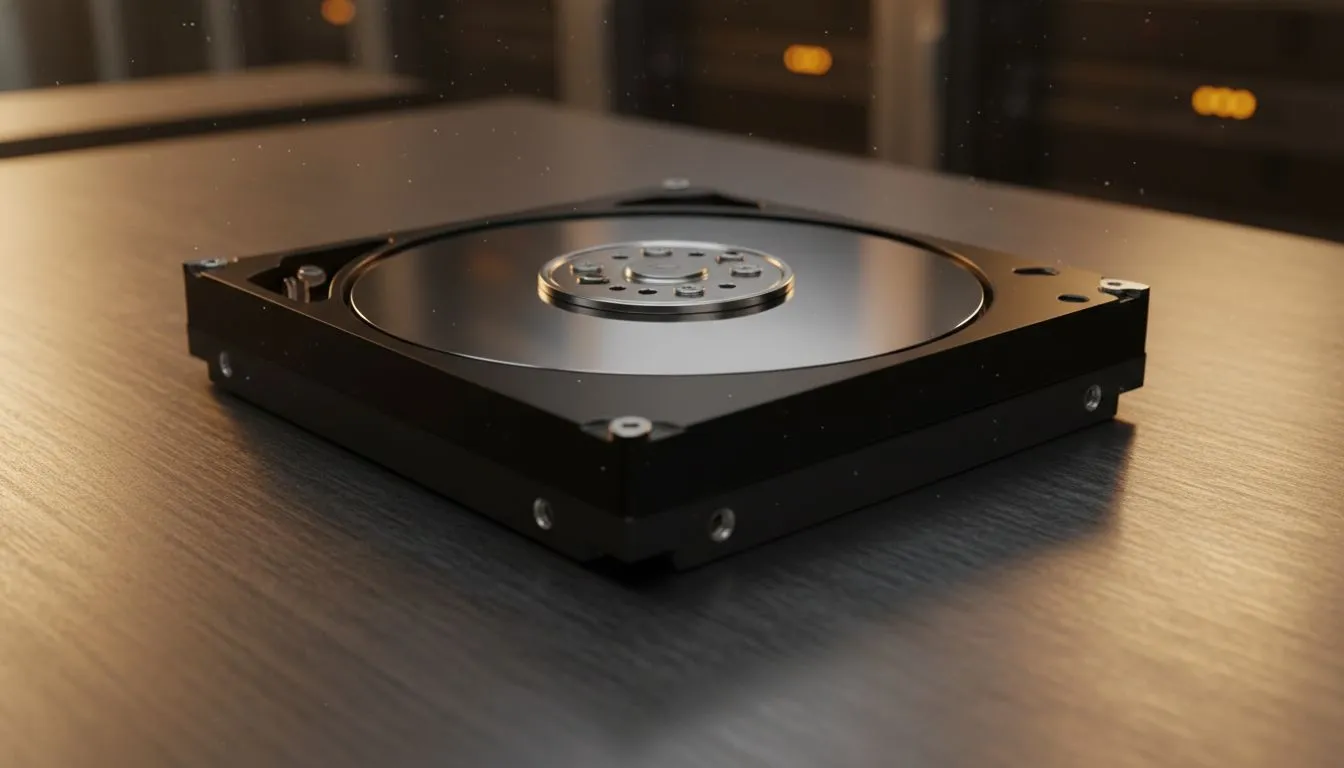
The fundamental battle between an SSD (Solid-State Drive) and an HDD (Hard Disk Drive) comes down to mechanics. An HDD is a mechanical device with a spinning platter and a moving read/write head, like a tiny record player. An SSD, on the other hand, uses flash memory chips and has no moving parts.
Think of it this way: finding a file on an HDD is like searching for a specific book in a massive library by physically walking to the right shelf. An SSD is like having a digital catalogue that instantly teleports the book to your hands.
This difference is massive in the real world:
- Boot Times: Windows can load in seconds on an SSD, while an HDD can leave you waiting for a minute or more.
- Application Loading: Programs and games launch almost instantly.
- File Transfers: Copying large files takes a fraction of the time.
For anyone building or upgrading a PC today, the choice for your primary drive is clear. A modern system simply isn't complete without one of these zippy solid-state drives.
SSD vs HDD for Gaming in 2025: It's Not Even a Contest
A few years ago, an SSD was a luxury for gamers, mainly for reducing load times. Now, it's a necessity. Modern games are being built from the ground up to take advantage of SSD speeds, thanks to technologies like Microsoft's DirectStorage API.
These technologies allow the graphics card to stream game assets directly from the storage drive, bypassing the CPU. This results in:
- Vast, Seamless Worlds: Developers can create enormous, detailed environments without ugly loading screens between areas.
- No More Texture Pop-In: You won't see blurry, low-res textures suddenly snap into focus as you get closer.
- Instantaneous Loading: Get from the main menu into the game in a blink.
Games like Starfield and Cyberpunk 2077: Phantom Liberty already list an SSD as a minimum requirement. For the ultimate gaming experience in 2025, you need the blistering speeds that only high-performance NVMe SSDs can provide. The old HDD just can't keep up.
Cloning Made Easy ✨
Upgrading from an old HDD to a new SSD? Don't reinstall everything! Use free software like Macrium Reflect or Clonezilla to "clone" your entire old drive to the new one. It creates an exact copy, including Windows, your games, and all your files. Just swap the drives, boot up, and enjoy the incredible speed boost instantly.
The HDD's Last Stand: Price-Per-Gigabyte
So, is there any reason to even consider an HDD in 2025? Just one: cost. When it comes to pure, raw storage capacity for the lowest price in ZAR, the hard drive still holds an edge. While the price gap is shrinking, you can still get a massive 8TB HDD for the price of a much smaller 2TB SSD.
This makes the HDD a viable choice for a very specific role: a secondary drive for bulk data storage.
- Media Archives: Storing huge collections of photos, videos, and music.
- Backups: A large, affordable destination for system backups.
- Game Library Storage: Storing older or less-played games that you don't need instant access to.
Even with this niche, you can often find some of the best SSD deals that make a compelling argument for going all-flash, especially for smaller capacity needs.
The Verdict: Is the Hard Drive Obsolete? 🚀
For your operating system, your main applications, and your modern game library... yes, the hard drive is effectively extinct. The performance gap in the SSD vs HDD debate is no longer a gap; it's a chasm. Building a new PC with an HDD as the primary boot drive in 2025 is a massive mistake that will bottleneck every other component.
The future is solid-state. Whether you're grabbing a portable drive for work on the go, like an external SSD, or slotting a new drive into your motherboard, flash storage is the way. The HDD has been relegated to a supporting role as a cheap-and-deep data archive, but its days as a leading component are over. The reign of the SSD is here to stay.
Ready for an Instant Speed Boost?
The SSD vs HDD debate is settled. For a faster, smoother, and more responsive PC experience, an SSD is the single most impactful upgrade you can make. Explore our massive range of SSDs and find the perfect drive to leave loading screens in the dust.