


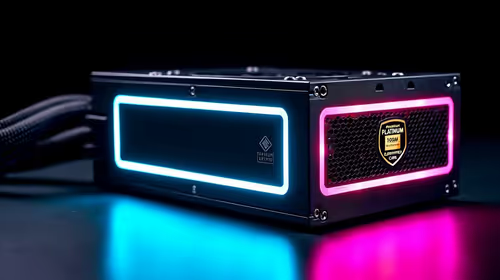
80+ Gold vs 80+ Platinum for Couch co-op gaming in SA
80+ Gold vs 80+ Platinum for couch co-op gaming is about PSU efficiency, heat, fan behaviour, quality, and wattage headroom, not direct FPS. SA buyers should compare the whole build.
Read moreFor an engineering student in South Africa, a standing desk is less excessive if long design, coding or calculation sessions strain the setup. Still compare simpler peripheral buys first, including GAMDIAS Hermes P2A R130, Logitech G305 R525, and Promate Baton R280.
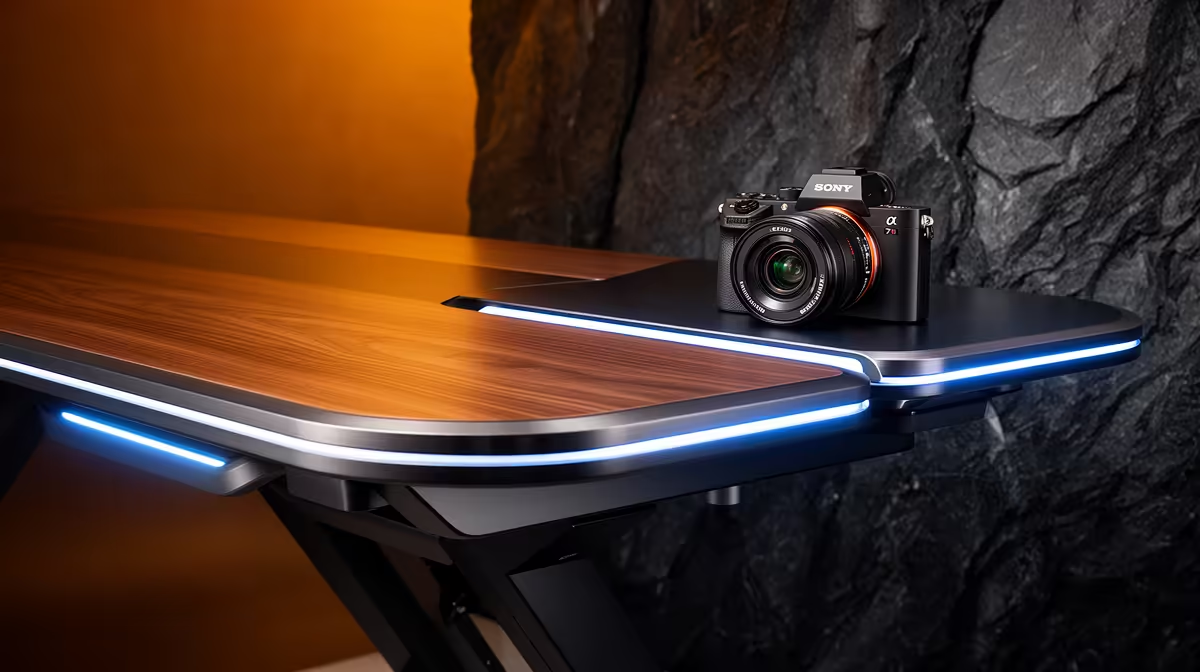
A standing desk is not excessive when an engineering student spends long blocks on CAD, reports and online labs, but it is not a cure for poor posture. A stable height range, monitor position and movement habits matter more than the standing label.
Set sitting height so elbows stay close to the body and feet have support. At standing height, keep shoulders relaxed and the keyboard near elbow level. Raise the screen independently when needed. A laptop alone often sits too low, so an external keyboard and mouse may be essential.
The factpacks list no verified standing-desk SKU or price for this setup. Compare current options by desktop depth, minimum and maximum height, load rating, crossbar clearance, wobble and warranty. Measure textbooks, drawing equipment, monitor arms and any lab hardware before choosing a surface.
The ASUS ExpertBook P5405 with Core Ultra 5 226V, 16GB memory and 512GB storage costs a verified R12,700 as a portable engineering-study reference. Confirm CAD, simulation and course requirements, since demanding 3D work may need dedicated graphics. The desk cannot correct an underspecified computer.
Alternate positions instead of standing through every lecture. Start with short intervals, keep cables clear of moving parts and place controls where accidental activation is unlikely. Persistent pain or numbness needs professional assessment rather than another furniture adjustment.
Planning an engineering study space? > Ask Evetech to match the laptop, display and desk accessories to the course workload.
Yes, when engineering workloads keep the student at the workstation long enough for posture changes to matter.
Compare GAMDIAS Hermes P2A R130, Logitech G305 R525, and Promate Baton R280 against the comfort issue being solved.
Confirm the desk can support the current study screen, keyboard, mouse and notes without making drawing or typing awkward.
Choose the cheaper fix first if a mouse, keyboard or small accessory solves the engineering study pain point.
Engineering students should judge the desk by workstation endurance during projects, not by whether it looks impressive.
Upgrade the core workstation only when added peripherals no longer improve comfort, responsiveness or practical study flow.
80+ Gold vs 80+ Platinum for couch co-op gaming is about PSU efficiency, heat, fan behaviour, quality, and wattage headroom, not direct FPS. SA buyers should compare the whole build.
Read more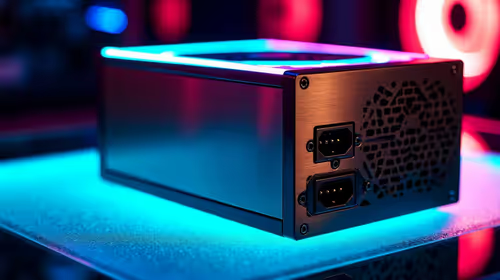
80+ Platinum or 80+ Titanium for competitive should be shortlisted around the job it must do. South African buyers should compare fit, performance, compatibility, and upgrade room, warranty path, and upgrade room before treating any pick as best.
Read more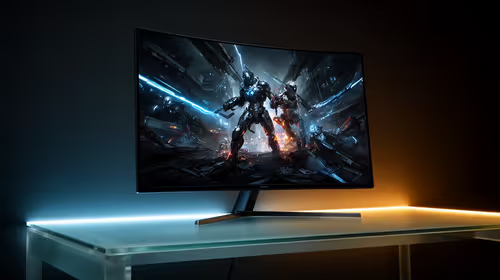
The real world difference between IPS and OLED for AAA single-player gaming is immersion versus versatility. OLED lifts contrast and dark scenes, while IPS can suit bright rooms, mixed PC use, and SA buyers watching total setup cost.
Read more
HDMI 2.1 vs HDMI 2.0 for SA MMO needs a workload-first comparison. For SA buyers, judge real performance, platform fit, warranty path, power needs, and upgrade timing before choosing either side.
Read more
USB4 and Thunderbolt 4 differ for competitive esports through dock, display, and capture consistency. Use this real world difference between usb4 and thunderbolt 4 for competitive guide to keep SA tournament desks tidy without assuming better ping.
Read more
Magnetic switches vs Mechanical switches depends on Competitive esports needs, platform limits, and budget fit. Compare compatibility, latency, upgrade path, and real setup constraints before choosing for an SA build.
Read more
B850 motherboard FPS drops needs a methodical troubleshooting pass. Review drivers, thermals, power settings, background apps, cables and game settings before replacing parts in an SA gaming setup.

Gaming PC FPS drops in South Africa often come from drivers, thermals, background apps, power plans, or in-game settings. Check one change at a time and use the same scene before buying upgrades for your local setup.

Difference between PCIe 5.0 and PCIe 4.0 explained for PC builders starts with bandwidth, lanes, and support. SA builders should match the motherboard, GPU, NVMe drive, and budget before choosing a platform.
Windows 11 mechanical keyboard setups rarely cause display banding directly. Fix color banding by checking HDR, colour depth, GPU range, monitor profiles, and any new RGB utility conflicts.

Steam Big Art Mode enlarges library artwork in Big Picture Mode and on Steam Deck, while the same beta adds configurable screensavers. Both features are optional and currently require the Steam beta client.
Diablo 4 HDR settings work best after Windows and the display are calibrated, then the game's black point, brightness and white point are adjusted in that order. Use visible shadow detail and controlled highlights, not copied values from another screen.

The best HOTAS for Elite Dangerous is a separate stick-and-throttle set with enough analogue axes for pitch, roll, yaw and thrust, plus local support. Evetech's captured flight-simulation sample lists the complete Logitech X56 at R4,999.
Nintendo Switch 2 docked VRR arrives with system version 23.0.0 and also requires a dock update. The connected TV or monitor and the running software must support VRR before the output can follow changing frame rates.
750W for RTX 5080 Super needs a full-build check, not a simple yes. Review GPU guidance, CPU draw, transient load, connectors, PSU quality, and upgrade plans before deciding.
80+ Gold vs 80+ Platinum for couch co-op gaming is about PSU efficiency, heat, fan behaviour, quality, and wattage headroom, not direct FPS. SA buyers should compare the whole build.
ultrawide monitor FPS drops needs a methodical troubleshooting pass. Review drivers, thermals, power settings, background apps, cables and game settings before replacing parts in an SA gaming setup.
80+ Platinum or 80+ Titanium for competitive should be shortlisted around the job it must do. South African buyers should compare fit, performance, compatibility, and upgrade room, warranty path, and upgrade room before treating any pick as best.