Sitting still for eight hours straight wears on your back, and the two ways to fix it pull in very different directions on price and effort. A full standing desk swaps out your entire worktop for a motorised surface that rises and falls, while a desk converter perches on top of the desk you already own and lifts just your screen and keyboard. The choice between them comes down to your space, your budget, and whether you can replace the furniture in the first place.
Quick Answer
A standing desk replaces the whole worktop and raises the entire surface, giving the cleanest ergonomics and the most usable desk space. A desk converter sits on your existing desk and lifts only the monitor and keyboard tier, costing far less and needing no furniture swap. For SA renters who cannot replace fitted or built-in desks, the converter is usually the smarter and cheaper entry into sit-stand working.
What each one actually is
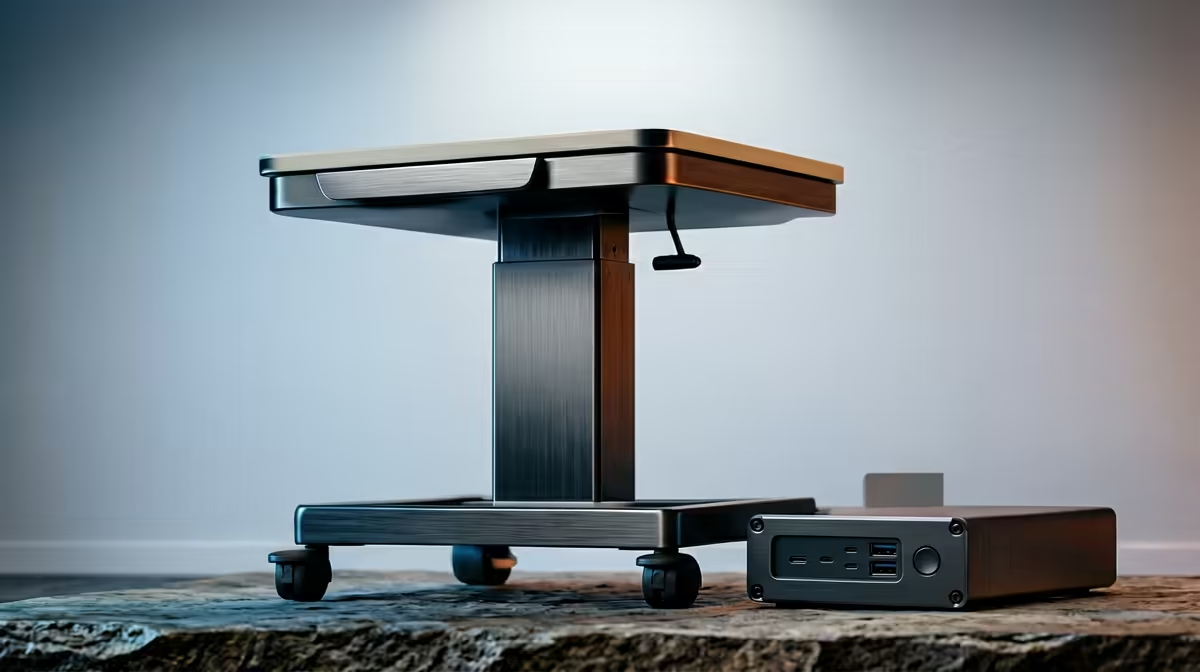
A standing desk is the desk. The legs contain motors or a manual crank, and pressing a button moves the full tabletop between sitting and standing height, typically from around 70cm up past 120cm. Everything on the surface rises together, so your dual monitors, laptop, notes, and coffee all travel as one stable platform.
A desk converter is a riser that lives on top of your current desk. It usually has a two-tier design: a lower shelf for the keyboard and mouse, and an upper shelf for the monitor. You lift it from sitting to standing with a gas-spring lever or an X-frame mechanism, leaving the rest of your desk untouched. Nothing about your existing furniture changes.
If you are building or refreshing a workspace, it helps to sort out the furniture side too, and the height-adjustable desk range at Evetech takes care of the surface half of a sit-stand setup.
Where the standing desk wins
Ergonomics and stability
Because the whole surface moves, your screen, keyboard, and arms keep their correct relationship at every height. There is no compromise on monitor distance or keyboard angle when you stand. A solid electric frame is also rock-steady, with little of the wobble that taller converters can show when fully raised, which matters if you type hard or run a heavy dual-monitor arm.
Space and clean looks
A standing desk gives you the full tabletop at both heights, so a large monitor setup, a laptop, and your peripherals all fit without crowding. There is no riser eating into your depth and no second platform to work around. The look is cleaner and the cable management is simpler because everything routes through one frame.
Where the converter wins
Cost and zero commitment
A converter costs a fraction of a motorised desk and needs no installation beyond placing it down. You keep the desk you have, which is decisive for renters and anyone with built-in or fitted furniture they cannot replace. If you later move or change your mind, you simply lift it off.
Flexibility for shared and small spaces
In a shared home, a flat, or a student room where the desk is not yours to change, a converter slots in without altering anything. It also suits people who only want to stand for part of the day and do not need the full surface to move. For many SA buyers easing into sit-stand working, that lower-risk entry is exactly the point.
The trade-offs to weigh
The converter's limits are real. It occupies desk depth, it can wobble more at full height, and it constrains how you arrange monitors because the upper shelf sets your screen position. The standing desk's limits are cost and permanence: it is the bigger spend and it means replacing furniture you might not own. Picture your daily layout, count how many screens and devices need to move together, and check whether you are even allowed to swap the desk before deciding. The right desk surface underpins either choice, and the popular workspace add-ons at Evetech complement both options for the hours you spend at the desk.
How Long Should You Actually Stand?
Both setups deliver their benefit only if you use them correctly, and that means alternating rather than standing all day. Research consistently points to 30-minute cycles as a practical guide: stand for 30 minutes, sit for 30 minutes, and repeat. Standing continuously for several hours produces its own fatigue and joint strain, which is why an anti-fatigue mat is a companion purchase for either option. Most electric desks include programmable memory presets so you can set your exact seated and standing heights and switch with one press, removing the friction that causes people to stop using the height adjustment altogether.
The South African Rental Consideration
In South Africa, a large proportion of young professionals and students live in rented apartments or shared spaces where they either cannot replace furnished desks or face the practical challenge of moving bulky electric frames when they relocate. Converter appeal in this context goes beyond price. A converter packs flat or disassembles quickly and moves in a standard vehicle, while a standing desk frame requires disassembly and transport of heavy steel legs. If there is any chance you are moving within two years, weigh that portability against the ergonomic premium of a full desk.
Who should buy which
Choose a full standing desk if you own your space, run a multi-monitor setup, and want the best ergonomics with no compromise on surface area. Choose a converter if you rent, have fitted furniture, want a low-cost trial of sit-stand working, or only plan to stand for short stretches. Both deliver the core health benefit of changing posture through the day, so the deciding factors are budget, space, and whether the desk underneath is yours to replace.
Frequently Asked Questions
Is a desk converter as stable as a standing desk?
Generally no. A good electric standing desk is steadier at full height, while taller converters can wobble under a heavy load. For most typing and single-monitor use a quality converter is stable enough, but heavy dual-monitor arms favour a full desk.
Can I use a converter if my desk is built in?
Yes, and that is its biggest advantage. A converter sits on any flat surface without modifying it, making it ideal for fitted or built-in desks you cannot replace.
Which option is better value for SA buyers?
A converter offers far lower upfront cost and no furniture replacement, which suits renters and smaller budgets. A standing desk costs more but delivers better ergonomics and space if you can commit to the spend.
Do standing desks need a power point?
Electric models do, since the motor drives the height change. Manual crank desks need no power but take more effort to adjust, which can discourage frequent height changes.
Will a converter fit my monitor setup?
Single and many dual-monitor setups fit on the upper shelf, but very large or triple-monitor arrangements can exceed a converter's platform. Check the shelf dimensions and weight rating against your screens before buying.