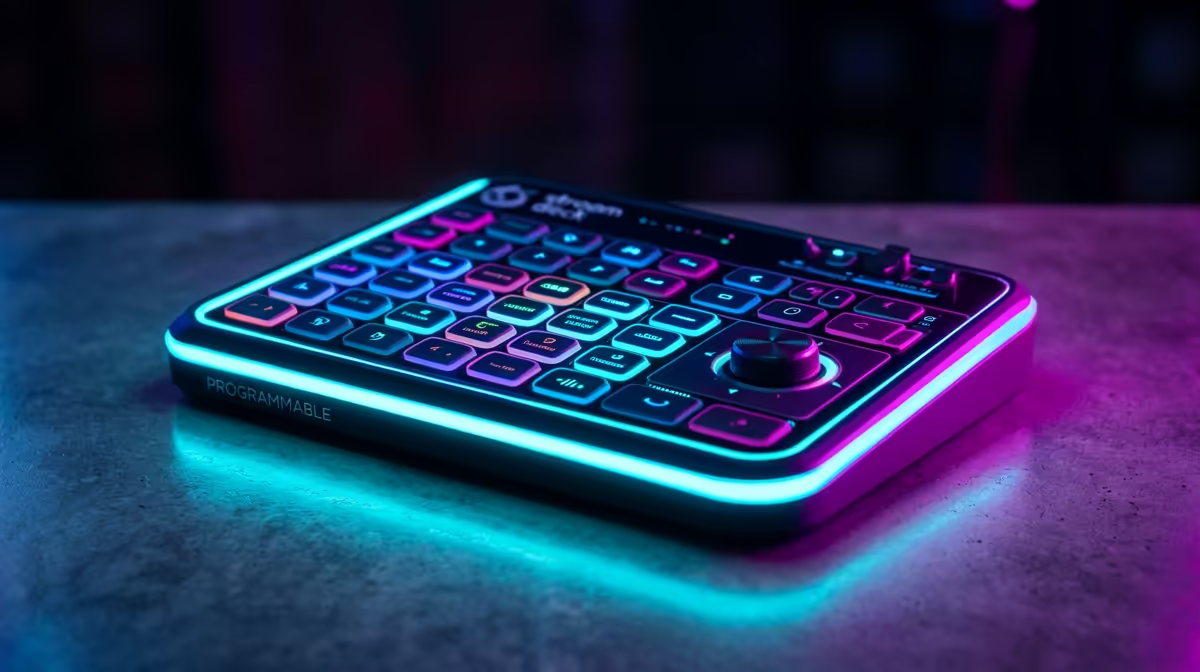
A stream deck decision tree is really about how many actions you trigger live and how much you value tactile control versus software shortcuts.
Quick Answer
Choose a stream deck by key count and your live workflow. Casual streamers do well with a compact 6 or 8-key unit; busy creators benefit from 15 keys or more, plus dial-equipped models for fine adjustments. SA pricing runs from about R1,800 for small units to R6,000 for large or dial models.
The Branches To Weigh
Branch one is key count. Count the scenes, mutes, and app toggles you trigger during a stream, then add headroom. Branch two is whether you need rotary dials for smooth audio or filter control, which suits creators who tweak levels mid-stream.
Branch three is software fit. The deck's companion app and its integration with your capture and chat tools matter as much as the hardware. A profile that switches automatically per app saves real time during a session.
Sizing It Right
Undersizing leads to constant profile switching mid-stream; oversizing wastes money on keys you never press. Most growing streamers settle comfortably on a 15-key unit, which in SA typically costs around R3,500 to R4,500. A compact 6-key starter sits closer to R1,800, while dial-equipped models reach R6,000. Add a dial model only if live audio or filter control is part of your routine.
FAQ
How many keys does a beginner streamer need?
A 6 to 8-key unit covers the core scene switches, mute, and start-stop actions most new streamers use. You can expand later if needed.
Are the dial models worth it?
For creators who adjust audio or effects live, dials offer smooth control a button cannot. For simple scene switching they are optional.
Does the companion software matter?
Yes. Smooth integration with your streaming and audio tools, plus per-app profiles, often matters more than raw key count.
live actions in a typical stream and add a few spare keys; that number, not the biggest model, points to the right deck.