Quick Answer
For recording lectures, the upgrade path runs from a R600 FiFine K669B for personal note capture to a R900 HyperX SoloCast for clearer self-recorded summaries, then a R3,000 Rode NT-USB Mini only if you produce study content. Start at the entry tier; most students never need the top.
The starter-to-serious mic path
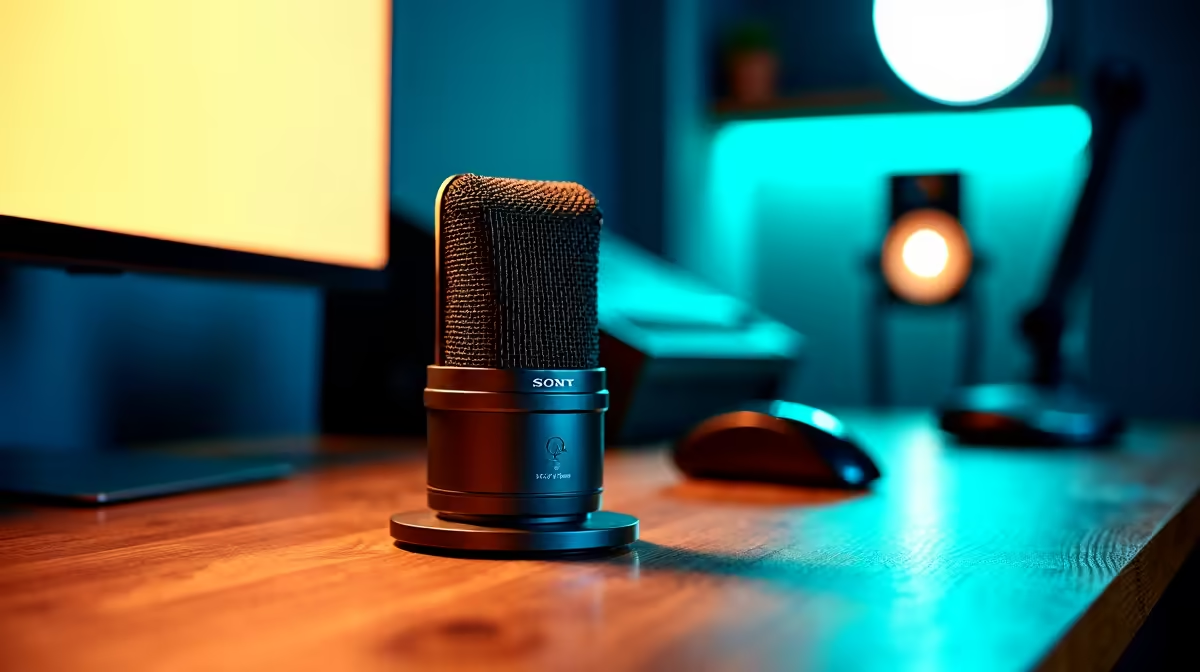
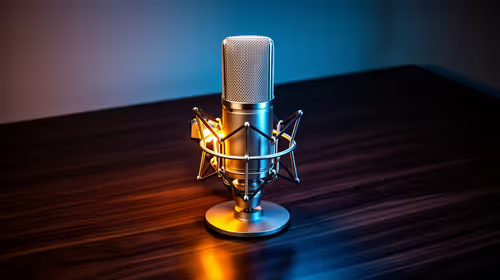
Starter: a R600 FiFine K669B captures your own spoken summaries and revision notes clearly over USB, no interface needed. It is the right first step for a student recording themselves rather than a distant lecturer. Serious-but-sensible: the R900 HyperX SoloCast adds tap-to-mute and slightly tighter rejection of room noise, better for podcast-style revision recordings shared with classmates. Top: the R3,000 Rode NT-USB Mini only earns its place if you regularly produce polished study content. For capturing a lecturer across a hall, no desk USB mic helps; a phone or a dedicated recorder closer to the speaker does better.
Recording yourself versus the room
A cardioid USB mic is built to capture one voice up close, so it shines for self-recorded summaries and explaining concepts back to yourself, the most effective revision method. For recording an actual lecture, distance is the enemy: a mic on your desk picks up neighbours and air-con more than the lecturer. If you must capture the room, a small portable recorder placed near the front beats any desk mic. Use the desk USB mic for what it does best, clear close-up voice capture, and keep the spend modest at the R600-R900 tier.
FAQ
Can a USB mic record a lecturer across the hall?
Not well. Cardioid USB mics are built for close-up voice, so at lecture-hall distance they capture more room noise than the speaker. Use a phone or portable recorder near the front for the lecturer, and the USB mic for your own summaries.
What is the cheapest mic for recording study notes?
The FiFine K669B at around R600 is the practical floor: cardioid, USB, no interface, and clear for self-recorded notes. It is all most students need for capturing their own spoken revision.
When is a R3,000 mic worth it for a student?
Only if you regularly produce shared study content or a podcast. For private note capture and revision, a R600-R900 mic is indistinguishable in usefulness, so save the difference for storage or RAM.
back to yourself", body="The best revision use of a mic is recording yourself explaining a topic out loud, then listening on a commute. A R600 cardioid USB mic at 15cm captures this clearly; you do not need the expensive tier to study smarter."