Quick Answer
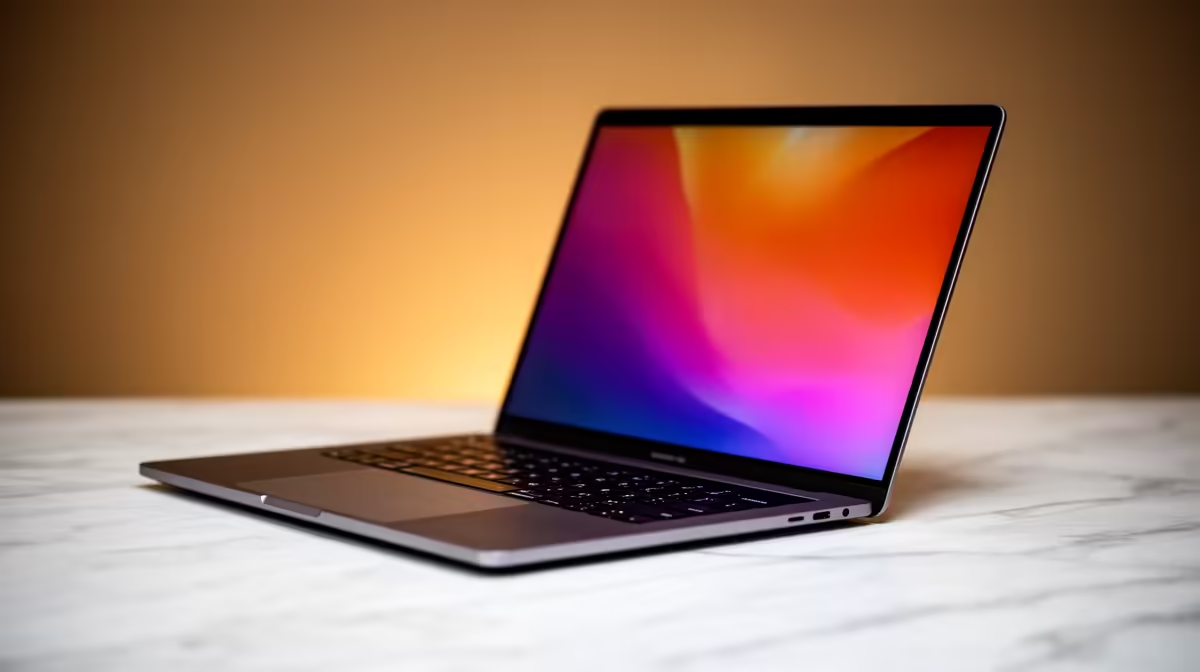
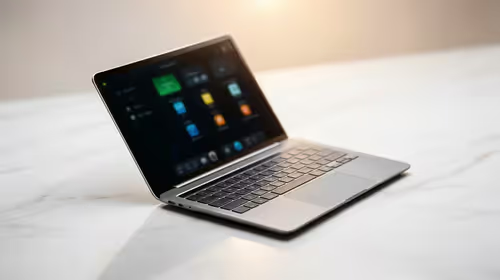
A student laptop should start at the practical floor of about R8,000, because cheaper machines often cut too hard on memory, storage, or build quality. Prioritise 16 GB RAM, a 512 GB SSD, and a 14-15.6 inch screen, with broad local bands around R8,000-R16,000 for models such as ASUS Vivobook 15, Lenovo IdeaPad Slim 3, and Acer Aspire 5. The right choice is a reliable study tool first, not a gaming machine in disguise. For Boksburg, check layout and delivery before ordering.
What To Prioritise
The safest baseline is a modern Intel Core i5 or Ryzen 5-class CPU, 16 GB RAM, and SSD storage. Eight gigabytes can work for light notes and browsing, but it gets tight with Teams, PDFs, browser tabs, and coding tools open together. Use the guide as a shortlist filter before comparing models locally.
Local Fit For Boksburg
Boksburg buyers should think about desk space, weekend setup time, and whether collection is easier than waiting for courier delivery. SA students at campuses around Gauteng need a laptop that handles WiFi, Teams, PDFs, coding basics, and transport without constant charging. Use R8,000-R16,000 as a planning anchor, then confirm current Evetech stock before deciding. Reference models include ASUS Vivobook 15, Lenovo IdeaPad Slim 3, and Acer Aspire 5.
Specs That Change The Result
Students moving between home fibre, residence WiFi, taxis, and lecture venues need battery life and portability as much as speed. A 14-inch model is easier to carry, while a 15.6-inch model gives more room for spreadsheets and split-screen notes. The spec anchors to check are 16 GB RAM, 512 GB SSD, and 8-hour class-day target; those numbers affect daily feel, not only the brochure. Before delivery or pickup, check warranty route, charger, backpack fit, and whether the laptop has HDMI or USB-C for presentations.
FAQ
What is the safest budget range for this category?
Use R8,000-R16,000 as a cautious planning range, then confirm live stock and final price at checkout.
Which spec should I check first?
Start with 16 GB RAM, 512 GB SSD, and 8-hour class-day target because those numbers change the day-to-day result.
Should students buy a gaming laptop?
Only if gaming or GPU-heavy course work is a real requirement. For general study, a lighter laptop with better battery life is usually the smarter buy.
Practical Check
Set up cloud backup and Windows updates before campus use; the best laptop choice still fails if assignments live only on one local drive.