


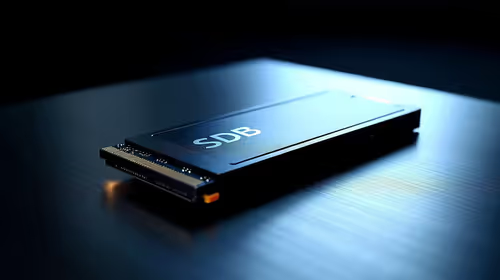
PCIe 5.0 vs PCIe 4.0 for Video editing in 4k in SA
PCIe 5.0 vs PCIe 4.0 for video editing in 4k is mainly about fit, features, compatibility, cost, and upgrade path, not one automatic winner. SA buyers should match the choice to the setup.
Read moreA basic student laptop is not worth buying for serious colour grading in SA, but a creator-grade student machine can be. The ProArt P16 at R49,999 is the relevant choice because colour grading depends on a calibrated, high-gamut screen, discrete GPU power and enough memory for demanding timelines.

Yes, the ASUS Vivobook S14 OLED at R10,719 is the student-friendly laptop I would start with for a learner creator who needs an OLED screen for colour grading without jumping into a full gaming setup. It suits a student desk where the screen quality matters more than heavy 3D power, especially for editing short clips, social reels, campus projects, and portfolio work.
The ASUS Vivobook S14 OLED at R10,719 stands out because OLED is the clearest listed advantage for visual work. For a student who is learning how tones, contrast, and shadows behave on screen, that OLED panel is more useful than buying purely around a bigger processor name.
The Lenovo IdeaPad Slim 3 i7 at R13,400 is the stronger everyday study option if the same machine must handle browser tabs, assignments, and editing software. Its i7 spec gives it more headroom than the ASUS ExpertBook P1503 i5 at R9,858, although the ExpertBook is still the better low-cost pick for note-taking, research, and lighter creative practice.
On a small creator desk, the ASUS ExpertBook P5405 at R12,700 makes sense when you want a more serious study machine but still need to keep the setup simple. The Lenovo LOQ RTX3050 at R9,500 is the more performance-focused option because the RTX3050 spec helps when visual software can use GPU support, but it is less screen-led than the OLED Vivobook.
The ASUS Vivobook X1504VA i7 at R13,999 is the sensible higher-price study pick if you want an i7 machine and a larger-feeling everyday workspace, while the Lenovo IdeaPad Slim 3 i7 at R13,400 keeps the same listed i7 advantage at a slightly lower price.
Ready to choose the right laptop? For student laptop actually colour grading, put ASUS ExpertBook P1503 i5 at R9,858 first and judge the setup around its listed spec.
No, a budget model around R10,499 will struggle, while the ProArt P16 at R49,999 is built for proper grading work.
Colour grading relies on what the display shows, so the ProArt P16s high-gamut, calibrated screen gives more trustworthy colour decisions.
Yes, DaVinci Resolve and similar tools use the GPU heavily for real-time playback, making discrete graphics important for smooth grading.
16GB is the minimum for colour grading, while 32GB or more is better for high-resolution timelines and heavier projects.
Yes, if it is a creator-class student laptop like the ProArt P16, rather than a typical budget study machine.
Plug in while grading because sustained GPU work drains batteries quickly and mains power helps keep performance steady.
PCIe 5.0 vs PCIe 4.0 for video editing in 4k is mainly about fit, features, compatibility, cost, and upgrade path, not one automatic winner. SA buyers should match the choice to the setup.
Read more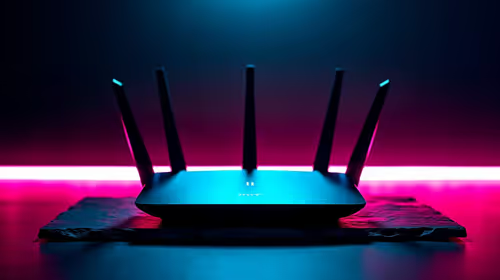
Wi-Fi 7 vs Wi-Fi 6e for competitive esports comes down to router support, latency goals, device compatibility, and coverage. SA buyers should match the choice to the real network setup.
Read more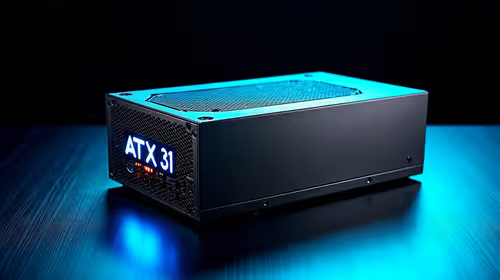
ATX 3.1 vs ATX 3.0 for mMO and live-service games buyers - what changes is mostly about compatibility, budget, upgrade path, and setup fit. SA buyers should check device support and real needs before expecting a clear win from either option.
Read more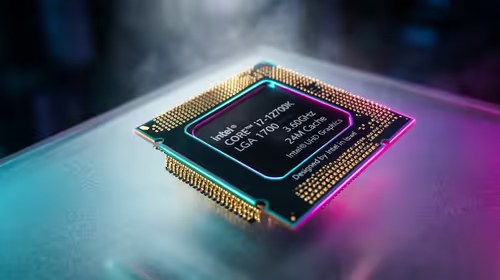
LGA 1851 vs LGA 1700 can affect Twitch and YouTube streaming when gaming and encoding share CPU resources. For SA creators, the real-world difference depends on encoder choice, memory support, motherboard cost, thermals, and upgrade plans.
Read more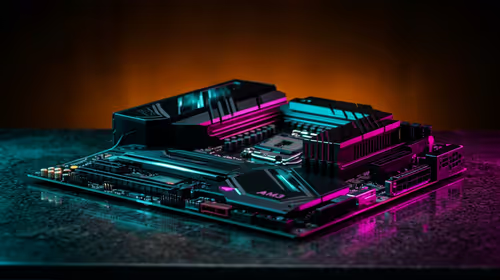
X870E vs X670E for aaa single-player gaming is mainly about fit, features, compatibility, cost, and upgrade path, not one automatic winner. SA buyers should match the choice to the setup.
Read more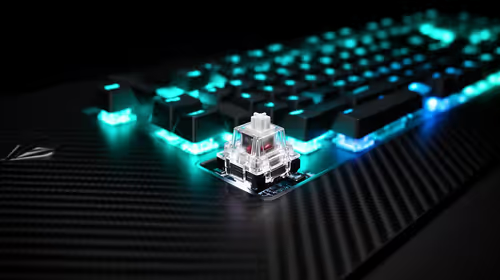
Hall Effect switches vs Mechanical switches for mMO and live-service games is mostly about compatibility, budget, upgrade path, and setup fit. SA buyers should check device support and real needs before expecting a clear win from either option.
Read more
A fake 113GB GTA VI ISO reportedly used empty padding around a small malware payload. SA gamers should delete unofficial builds, keep Windows security active and wait for official channels.

Wi-Fi 6E vs Wi-Fi 6 matters for 4K video editing when files move across a network. The real-world difference between Wi-Fi 6E and Wi-Fi 6 for video editing in 4K depends on NAS access, cloud uploads, router range, and SA creator workflows.

The difference between PCIe 5.0 and PCIe 4.0 for SA gamers is mostly bandwidth headroom. Compare GPU slot needs, NVMe speed, motherboard support, and upgrade timing before paying extra for a newer platform.

Gaming PC stuck pixel checks in South Africa should confirm the monitor fault first. Use colour tests, screenshot comparison, cable swaps, display menu checks, and clear photos before deciding on support.

Shokz OpenFit Air 2 earbuds weigh 7.2g each and use a redesigned dual-driver open-ear layout. SA buyers should choose them for comfort and awareness, not maximum isolation.

AMD's current driver now lists a Radeon RX 9050 4GB, while product coverage details a narrowed memory system. SA buyers should weigh the low VRAM ceiling against current local Radeon options.

Samsung Display has demonstrated a 16-inch 2.5K OLED laptop panel running at 300Hz. SA buyers should wait for a named notebook, full panel specifications and a local price before planning an upgrade.

Microsoft says some Windows 11 game crashes after recent updates are linked to RGB-related drivers. Affected SA gamers should confirm the update and driver before using the published registry workaround.
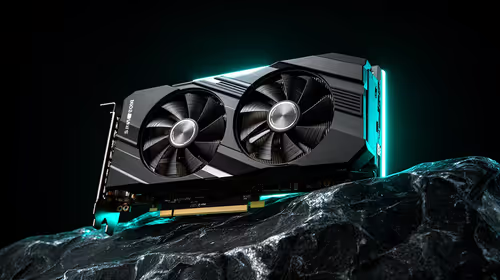
RTX 5090 on a 650W PSU is a tight pairing with very limited headroom. For SA gaming PCs, focus on total system draw, PSU quality, connector support, CPU choice, and avoid OC plans unless the full build is carefully power-limited.
PCIe 5.0 vs PCIe 4.0 for video editing in 4k is mainly about fit, features, compatibility, cost, and upgrade path, not one automatic winner. SA buyers should match the choice to the setup.
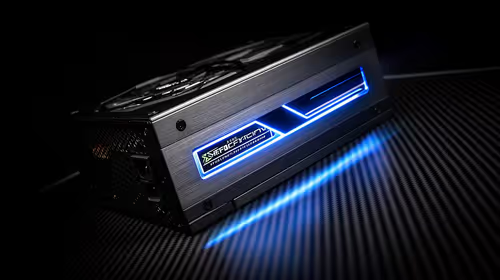
850W PSU safety for RTX 5090 is plausible with a quality unit and balanced parts. In SA, confirm connector support, CPU power draw, case airflow, PSU age, and spare capacity before building around 850W.
Wi-Fi 7 vs Wi-Fi 6e for competitive esports comes down to router support, latency goals, device compatibility, and coverage. SA buyers should match the choice to the real network setup.