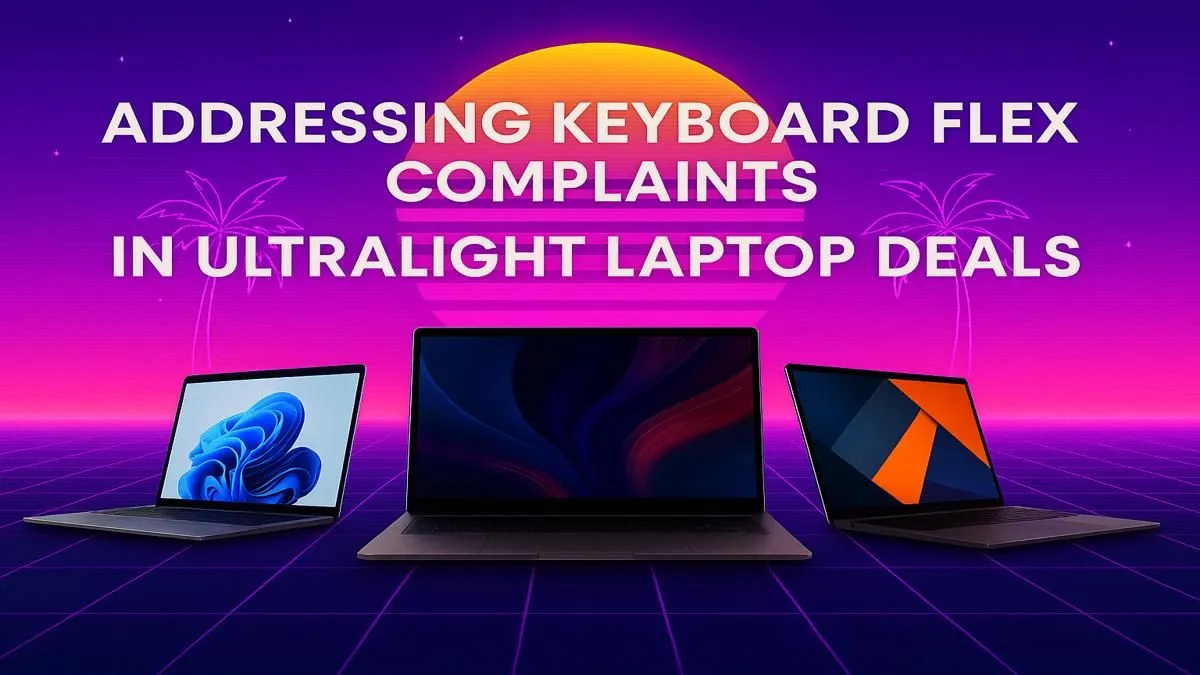
You’ve just unboxed your sleek new lightweight laptop. It’s a feather in your backpack, a powerhouse on your desk… but then you start typing. Instead of a firm, satisfying tap, you feel a slight bounce, a spongy dip under your fingers. That, my friend, is keyboard flex. While not a critical flaw, this subtle sinking sensation can cheapen the feel of an otherwise premium machine and even affect your typing speed. Let’s tackle it.
Understanding Keyboard Flex in Lightweight Laptops
So, why does this happen? The drive for ever-thinner and lighter laptops creates an engineering challenge. To shave off grams, manufacturers often use less bulky internal supports and thinner chassis materials, especially in mid-range models. This trade-off between portability and rigidity is the primary cause of keyboard flex issues in lightweight laptops.
A little bit of give is normal, but excessive keyboard deck flex—where the whole area around the keys visibly sinks under normal typing pressure—can be a sign of a less-than-optimal structural design. It’s not just about feel; it suggests the internal components might have less protection against bumps and pressure. 💪
Does a Spongy Keyboard Really Matter?
For a casual user browsing the web, a bit of keyboard flex might go unnoticed. But for anyone who spends hours typing—students smashing out essays, developers coding, or gamers executing complex commands—it becomes a real issue. Here’s why:
- Inconsistent Keystrokes: A bouncing base can lead to missed or inaccurate key presses, slowing you down.
- Typing Fatigue: Your fingers have to compensate for the unstable surface, which can cause strain over long sessions.
- Perceived Quality: It just feels… cheap. A rock-solid keyboard inspires confidence in the laptop's overall build quality.
Thankfully, manufacturers are constantly improving their designs. For example, many modern HP notebooks have made huge strides in chassis rigidity without adding extra weight.
The 'G-H' Test 🔧
When testing a laptop in-store, press down with normal typing force on the G and H keys. These are typically in the middle and the weakest point of the keyboard deck. If you see significant sinking, you're looking at a flex issue.
How to Choose a Laptop with a Solid Keyboard
Avoiding annoying keyboard flex starts before you even spend a Rand. Arming yourself with a little knowledge can save you from buyer's remorse. When you're shopping, focus on build materials and design. Premium lines like the Lenovo Yoga series often use CNC-milled aluminium or magnesium alloys, which provide a much stiffer frame than the plastics found in budget models.
Beyond the spec sheet, your best tool is research. Watch and read reviews from trusted tech journalists who specifically test for laptop keyboard flex. They’ll often have high-quality footage of typing tests, giving you a clear view of how the chassis holds up under pressure.
What if Your Current Laptop Already Has Flex?
Stuck with a bouncy keyboard? Don't despair. While you can't easily rebuild the chassis, you have a couple of practical options. For desk-based work, investing in a good external mechanical keyboard is the ultimate solution for a superior typing experience.
If the flex is really getting to you, it might be a sign that your machine's design is behind the curve. Newer platforms and materials are constantly improving the thin-and-light formula. Innovations seen in the latest Dell Snapdragon laptops are pushing the boundaries of what’s possible, delivering rigid construction in incredibly portable packages. ✨
Ready for a Typing Upgrade?
Don’t let a spongy keyboard compromise your productivity or gaming prowess. Explore our curated selection of laptops, vetted for build quality and performance. Find your perfect deal at Evetech and feel the difference a solid foundation makes.