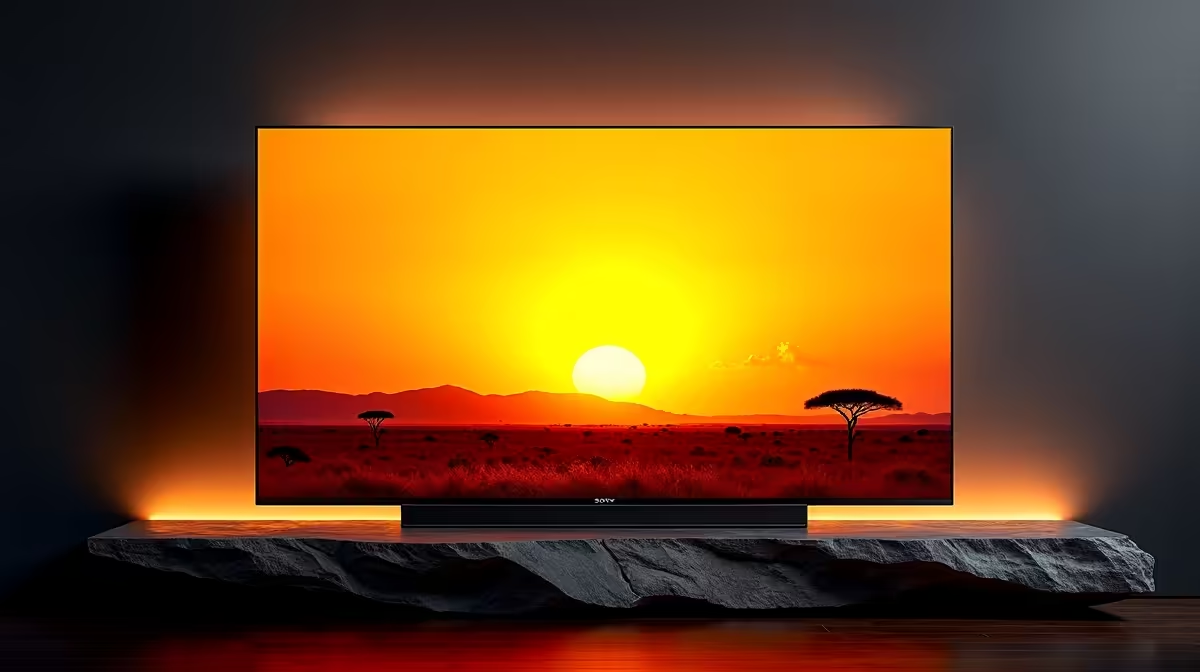
That bright South African sun is brilliant… until it hits your screen during a crucial boss fight. For years, OLED displays have offered mind-blowing contrast but often struggled with the glare in our sun-drenched rooms. Now, a new challenger has entered the ring: Tandem OLED. But is this new tech worth the hype, or is a standard OLED still the best choice for your setup? Let’s break down the Tandem OLED vs Standard OLED debate.
Understanding the Standard OLED We Know and Love
For years, a standard single-stack OLED has been the gold standard for deep blacks and vibrant colours. Each pixel is its own light source, meaning it can turn off completely. The result? Perfect black levels and an infinite contrast ratio that makes games and movies look incredibly immersive. If you've ever seen one in a dimly lit room, you know the magic. ✨
However, they have two well-known trade-offs: peak brightness and longevity. They aren't always bright enough to overcome reflections in a sunny room, and the organic compounds can degrade over time, leading to potential burn-in. While modern PC monitors have excellent mitigation tech, it's still a consideration for many buyers.
What is This New Tandem OLED Tech?
So, what makes Tandem OLED different? The name gives it away. Instead of one layer of light-emitting diodes, it uses two layers stacked on top of each other. This simple but brilliant engineering trick solves the biggest weaknesses of standard OLED.
By sharing the workload between two layers, a Tandem OLED display can achieve some incredible feats:
- Massively Increased Brightness: It can reach full-screen brightness levels up to three times higher than a standard OLED. Suddenly, that sunny Jozi afternoon isn't a problem.
- Drastically Improved Lifespan: With the strain divided, the pixels last much longer… potentially up to four times longer, significantly reducing the risk of burn-in.
- Better Power Efficiency: It produces more light (nits) for every watt of power consumed, making it a smarter technology for laptops and future displays from brands like HP.
Tandem OLED vs Standard OLED: The Showdown for SA Gamers
When choosing the best display for bright South African rooms, the comparison becomes crystal clear. Let's pit Tandem OLED vs Standard OLED on the factors that matter most to you.
Brightness & Glare Resistance
This is the easiest win for Tandem OLED. Its ability to pump out significantly more light means it can cut through ambient light and reflections far more effectively. If your gaming den doubles as a sunroom, Tandem OLED is being designed specifically for you. A standard OLED, while stunning at night, may still look washed out in direct sunlight.
Gaming Performance & Features
Both technologies offer the near-instantaneous pixel response times that make OLEDs a dream for competitive gaming. You won't see any ghosting or smearing here. You'll still find crucial gaming features like FreeSync (AMD) and G-Sync (NVIDIA) on high-end panels of both types, ensuring tear-free gameplay. The core difference is how vividly that HDR content will pop in a bright environment. Many current displays also support the general Adaptive Sync standard for broad compatibility.
Calibrate for Your Room 🔧
Don't just unbox and play! Use your graphics card's control panel (NVIDIA Control Panel or AMD Software) to adjust gamma, brightness, and contrast. In a bright room, slightly increasing the gamma can help make darker details more visible without washing out the entire image. It's a free tweak that makes a big difference.
Longevity & Price
Here’s where the standard OLED fights back. Because it's a mature technology, it's far more affordable right now. You can get a fantastic standard OLED gaming monitor from brands like AOC or even budget-friendly options from Dahua for a fraction of what the first Tandem OLED monitors will cost. Tandem OLED’s superior lifespan is a huge plus, but you'll be paying a significant premium for that peace of mind when the technology first launches.
The Verdict: What’s the Best Choice Today? 🚀
So, which is the best choice for bright SA rooms? It comes down to your budget and urgency.
If you are buying a monitor right now, a Standard OLED offers unbeatable contrast and value. As long as you can manage your lighting with curtains or blinds, you'll get a spectacular visual experience for your money. They are tried, tested, and available across a wide range of sizes and prices.
However, if you're planning a future-proof, money-is-no-object build and your room is constantly flooded with light, Tandem OLED is the technology to watch. It directly solves the brightness and longevity concerns of its predecessor, making it the ultimate display tech for challenging environments.
The battle of Tandem OLED vs Standard OLED is just beginning, and for consumers, that competition is a very good thing.
Ready to Find Your Perfect View? Whether you need the proven value of a standard OLED today or are planning for the future, the perfect monitor is waiting. Explore our massive range of PC monitors and find the perfect screen to conquer your world.