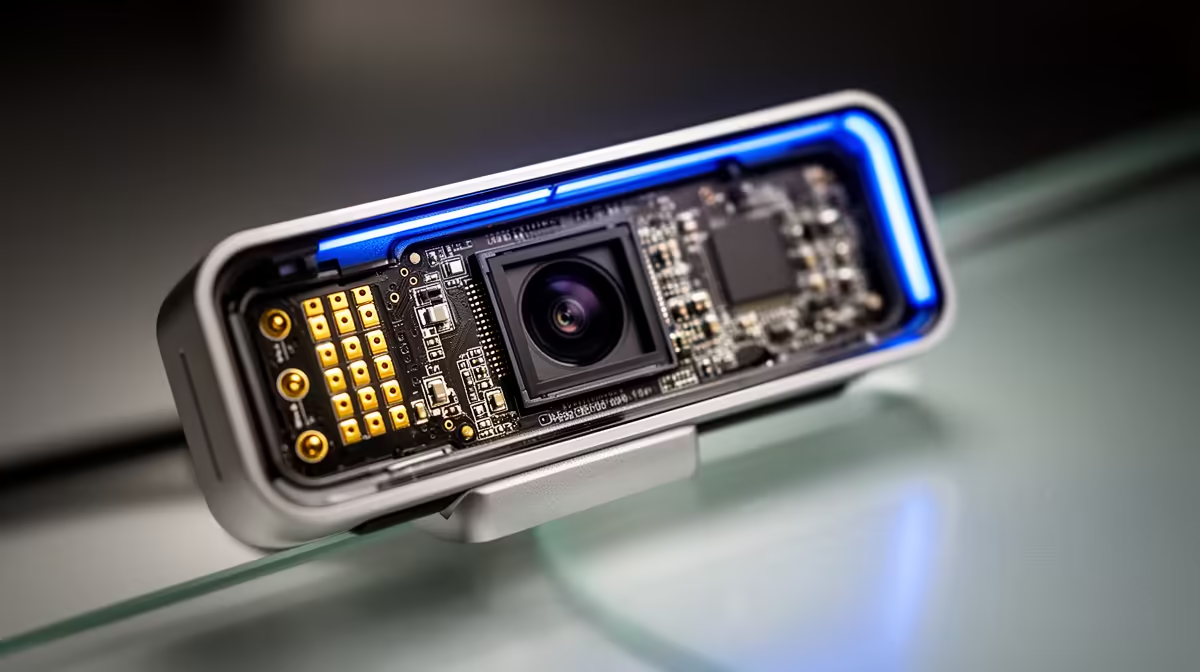
Two webcams at the same megapixel count can produce images so different in quality that they look like they belong to separate product generations. The reason almost always traces back to one number buried in the spec sheet: the physical size of the CMOS photo sensor. Understanding what that number means, and how pixel architecture and signal processing amplify or undermine it, is the technical breakdown that makes all other webcam specs legible.
Quick Answer
Sensor size is the dominant driver of webcam image quality. A 1/2.8 inch sensor collects more light per pixel than a 1/4 inch chip, which means cleaner images in dim conditions and better dynamic range. Megapixel count matters far less than the physical area the sensor occupies.
📺 Sensor Size and Pixel Pitch
The sensor is a rectangular silicon die covered with millions of light-sensitive sites called pixels. The physical size of that die determines how much total area is available to share among those pixels. When the die is large, each pixel can be large. When it is small, the same number of pixels get crammed onto a smaller surface, shrinking each one.
Pixel pitch is the measurement of how much space a single pixel occupies, typically expressed in micrometres. A pixel with a pitch of 2.9 micrometres is physically larger than one at 1.4 micrometres and collects more photons during the same exposure. That matters because the electrical signal a pixel generates is proportional to the light it captures. A strong signal from a large pixel is easier to read cleanly. A weak signal from a tiny pixel requires more amplification, and amplification brings noise.
This is why a 1/2.8 inch sensor at 8 megapixels routinely outperforms a 1/4 inch sensor at the same 8 megapixels in low light. The resolution is identical but the pixels are physically larger on the bigger chip, making the image cleaner when the room dims.
🔧 Why the Megapixel Count Misleads
Marketing has leaned hard on megapixel counts because the numbers are simple to compare. A 4K webcam sits at roughly 8 megapixels; a 1080p webcam is closer to 2 megapixels. That arithmetic makes the 4K model look twice as capable.
The problem is that cramming 8 megapixels onto a tiny 1/4 inch sensor produces pixels so small that each captures very little light. The camera firmware compensates by raising the sensor gain, which amplifies the signal. It also amplifies the noise floor, and the result is a nominally 4K image that is visibly grainy in any room that is not flooded with light.
A 4K sensor on a 1/2.8 inch die produces the same resolution but with larger pixels, and in practice delivers noticeably less grain in natural home-office or streaming lighting. The lesson is that the sensor size and the megapixel count only mean something together. Neither number alone predicts real-world image quality.
Pro Tip ⚡
Before buying a webcam for a dim home office or a koshuis room with one window, search for the sensor model number paired with a low-light test rather than trusting the resolution figure. A 1080p webcam on a 1 2.8 inch Sony STARVIS sensor will often beat a budget 4K model after the sun sets.
🧠 Back-Illuminated Sensors and STARVIS Technology
Standard CMOS sensors place the wiring layer on top of the pixel area, which partially blocks incoming light. Back-illuminated CMOS, abbreviated BSI, flips that arrangement. The wiring moves behind the silicon layer, exposing the full pixel area to incoming photons and increasing light sensitivity for the same pixel pitch.
Sony's STARVIS is a back-illuminated sensor architecture optimised for video surveillance and, increasingly, consumer webcams. A STARVIS-equipped webcam captures useful detail at light levels where a conventional front-illuminated chip of the same size would produce muddy, noisy footage. For a South African home office with unpredictable natural light, or an evening stream where the room relies on a single desk lamp, a back-illuminated sensor narrows the gap that better lighting would otherwise need to close.
The practical implication is that sensor architecture is a third variable alongside size and megapixels. A smaller back-illuminated chip can outperform a larger conventional one in truly dim conditions, though for most everyday use the physical size advantage of a bigger die still dominates.
⚡ Signal Processing and Its Limits
After the pixels collect light, the sensor outputs a raw electrical signal that the camera's image signal processor converts into the final image. This processing stage handles noise reduction, colour correction, sharpening, and tone mapping.
Good signal processing can clean up a mediocre sensor to a useful degree. Temporal noise reduction averages several consecutive frames to smooth out random pixel variation, which works well for a near-static video call but can produce a subtle smearing effect on fast movement. Spatial noise reduction blurs neighbouring pixels together, which also reduces grain but softens fine detail like hair or fabric texture.
The ceiling is what matters here. Image processing cannot recover detail the sensor never captured in the first place. Heavy noise reduction on a weak sensor produces an image that looks smooth rather than sharp, and the smoothness is a symptom of data loss, not quality. A sensor with a strong clean signal from good pixel architecture requires far less aggressive processing, which is why high-end webcam images look both clean and detailed rather than clean-but-soft.
Frequently Asked Questions
What makes one CMOS sensor resolve sharper images than another?
Pixel pitch is the main factor. Larger pixels on a bigger sensor gather more light and produce a stronger, cleaner signal before the processor touches it. That foundation of clean data allows the firmware to recover fine detail, thread texture, and edge definition that a sensor with weaker signal cannot retrieve no matter how hard the noise reduction works.
Is 4K actually worse than 1080p on a small sensor?
Not always worse, but often no better in practical conditions. When 4K resolution is spread across a very small sensor, each pixel collects little light and the image needs heavy amplification to produce a usable result. In a well-lit room both sensors perform well. Once the light drops, the 4K model on a small chip typically produces noticeably more grain than a good 1080p sensor on a larger die.
Does sensor size affect colour accuracy?
Indirectly, yes. A larger pixel with more light signal gives the processor accurate colour data to work with. When signal is weak, colour channels become noisy and the firmware interpolates to fill gaps, which shifts white balance and saturation. Good colour accuracy in mixed or warm artificial lighting is one of the quality differences you notice first between a 1/2.8 inch and a 1/4 inch webcam.
Can image processing fully rescue a weak sensor?
No. Processing can reduce visible noise and improve perceived sharpness up to a point, but the detail that was never captured cannot be created from nothing. A weak sensor with heavy noise reduction produces images that appear smooth and clean on a quick glance but lose fine texture and look plastic compared to an image where the sensor collected solid data from the start.
Why do two 4K webcams look so different when recorded side by side?
Sensor size, pixel architecture, and the quality of the paired optics all differ between models. One manufacturer places 4K on a 1/2.8 inch back-illuminated sensor with quality glass. Another places the same 4K resolution on a 1/4 inch standard sensor with a cheaper lens. The first captures more light, processes less noise, and feeds the lens better raw data. The output images can look like different resolution classes even though the spec sheet shows the same number.
Ready to pick a webcam whose sensor actually matches your conditions?
Browse the 4K and full HD streaming webcam range at Evetech and compare sensor specs before your next purchase.