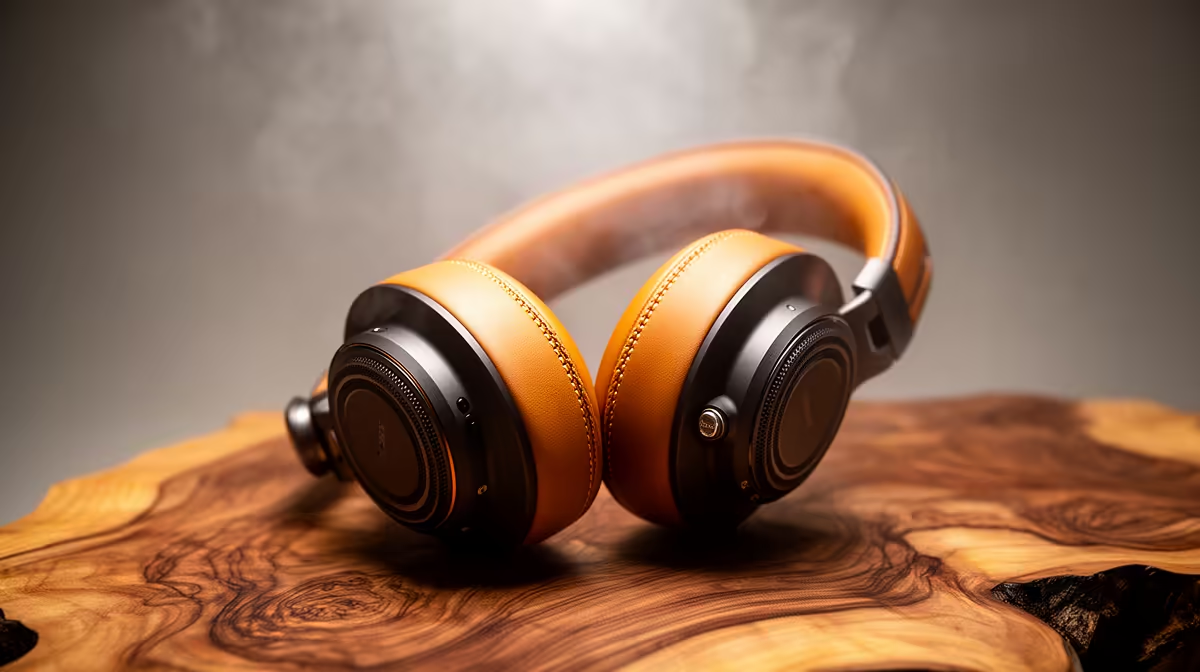
Spend R5,000 on a headphone and R1,000 on the amp, and you will hear far more than the reverse split. The driver in front of your ears is the single biggest variable in how music sounds, which is why a budget audiophile headphone setup lives or dies on the headphone choice first, with a modest source added only to drive it cleanly. Chase an expensive amplifier ahead of the headphone and you are polishing a signal the drivers were never good enough to reveal.
Quick Answer
Put the majority of your money into the headphone, then add a modest DAC or amp costing roughly a quarter to half of what the headphone cost. Most sets under 100 ohms run cleanly from an affordable DAC/amp, so a R3,000 to R6,000 headphone paired with a R1,000 to R2,500 source beats spending the same total the other way around.
Why the headphone gets the money first
Every other component in the chain can only pass along or gently shape what the driver produces. A great DAC cannot add detail the headphone is incapable of resolving, and a powerful amp cannot widen a soundstage the drivers do not have. The headphone sets the ceiling; everything downstream works inside it.
This is the most common money-wasting trap for newcomers, who read about exotic amplifiers and DACs before settling on the actual transducer. Flip the priority. Audition or research headphones in your budget band, pick the one whose tuning you genuinely enjoy, and only then ask what it needs to perform.
Open-back versus closed-back on a budget
Open-back designs tend to sound more spacious and natural, which suits critical listening at home, but they leak sound both ways and offer no isolation. In a shared res room, a flat, or a busy household, that openness can be a dealbreaker. Closed-back sets isolate better and keep your music to yourself, at the cost of a slightly more closed-in presentation. Choose by environment first, then by sound signature, because a brilliant open-back you cannot use in your space is a poor buy.
The role of the DAC and amp, kept in proportion
The DAC's job is turning stored digital data into an analogue waveform, while the amp takes that waveform and raises it to the voltage and current your headphone needs. On a budget, both jobs are usually handled well by a single combined DAC/amp unit, which is cheaper and tidier than two boxes. The useful rule of thumb is to budget roughly 25 to 50 percent of the headphone price for amplification, enough to drive it properly without overspending on diminishing returns.
There is a real ceiling on sensible DAC spend for a first setup. Past a certain point the audible gains shrink fast, so money beyond a mid-priced combined unit is better kept for a future headphone upgrade. The point of the source is to deliver a clean, adequately powered signal, not to colour the sound.
How impedance decides whether you even need an amp
Impedance is the spec that tells you how hard a headphone is to drive. Sets below about 50 ohms are designed to run from phones, laptops, and portable players, and often sound fine straight out of a device. Headphones at 50 ohms and above usually want proper amplification to reach their full volume and control, especially in the bass.
A practical guideline is that the source output impedance should be well below the headphone impedance, ideally around eight times lower, so the drivers get clean, controlled power. Get this badly wrong and you hear weak volume, soft bass, or an uneven tonal balance. Match a high-impedance headphone with a capable amp, and a low-impedance one with almost anything, and you avoid the problem entirely. Browsing the headphone and headset range at Evetech lets you check each model's impedance on the spec sheet so you can match it to your source before buying.
A sensible buying order for South African budgets
Build the setup in stages rather than all at once. Start with the headphone, because it is both the most important link and the part you will keep longest through future source upgrades. Live with it from your phone or laptop for a week. If it already sounds great and loud enough, you may not need a separate amp at all, which frees that money for a better headphone.
If it sounds quiet, soft, or strained, add a combined DAC/amp in the proportion above. Buy the source to suit the headphone you actually own, not a hypothetical future one. For most people in Rand terms, a single quality headphone plus an entry-level DAC/amp covers the whole journey, and the popular headsets at Evetech show which models other SA listeners have paired successfully with their audio chain.
Common mistakes that waste Rand
The biggest is buying the amp first. Close behind is overspending on a DAC chasing specifications you will never hear, and ignoring impedance so the headphone never gets the power it needs. Skipping the listen-first step is another, since a headphone that suits your ears beats one that merely measures well. Avoid all four and your money lands where it actually changes the sound.
Frequently Asked Questions
Should I buy the headphone or the amp first?
The headphone, every time. It is the biggest factor in how the setup sounds and the part you keep through later upgrades. Buy the headphone, live with it, then add an amp only if it needs more power.
Do I even need a separate DAC or amp?
Not always. Headphones under about 50 ohms usually run well from a phone or laptop. If your headphone sounds loud and clean already, save the money. Add a source only when the headphone sounds weak or strained on its own.
How much should I spend on the amp relative to the headphone?
Around 25 to 50 percent of the headphone price is a sensible band. That gives enough power without paying for gains you cannot hear. Spending more on the source than the headphone is the wrong way round on a budget.
What does impedance tell me?
It indicates how much amplification a headphone needs. Below 50 ohms is easy to drive from portable gear; 50 ohms and above usually wants a proper amp. Matching the two avoids low volume and weak, uneven bass.
Is open-back or closed-back better for a budget setup?
Neither is better outright. Open-back sounds more spacious but leaks and offers no isolation, so it suits quiet, private spaces. Closed-back isolates and contains sound, which suits shared or noisy rooms. Pick by your environment first.
Build it in the right order and your Rand goes further. Start with the driver that sets the ceiling by browsing the headphone range at Evetech, then add a modest source to match.