Quick Answer
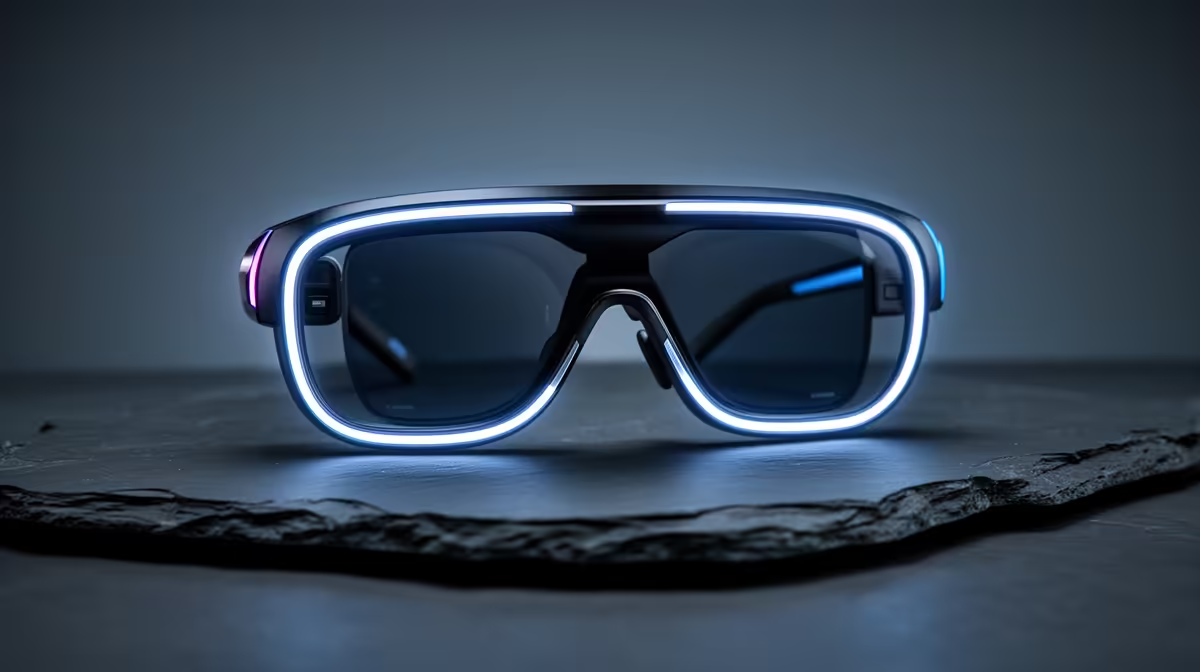
For a matric-to-varsity buyer, the AR glasses short list is simple: 1080p-per-eye panels, USB-C DisplayPort Alt Mode support, and comfortable weight under about 80 g. Budget roughly R5,000-R9,000. They act as a private big-screen monitor for a laptop, not a full headset, so check your laptop's port supports video out first.
What The Specs Mean
The numbers that matter are resolution per eye (1080p is the comfortable floor for text), field of view (a wider FoV feels more immersive but costs more), brightness in nits for use in a bright room, and weight for comfort over long sessions. Crucially, most AR glasses need a host device with USB-C DisplayPort Alt Mode; a plain USB-C data port will not output video without an adapter. Check that before anything else.
Fitting Them Into Student Life
AR glasses work best as a portable second screen for a laptop: notes on the laptop, reference or video on the glasses. They are lighter and more private than carrying a monitor between res and campus. They are not a replacement for a desktop setup, and prescription wearers should check for insert-lens support before buying.
FAQ
Do AR glasses work with any laptop or phone?
Only with devices that support USB-C DisplayPort Alt Mode for video out. Many budget laptops and some phones only do data over USB-C, so check the spec or plan for an adapter before buying.
What resolution do I need for studying?
Aim for 1080p per eye as the floor; text is comfortable to read at that resolution. Lower-resolution panels look fuzzy for documents and cause eye strain over long sessions.
Are AR glasses a replacement for a monitor?
Not fully. They are a private, portable big-screen view, ideal for a laptop in tight spaces, but they cannot be shared and need charging. For a fixed desk, a normal monitor is still better value.
Confirm your laptop or phone supports USB-C DisplayPort video out, then compare AR glasses at Evetech for a portable big-screen setup.