Quick Answer
A sim-racing cockpit runs the GPU hard for hours, so the short list is high static-pressure fans for the radiator: an Arctic P12 trio (around R450) or a Noctua NF-A12x25 (near R650 each) holds temps steady at full lock. Lighting is the last thing to pay for in a cockpit you barely look at.
What Actually Moves Air
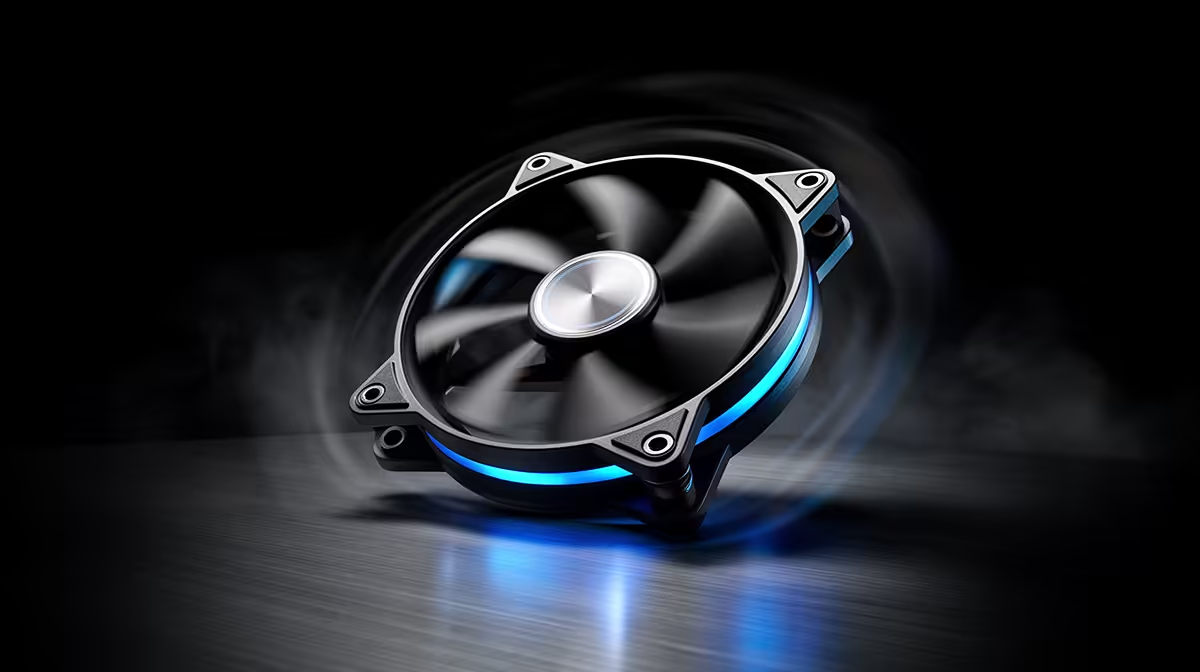
Fan performance comes down to three numbers: airflow (CFM), static pressure (mm H2O) and noise (dBA). For open intakes you want airflow, around 50-60 CFM; for radiators and restrictive filters you want static pressure. A budget 120 mm fan sits near 30-35 dBA, while a quality bearing fan like the be quiet! Pure Wings 3 runs closer to 22 dBA at the same RPM. That gap is what you are actually paying for, not the colour.
Cooling A Long Race Stint
Racing sessions are long and steady, so heat builds gradually rather than spiking. A flat-ish curve that ramps near 65C keeps the GPU from throttling deep into a stint. Static-pressure fans matter most on radiators and tight intakes; for open intakes, airflow fans are fine. Either way, around R450-R650 in good fans covers a cockpit rig.
FAQ
How many case fans do I actually need?
Most mid-towers are happy with two front intakes and one rear exhaust. Add a top exhaust only if you run a hot GPU or a top-mounted radiator. Three to four quality fans, around R1,200 total, cover almost every SA build under R30,000.
Are RGB fans worth the extra money?
Only after airflow and noise are sorted. RGB adds R80-R150 per fan and zero cooling; for a glass-panel showpiece it is fine, but for a closed case it is wasted money. Buy plain quiet fans first.
Will better fans actually lower my temperatures?
Yes, but modestly. Swapping stock case fans for quality 120 mm units typically drops GPU and CPU temps by 3-6C and cuts perceived noise far more. The bigger win is consistency over a long session, not a huge peak-temp drop.
Compare quiet 120 mm and high-airflow case fans stocked at Evetech and match them to your build.