Dynamic surface effects reward a maker who thinks about light before pressing print. Galaxy effect PLA filament does not add motion to the model; it changes how a fixed form is perceived from different positions. Curves, facets, orientation and room lighting work together with the glossy material, making visual planning as important as a clean PLA baseline.
Quick Answer
Use Galaxy PLA on exposed models whose geometry can carry moving highlights and colour shifts. ELEGOO offers a 1kg spool of 1.75mm plant-based PLA at R499, with a glossy space-like shimmer for beginners and professionals. Print a representative surface, rotate it beneath the intended light and refine the model orientation before committing to the complete piece.
🌌 How the dynamic effect changes a static object
The Galaxy surface appears different as the relationship between light, object and viewer changes. A rounded wall can carry a highlight in a smooth sweep. A faceted shape can divide that movement into separate flashes. Raised detail interrupts the reflection and may create small points of contrast across the base surface.
This means a single front-facing render or photograph tells only part of the story. Hold a sample at the height where the final model will be seen and turn it slowly. Then keep the object still and move the light. The two tests reveal how much of the effect comes from viewpoint and how much comes from illumination.
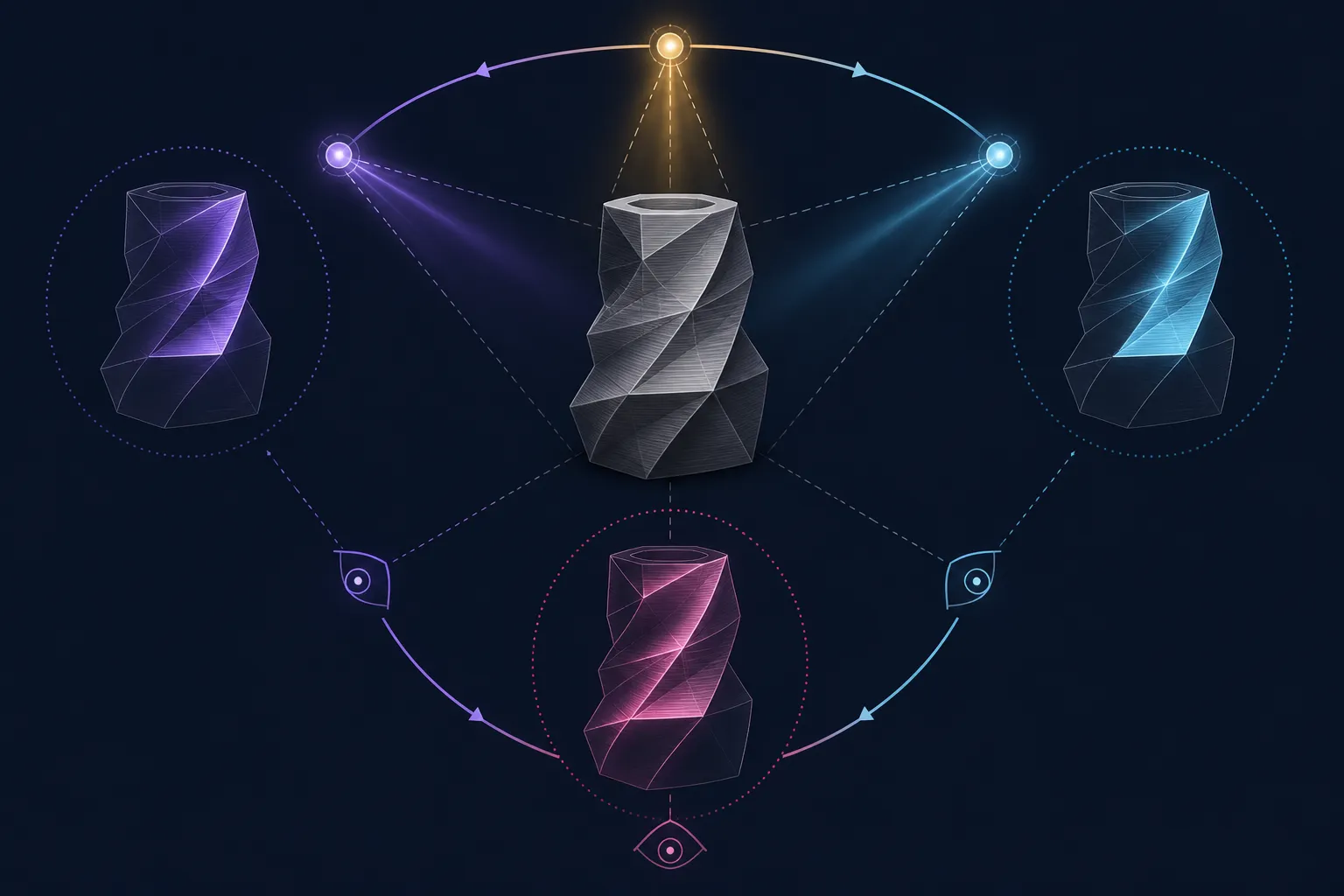
The visual also changes with distance. Fine layer texture may be obvious close up but merge into a broader shimmer from across a room. Evaluate at the real display distance before deciding that a tiny surface mark ruins the result.
🧱 Shape the geometry around the finish
Begin by identifying the hero surfaces. These are the faces, curves or edges that carry the visual idea and remain visible after assembly. Place them where light can reach and people can see more than one angle. Hidden undersides and internal supports receive little value from a premium changing finish.
Use a reduced section of the final model as the test. Include the dominant curve, one important facet and any texture that might compete with the gloss. A generic calibration object can confirm basic extrusion, but only related geometry can answer the design question.
For multi-part objects, note the orientation of each sample. Parts printed or assembled in unrelated directions may display highlights differently. Decide whether that variation supports the design or whether the pieces should present a more continuous visual flow.
🔧 Establish clean layers before judging colour
The dynamic effect cannot hide inconsistent material placement. Gaps, ridges and rough seams break the surface that carries gloss. Start from the printer's suitable PLA guidance, confirm free spool movement and print a compact baseline before changing profile controls.
Separate structural and optical observations. First ask whether walls, lines and corners are formed correctly. Next inspect the surface under stable light. A quiet angle may be normal for a view-dependent material, while a rough patch that remains visible through rotation points back to print quality.
Change one variable only when the defect supports it. Record the test orientation and lighting as well as the profile decision. This is particularly helpful when a project is paused and resumed later, or when several matching objects need consistent presentation.
Compare machine formats through Evetech's 3D printer collection. The ELEGOO spool measures 1.75mm, so diameter support is the first physical gate. Printer compatibility and a compelling finish are separate achievements.
🎨 Plan the final viewing experience
Galaxy PLA works well for ornaments, display shells, sculptural pieces and visible props whose surfaces can be approached from more than one direction. Consider the shelf, desk or photography position before final orientation. A model backed tightly against a wall cannot reveal the same range as one that can be turned.
Lighting should help without overwhelming geometry. A directional source can reveal stronger movement, while broader light may produce subtler transitions. Test both if the object will move between environments. For online presentation, photograph several viewpoints rather than relying on one dramatic frame.
The material is biodegradable and plant-based, adding another concrete consideration to the finish-led choice. Use Evetech's 3D printing filament range to compare named alternatives. Select the R499 Galaxy spool when its surface contributes to the object, not merely for a premium label.
Reserve the most visually active material for the parts that need it. Fit tests and enclosed components may be produced separately when their role does not include appearance. This keeps the design intent clear and makes the visible Galaxy surfaces feel deliberate.
Before approving the final model, walk around it at the intended display height. A surface that looks active from above may become quiet from a seated viewpoint. Check how neighbouring objects and wall colour influence the reflection, then decide whether the model needs a different orientation or a simpler background. The printed object and its environment form one visual system.
For a series of matching pieces, retain one approved reference and compare each new print under the same lamp. Do not expect every curve to show an identical colour at the same moment; look for consistent geometry, clean surface formation and a coherent response as each object turns. This gives a professional workflow a realistic visual standard without flattening a dynamic material into one static colour target.
Finally, record the creative reason for using Galaxy PLA. It may be the way a helmet curve changes in motion, the shifting planes on a sculpture or the depth across a decorative vessel. Naming that purpose helps later edits preserve the feature that justified the material. Without it, optimisation can slowly remove the broad surfaces or viewing paths that made the finish valuable in the first place.
The eye-catching result begins with three linked material traits. A brilliant high-gloss sheen gives surfaces visual depth, rich transitions move colour across different angles, and dynamic reflections create the deep-space lustre associated with Galaxy PLA. Geometry controls how visibly those traits appear: rounded shells create travelling highlights, facets break the effect into deliberate planes, and broad walls give one transition room to develop.
The filament remains user-friendly PLA rather than a material reserved for advanced operators. Beginners can work from a dependable PLA baseline and learn the effect through short samples; professionals can coordinate model orientation, room lighting and viewing movement for a planned display outcome. The plant-derived biodegradable formulation adds a material choice without replacing those practical design decisions.
For a complete presentation test, inspect the object under neutral workshop light first, then under the final directional source. The first view exposes print defects. The second shows whether the intended colour movement survives the real display position.
Frequently Asked Questions
Why does one Galaxy PLA model look different as it turns?
Its glossy dynamic shimmer and vibrant colour response change with viewing angle, so new relationships between light and geometry become visible.
Which geometry is most useful for a first sample?
Include a broad face, curve and facet related to the final model. Those features show continuous and stepped highlight movement.
Can lighting replace good print quality?
No. Light can reveal the effect, but rough extrusion and inconsistent layers still interrupt the surface carrying it.
How much material comes in the Galaxy package?
The R499 Galaxy PLA spool contains 1kg of plant-based 1.75mm filament.
Is the effect only for advanced projects?
No. Makers at either experience level can use it, with staged tests keeping the visual planning approachable.
Ready to design a model that changes with every viewpoint?
Explore Evetech's filament and 3D printer ranges, then test Galaxy PLA on the exact curves and facets that will define the finished piece.