The Complete R7,500 Battlestation Refresh: Buying Order
Quick Answer
Put the monitor first when your PC produces high frames but the current screen stays at 60Hz, smears motion or lacks the required connection. Then fix the mouse-and-pad path, keyboard failures and headset problems in that order.
Change the order when the current device has a clear fault. A painful chair, broken mouse or silent headset deserves attention before a healthy display.
Audit the Setup Before Spending
Record monitor resolution and refresh, game frame time, mouse faults, pad size, missed keys, audio direction and chair comfort.
Run one full game session with the normal PC and network. A five-minute desk inspection misses heat, pressure and intermittent failures.
Mark every line pass, weak or failed. The R7,500 goes to failures first, then the upgrade with the widest daily effect.
Put the Monitor First When Frames Are Waiting
A move from 60Hz to a suitable 144Hz or 165Hz screen can improve motion clarity across competitive games and desktop movement. The PC must produce a useful frame range.
Check response behaviour, adaptive sync, resolution, panel size and the supported HDMI or DisplayPort path. Refresh rate alone cannot describe motion.
Include the cable and any required stand or mount. Set the full refresh rate in Windows after connection.
Keep the Screen You Have When It Passes
A healthy 1440p or high-refresh monitor may already match the PC. Replacing it because the R7,500 plan says monitor first wastes the broadest share.
Test for response, brightness comfort, pixel faults and desk fit. If it passes, freeze it and move the budget to the next failed path.
The buying order is a default for an old 60Hz setup, not a command for every desk.
Fix Mouse and Pad Together
Measure the full swipe and hand. Check sensor tracking, clicks, cable or receiver, shape and pad wear.
A clean mid-range mouse on a large consistent pad can create more control than a flagship mouse on a tiny surface. Reserve money for both when the pad ends the turn.
Keep DPI and sensitivity fixed through the trial. Give a comfortable new shape several sessions before changing settings.
Replace the Keyboard for a Real Input Need
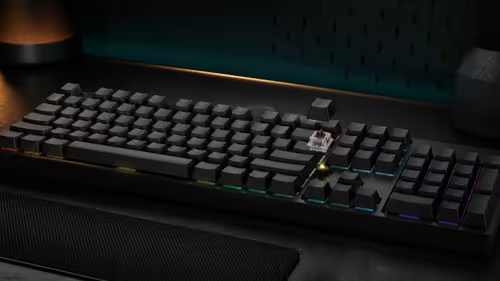
Move the keyboard up when keys chatter, combinations fail or a full-size board steals mouse room. A compact layout can improve the entire aim area.
Switch feel and sound are preferences after reliable registration. Check the keys and layout used by your games.
Do not spend the third share on lighting while the headset or chair still fails.
Keep the Headset Where Audio Passes
Test directional cues, microphone clarity, platform connection and comfort. Use safe volume.
A new headset earns its place when the old set hides direction, drops chat or becomes painful. Wireless convenience is valid when movement needs it and exact-model latency is sound.
If the current wired set passes, clean the pads and keep it. Move the remaining money to furniture or save it.
Review the Physical Desk
Check monitor distance, chair height, foot support, keyboard reach and cable movement. A battlestation refresh should not leave the user leaning around new hardware.
A monitor arm, larger pad or foot support can deliver more daily value than another peripheral tier. Confirm desk load and clamp support before adding an arm.
Persistent pain deserves qualified health guidance, not a product claim.
Build Three Baskets
Browse peripheral best sellers for named monitors and controls. Use gaming accessories for pads, mounts and connection pieces.
Basket A fixes failed items. Basket B improves the old 60Hz display and mouse path. Basket C preserves the healthy setup and solves comfort.
Keep every basket at or below R7,500 with delivery. Compare the effect across all games, not the number of boxes.
Buy in Two Waves
Purchase the first high-impact item and test it for a week. Keep settings and the rest of the desk stable.
Use the remaining money only after the first change exposes the next limit. A new monitor may reveal the PC cannot hold its refresh. A compact keyboard may remove the need for a different desk.
This pause protects the R7,500 from a prepacked bundle that solves yesterday's assumptions.
Validate the New Display Path
Set the monitor to native resolution and full refresh. Enable supported adaptive sync and choose a sensible overdrive mode.
Run the game scene used in the audit. Check frame time, tearing, stutter and motion trails.
Save the cable, port and driver settings. A future update can return Windows to 60Hz.
Validate Every Control
Run a mouse tracking and click test, a keyboard combination test and a headset cue recording. Check comfort after an hour.
Change one device at a time. Keep old hardware until the replacement passes the written return period and your real session.
The refresh is finished when failures are gone and the saved money has no clear job.
Keep the Old Gear in Service
A healthy old monitor can become a second screen for chat or work when the desk and GPU support it. Check the extra output and make sure the second display does not force an awkward neck turn.
An old mouse or keyboard can stay as a troubleshooting spare. Label its receiver and cable. Clean it before storage.
Do not keep broken electrical gear in a drawer. Follow local e-waste guidance for devices that are unsafe or beyond useful repair.
Review Power and USB Paths
Count the USB ports used by mouse, keyboard, headset, receiver and microphone. Spread high-bandwidth devices according to motherboard guidance and avoid an unstable unpowered hub.
Check that the display, PC and powered accessories use suitable protected outlets. Keep power cables away from the mouse path.
After the refresh, shut down and reconnect one device at a time. This proves each cable and port before the desk becomes crowded again.
FAQ
Should the monitor always come first?
No. It comes first when an old display is the broadest limit and the PC can feed the upgrade. Fix broken or painful gear first.
Should mouse and keyboard be bought together?
Only when both fail or a compact keyboard creates needed mouse space. Test them as separate paths.
What should happen to the remaining budget?
Keep it until a week of testing reveals the next repeated limit. Unspent money is a valid result.
Audit display, input, audio and comfort, spend the first R7,500 share on the broadest failed path, and retest before opening the second wave.