Quick Answer
Infinity mirror ARGB lighting uses a half-silvered mirror and LED ring to create the illusion of light receding infinitely into a component. It appears on AIO pump heads, case fans, and accessories, adds significant visual depth compared to flat ARGB rings, and costs R200 to R600 more than non-infinity equivalents.
How Infinity Mirror Lighting Works in PC Components 💡
The infinity mirror effect requires two elements: a semi-transparent mirror (a pane that reflects some light while transmitting some) and a reflective backing surface behind an LED ring. LEDs placed between the two surfaces reflect back and forth, each reflection showing a dimmer version of the previous, creating the visual impression of a tunnel of light receding into the component. Premium implementations deliver 8 to 12 apparent reflection layers within a 20mm component depth.
Where Infinity Mirror Appears in Gaming PC Builds 🎮
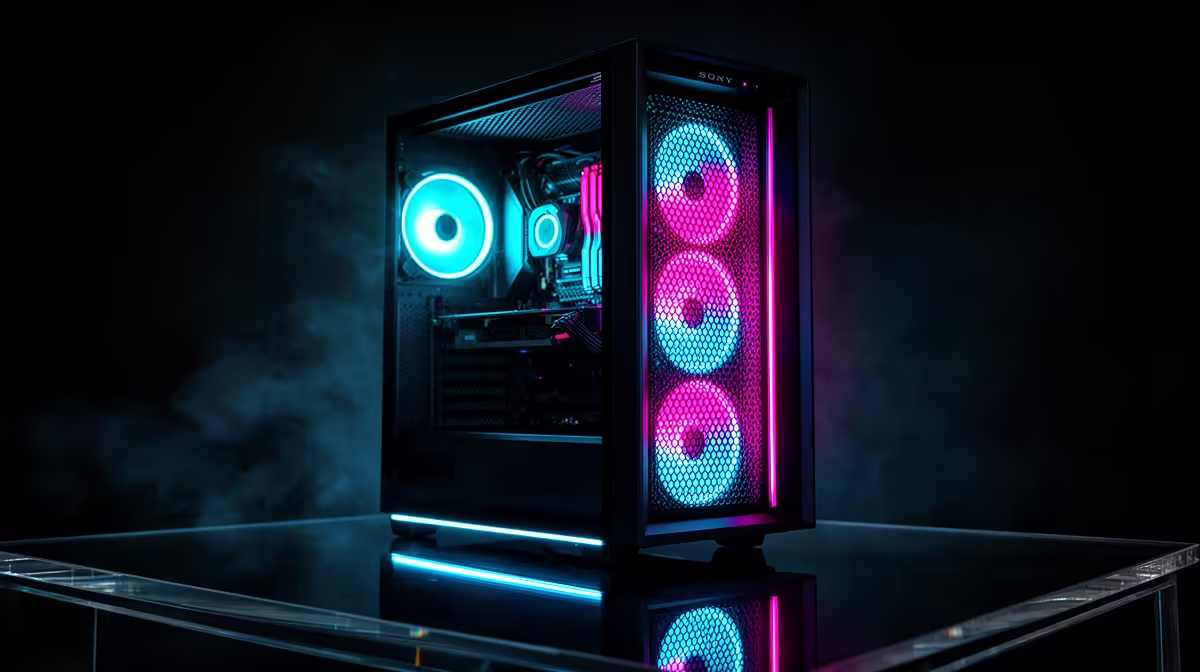
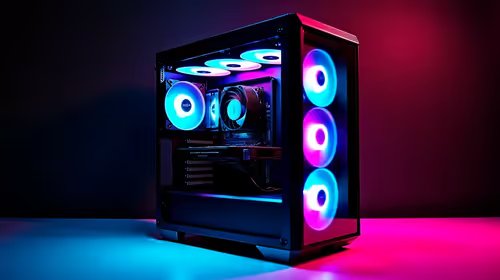
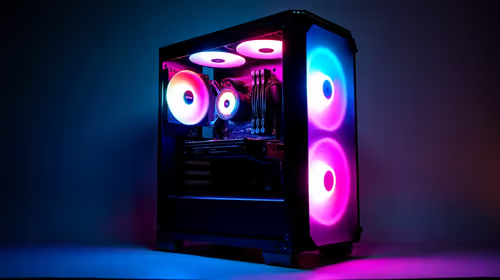
The three most common locations for infinity mirror ARGB in a modern SA gaming build are AIO pump heads, case fans with infinity hub designs, and GPU power connector shrouds on some high-end cards. AIO pump heads are the largest and most visible, making them the most impactful application in a windowed build. Lian Li Uni Fan SL-INF series fans feature an infinity mirror hub in each fan, creating a grid of receding light tunnels across the radiator face. South African gaming builds in the R35,000 to R55,000 range increasingly incorporate infinity mirror elements as a differentiator in build showcases and social media photos.
Practical Considerations for South African Builders 🔧
Infinity mirror components are generally proprietary to specific brands and ecosystems. Lian Li's SL-INF series connects through the L-Connect 3 hub and software. Choosing this ecosystem means committing to Lian Li fans throughout the build, since mixing infinity and non-infinity fans on the same radiator creates a visual inconsistency. Cleaning is straightforward: compressed air removes dust from fan blades and the mirror surface clears with a microfibre cloth from outside the case glass.
Photograph Against a Dark Background for Maximum Effect ⚡
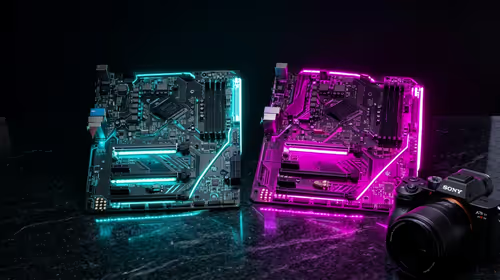
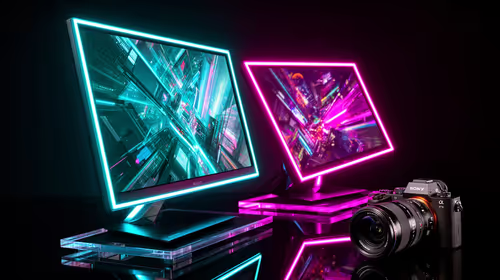
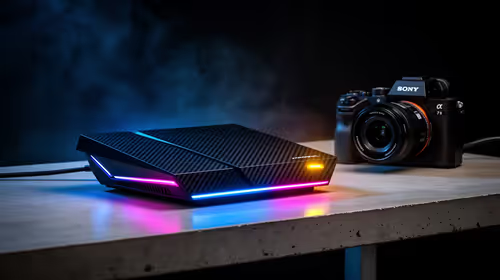
Infinity mirror ARGB lighting looks most dramatic in low-light conditions against a dark background. If you are photographing or video-recording your build for sharing, dim the room lighting to near-off rather than shooting in a bright room where ambient light washes out the reflection depth. The difference in image quality between a bright-room and dim-room shot of an infinity mirror component is dramatic.
FAQ
Does infinity mirror lighting consume more power than standard ARGB?
Minimally. The additional power draw comes from slightly more LEDs in an infinity ring design compared to a simple ring. In practical terms, the difference is under 1W per component, which has no meaningful effect on system power consumption or PSU selection.
Can I mix infinity mirror fans with standard ARGB fans in the same build?
You can, but the visual difference is immediately obvious and typically unflattering. Infinity mirror hubs next to flat ARGB rings create an inconsistency that draws attention to the mixed approach rather than complementing the build aesthetic. If budget limits a full infinity set, a practical alternative is using infinity fans only at the most visible positions (radiator front) and solid non-transparent fans in less visible locations.
Are infinity mirror components more difficult to install than standard fans?
No. Installation is identical: standard 4-pin PWM for speed control and the brand's ARGB connector for lighting. The additional step is the hub connection specific to L-Connect or equivalent, which adds one cable to the build but no additional mechanical complexity.
Want to add infinity mirror ARGB to your next build?
Browse Evetech's ARGB AIO and fan range to find infinity mirror components that fit your case, ecosystem, and budget.