Quick Answer
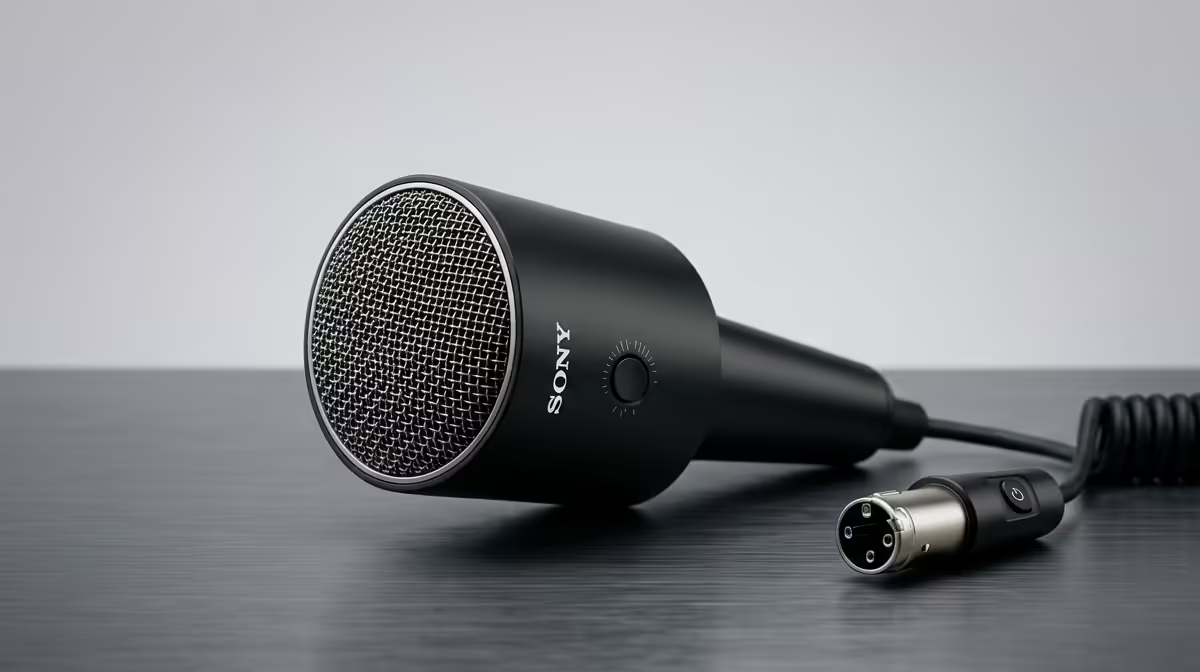
For a creator juggling backup and storage as well as audio, plan three mic tiers: a R900 to R1,500 USB cardioid mic for clean voiceovers, a R1,800 to R3,000 mid mic with a gain dial and mute, and a R3,500-plus mic plus interface for the best quality. And record locally to a fast SSD, since uncompressed audio adds up fast across long sessions.
The three mic tiers, and why audio ties to storage
Tier one (R900 to R1,500) is a USB cardioid mic that delivers clear voice for tutorials and streams. Tier two (R1,800 to R3,000) adds an on-mic gain dial, a mute button and better rejection of room noise. Tier three (R3,500-plus) moves to a quality mic plus a small interface for the cleanest sound. The storage link matters because recording high-quality audio, especially multitrack, generates large files; a single long session can run into gigabytes, so plan where it lands.
Backup and storage planning for recorded audio
Record to a fast internal or external SSD rather than a slow drive, so multitrack capture never drops samples mid-take. Then back up finished recordings, the classic approach keeps one working copy on your editing drive and a second on a separate external drive, so a single failure never loses a session. For creators producing daily, budget for storage growth: a 1TB external SSD holds plenty of project audio and is cheap insurance against losing work. Match the mic tier to your output quality and pair it with a storage plan that survives a drive failure.
FAQ
Which mic tier suits a creator on a budget?
Tier one, a R900 to R1,500 USB cardioid mic, gives clean voice for tutorials and streams. Step up to the R1,800 to R3,000 tier only when you want on-mic gain control and better room rejection.
Why does mic quality affect my storage needs?
Higher-quality and multitrack recording produces large files, with a long session running into gigabytes. Recording to a fast SSD prevents dropped samples, and you'll want a backup drive so a failure never loses a session.
How should I back up recorded audio?
Keep one working copy on your editing drive and a second on a separate external drive, so a single failure can't lose your work. A 1TB external SSD is cheap insurance for a daily creator.
to a fast SSD and copy each finished session to a second external drive the same day, so a drive failure never costs you a recording.