Quick Answer
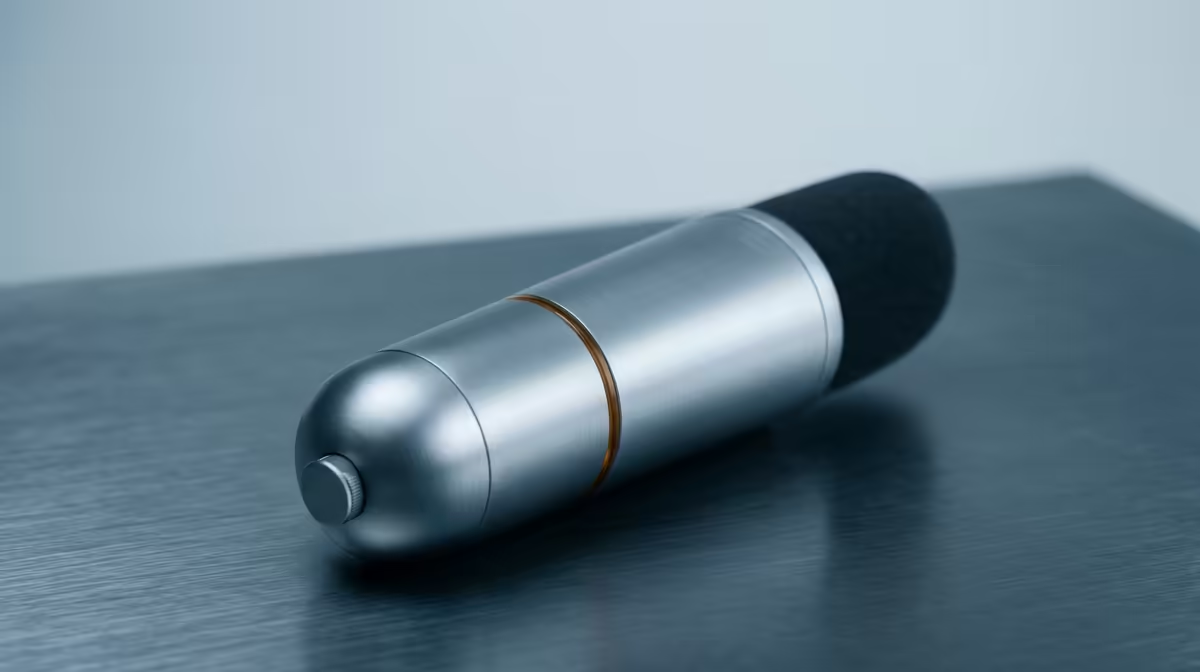
Use budget for the must-have spec, balanced for reliability, and premium for specialist comfort or features. Check cardioid pickup, gain control, mute button, USB-C connection, boom arm support, and 24-bit/48kHz capture before extras. Use models such as HyperX SoloCast, HyperX QuadCast S, Elgato Wave:3, and Razer Seiren-class USB microphones and treat R600 to R4,000 as a cautious SA category band, not a live quote.
Budget, Balanced And Premium Tiers
Start with the part of the setup that fails in normal use. The right streaming microphone should reduce wasted time, cable mess, noise, discomfort, or compatibility problems instead of only adding a longer feature list.
Premium spend only makes sense when it improves closer mic placement and lower room noise before chasing higher recording specs.
Specs That Change Daily Use
Check cardioid pickup, gain control, mute button, USB-C connection, boom arm support, and 24-bit/48kHz capture before judging lighting or styling. If cardioid pickup, gain control, mute button, USB-C connection, boom arm support, and 24-bit/48kHz capture are weak, a more expensive streaming microphone can still feel wrong.
Numbers keep the shortlist honest: R600 to R4,000 is the broad local bracket, and closer mic placement and lower room noise before chasing higher recording specs is a better target than vague claims.
SA Buying Checks Before Checkout
For SA travel between Joburg, Cape Town, Durban, and campus digs, compact gear that fits a backpack beats gear needing rare adapters. Also check warranty handling, cable or plug needs, and actual desk fit.
For Evetech shoppers, keep the shortlist focused on streaming microphones. For streaming microphones, keep the product block aligned.
FAQ
What price range should SA buyers expect?
Use R600 to R4,000 as a cautious local category band. Higher tiers should prove better compatibility, durability, comfort, or performance.
Which spec should I check first?
Start with cardioid pickup, gain control, mute button, USB-C connection, boom arm support, and 24-bit/48kHz capture. If that line is weak, the streaming microphone may disappoint even with a better finish or stronger brand.
When is it worth stepping up from entry level?
Step up when cheaper gear causes instability, poor calls, bad fit, noise, short battery life, or missing compatibility. If the current setup already handles closer mic placement and lower room noise before chasing higher recording specs, save the spend for the next bottleneck.
buy, write down the port, size, room, or performance target that must improve. If the chosen streaming microphone does not fix that exact point, pick a simpler model or spend elsewhere.