


PCIe 5.0 vs PCIe 4.0 for Strategy and Sim Games in SA
PCIe 5.0 and PCIe 4.0 differ most in lane support, compatibility, and upgrade value for strategy and sim games. SA buyers should match the choice to their actual hardware and games.
Read moreA turnkey content creator studio kit in South Africa typically costs R2500 to R8000, depending on whether you want basic softboxes or a full lighting, backdrop and stand bundle. Entry kits cover lights and a green screen, while pro bundles add panels and heavier stands.
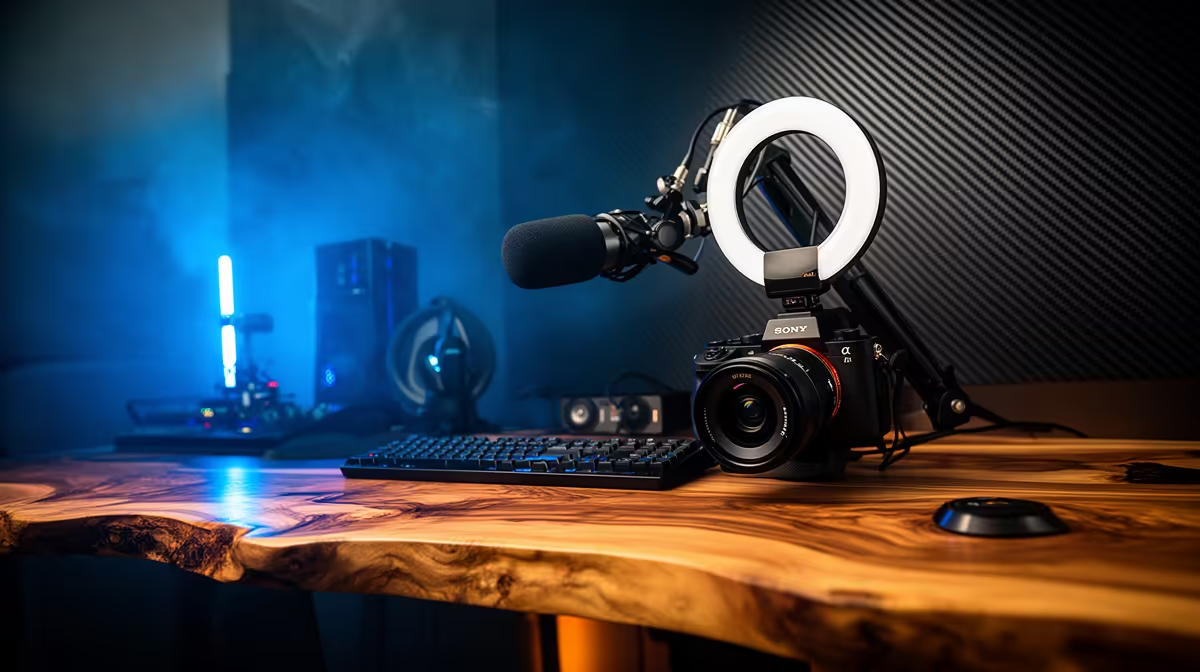
Starting a South African content creation channel without a studio means borrowing living rooms, fighting inconsistent light, and replacing equipment every few months as the setup outgrows itself. A turnkey content creator studio kit sidesteps that cycle by bundling everything into a single purchase with compatible parts that work together from day one. What that bundle actually costs in SA depends on how complete "turnkey" really is.
A basic SA turnkey creator studio kit costs around R2,500 to R3,500 and covers two softboxes and a fabric green screen. A fuller mid-tier bundle with sturdier stands, more lights, and a wider backdrop runs R5,000 to R6,000. Professional-grade bundles with panel lights and heavy stands sit closer to R7,000 to R8,000.
SA kit pricing breaks down into three fairly consistent bands, and the differences between them are about more than just component count.
R2,500 to R3,500: the starter tier. Two softbox lights with daylight bulbs, a pair of entry-level 199cm stands, and a fabric green screen are the core. At this price, the stands are lighter aluminium builds with thin centre columns, and the softboxes are small, typically 45 to 50cm. These kits are designed for seated, close-up shooting, and for a talking-head YouTube or podcast format they work well. Do not expect them to handle full-body framing or heavy loads.
R5,000 to R6,000: the mid-tier. Stands become noticeably heavier, with wider leg spread and more stable collar joints. Softboxes step up to 60 to 80cm, which makes a visible difference to shadow quality. Many mid-tier kits add a third light, either a second softbox for a fill or a panel for use as a back light, and the green screen often widens from a basic 1.5m panel to a full 298cm backdrop on a telescoping crossbar.
R7,000 to R8,000: the pro-facing tier. At this level you start seeing true panel lights alongside softboxes, heavy-duty stands rated for larger loads, and in some cases a padded carry bag for portable use. The colour accuracy of the lights improves, bulbs are more consistently matched, and stands are built to handle the crossbar and backdrop loads a permanent studio places on them daily.
Not every kit at the lower price point ships with a backdrop. Some entry-level bundles are lights only, which leaves you sourcing the green screen separately. Before committing to any kit, confirm whether the backdrop and its crossbar mounting system are included or are sold as a separate add-on.
Turnkey kits consistently come in below the equivalent cost of buying each piece separately, and the margin is real. A 60cm softbox with two 45W bulbs and a stand runs around R600 to R900 on its own. Two of those cost R1,200 to R1,800 before you add the backdrop and crossbar system.
A mid-tier bundle covering the same components typically prices at R4,500 to R5,500, which represents a 15 to 25 percent saving over the sum of the parts. The saving is largest at the mid tier because the component mix is broader; entry kits with only two items show less margin difference.
The trade-off with a bundle is flexibility: you get what is in the box. If you have strong preferences about softbox size or stand brand, buying separately lets you specify each component. If you are starting from scratch and want a complete studio on one purchase, the bundle beats the piecemeal approach on both price and convenience.
The headline price of any kit rarely reflects the full cost of a working studio. Several small additions are consistently necessary and consistently left out of the box.
Sandbags are the most critical omission. Any backdrop stand loaded with 3 metres of fabric has significant leverage working against its feet, and the entry stands in budget kits are the most vulnerable to tipping. Budget R150 to R200 for a pair of 5kg sandbags.
Spare bulbs come next. Entry kits often ship with CFL or lower-grade LED bulbs. A replacement 45W daylight-rated LED bulb costs R80 to R120. Having one spare per softbox avoids a dead light stopping a session.
A steamer or travel iron rounds out the list if your kit includes a muslin backdrop. Stored fabric arrives creased, and creases cast shadows that appear as dark patches in the key. A compact clothes steamer costs around R200 to R300 and removes them in minutes.
In total, expect to add R400 to R600 to the kit price for these essentials.
This is a common concern and mostly a distraction. A 45W softbox kit designed for a talking-head shot will illuminate a 4K sensor just as well as a 1080p one. Resolution is a camera property; light quality is a modifier property. A well-lit R3,500 kit produces better 4K footage than a poorly positioned R8,000 kit. Get the light placement right and the camera captures whatever resolution it is capable of.
The clearest way to choose a tier is to define the shot first, then work backward to the kit.
A seated, close-up face to the camera with a green screen background: a starter kit at R2,500 to R3,500 covers this well. A solo presenter doing full-body demonstrations with a clean white or green backdrop: the wider softboxes and more stable stands of the mid tier are worth the extra R1,500 to R2,000. A multi-person setup, a product review table with overhead panel lighting, or a permanent studio that will not be dismantled: the pro tier is the right baseline.
Most creators building their first studio are in the first or second group. An overspecified R8,000 kit in a 3x3m room is not meaningfully better than a well-configured R4,500 setup in the same space. The room limits what the lights can do as much as the lights themselves.
For a seated talking-head format, yes. Two 45W softboxes at a correct key-and-fill ratio with a taut green screen behind the presenter produces footage that looks intentional and polished. The limitations of a starter kit show up in full-body shots, in wide frames with multiple subjects, and in use cases that demand the kit is assembled and packed daily. For a fixed, single-presenter setup, R3,000 is a legitimate professional starting point.
Stand quality is the most significant difference. Mid-tier stands have thicker gauge legs, wider foot spread, and more robust locking collars that stay tight over hundreds of assembly cycles. Entry stands work when new but loosen with repeated use. If the studio is assembled and packed regularly, the difference in stand durability becomes obvious within a year.
Not reliably. Entry kits sometimes ship with mixed bulb batches, and a bulb that reads 5500K on its box may be slightly warmer or cooler than its pair in the second softbox. This creates a subtle colour cast on one side of the subject's face that is surprisingly difficult to correct in post. Before shooting, test both softboxes against a white card and compare the warmth.
Sandbags for stability (R150 to R200), a spare bulb per softbox (R80 to R120 each), and a compact steamer for the muslin backdrop (R200 to R300). Together these add R400 to R600 to the kit cost. None of them are glamorous, but all three will be needed within the first few weeks of regular use.
Partially. The green screen and crossbar system from a starter kit can stay useful for years. Stands often need upgrading as heavier modifiers are added, and softboxes can be replaced individually with larger sizes. The most cost-effective growth path is a mid-tier kit at the start, with individual component upgrades when specific limitations show up.
Ready to build your SA studio on a clear budget? Browse the turnkey content creator studio kits at Evetech and compare what each tier includes before you buy.
For a seated talking-head format, yes. Two 45W softboxes at a correct key-and-fill ratio with a taut green screen behind the presenter produces footage that looks intentional and polished. The limitations of a starter kit show up in full-body shots, in wide frames with multiple subjects, and in use cases that demand the kit is assembled and packed daily. For a fixed, single-presenter setup, R3,000 is a legitimate professional starting point.
Stand quality is the most significant difference. Mid-tier stands have thicker gauge legs, wider foot spread, and more robust locking collars that stay tight over hundreds of assembly cycles. Entry stands work when new but loosen with repeated use. If the studio is assembled and packed regularly, the difference in stand durability becomes obvious within a year.
Not reliably. Entry kits sometimes ship with mixed bulb batches, and a bulb that reads 5500K on its box may be slightly warmer or cooler than its pair in the second softbox. This creates a subtle colour cast on one side of the subject's face that is surprisingly difficult to correct in post. Before shooting, test both softboxes against a white card and compare the warmth.
Sandbags for stability (R150 to R200), a spare bulb per softbox (R80 to R120 each), and a compact steamer for the muslin backdrop (R200 to R300). Together these add R400 to R600 to the kit cost. None of them are glamorous, but all three will be needed within the first few weeks of regular use.
Partially. The green screen and crossbar system from a starter kit can stay useful for years. Stands often need upgrading as heavier modifiers are added, and softboxes can be replaced individually with larger sizes. The most cost-effective growth path is a mid-tier kit at the start, with individual component upgrades when specific limitations show up.
PCIe 5.0 and PCIe 4.0 differ most in lane support, compatibility, and upgrade value for strategy and sim games. SA buyers should match the choice to their actual hardware and games.
Read more
AM5 vs AM4 for video editing in 4K Difference explained is mostly about compatibility, budget, upgrade path, and setup fit. SA buyers should check device support and real needs before expecting a clear win from either option.
Read more
OLED vs QD-OLED for strategy and sim games buyers - what changes is mostly about compatibility, budget, upgrade path, and setup fit. SA buyers should check device support and real needs before expecting a clear win from either option.
Read more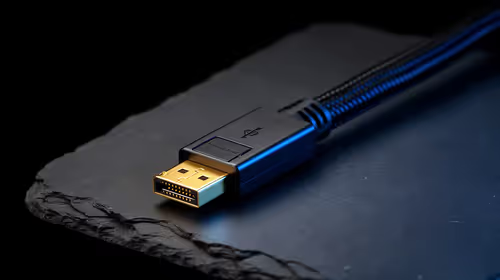
DisplayPort 2.1 and 1.4 differences matter when SA PC builders match GPUs, monitors, and refresh targets. Use this difference between displayport 2 1 and displayport 1 4 explained pc builders guide to avoid mismatched parts.
Read more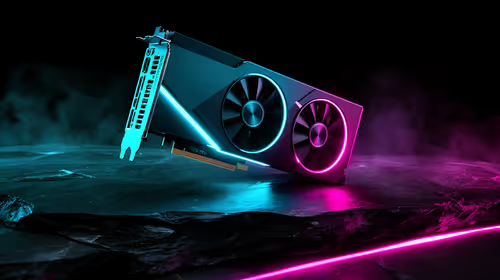
Ray tracing vs Path tracing depends on Strategy and sim games needs, platform limits, and budget fit. Compare compatibility, latency, upgrade path, and real setup constraints before choosing for an SA build.
Read more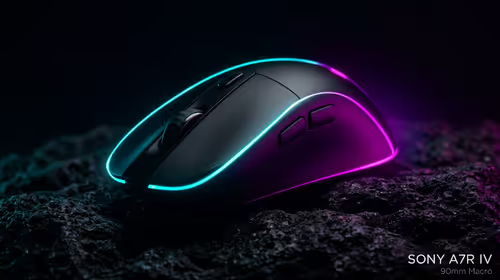
wireless mouse guide for Gqeberha gamers should be shortlisted around the job it must do. South African buyers should compare sensor, shape, weight, and wireless latency, warranty path, and upgrade room before treating any pick as best.
Read more
From 1 October 2026, WhatsApp Business Platform service replies in South Africa are expected to cost about $0.0076, or 12 cents, per delivered message.
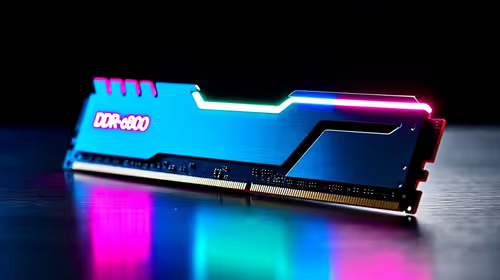
DDR5-8000 RAM Kits pros and cons depend on the build, budget, and workload. Weigh gaming needs, platform fit, power, cooling, warranty support, and South African pricing context before shortlisting it.
Wi-Fi 6E vs Wi-Fi 6 depends on AAA single-player gaming needs, platform limits, and budget fit. Compare compatibility, latency, upgrade path, and real setup constraints before choosing for an SA build.
Ryzen 9 9950X3D dead pixel checks should isolate the panel first. Run colour fills, inspect the monitor menu, test another cable or input, and capture proof before linking it to the SA CPU upgrade.
YouTube will count public views from the first frame across video formats from 24 August, while earnings and eligibility remain tied to engaged viewing.
Canonical expects Ubuntu on WSL users to outnumber native Ubuntu desktop users before the end of 2026. The software is open source and runs inside supported Windows PCs.
Telkom's daily bundles pair WhatsApp access with 10 all-network voice minutes. The R15 option includes 300MB, while the R17 option uses a fair-use threshold.
A 10,000-hour test found similar image retention across older and newer OLED TVs, while newer panels were brighter and more efficient. Local OLED monitors started at R9,999.

Windows 11 update KB5121003 is linked to crashes in several multiplayer games on versions 24H2 and 25H2. Check the build, report the fault and avoid risky file or update changes unless the problem is confirmed on your PC.

Comsol's standalone 5G network covers about one million Gauteng homes and starts commercial ISP service in September. Early packages range from R275 to R875 a month, but coverage and fair-use rules still decide the real value.

Sennheiser's Momentum True Wireless 5 adds user-replaceable batteries, 12-hour playback and a $299.95 launch price. There is no confirmed South African date, so compare longevity with live earbuds from R199 to R2,999.

AVerMedia's GC531 and GC535 are professional HDMI capture devices for continuous streaming, with RGB24 capture up to 2K30 and 4K30. South African creators should compare them with live 4K capture cards from R2,099.